
Installing a new gas heater today in the hope of using biomethane in the future is essentially a high-stakes bet on infrastructure that may never reach specific neighborhoods. As the push for a decarbonized economy in Australia reaches a fever pitch, households find themselves at the center of a complex tug-of-war between full electrification and the promise of a “green” gas alternative. In mid-2026, policy shifts such as the expanded Renewable Fuel Scheme in New South Wales have provided fresh ammunition for industry advocates who argue that a total abandonment of gas infrastructure is unnecessary. The proposal suggests that by simply swapping fossil methane for biomethane, millions of residents could keep their existing gas stoves and heaters while simultaneously meeting net-zero targets. However, the reality behind these claims involves a sophisticated interplay of chemistry, economics, and logistics that may not align with the immediate needs of the average homeowner. The debate is no longer just about whether the technology works, but whether it can be scaled effectively enough to compete with the rapid rollout of high-efficiency electric alternatives already dominating the market.
Understanding the Technology and Its Application
The technological viability of renewable gas depends on its ability to integrate with existing systems without forcing consumers to overhaul their home environments. To bridge the gap between fossil fuels and a sustainable future, researchers and energy providers have focused on creating fuels that mimic the behavior of natural gas while minimizing environmental harm. This approach seeks to utilize existing investments in the national gas grid, which spans thousands of miles and connects millions of individual appliances. By identifying waste streams that can be converted into high-quality methane, proponents of this technology argue that the transition to a low-carbon economy can be managed with less disruption to the daily lives of citizens. The focus remains on finding a balance between the immediate convenience of gas and the long-term necessity of reducing atmospheric emissions through innovative biological processing.
The Nature and Functionality of Biomethane
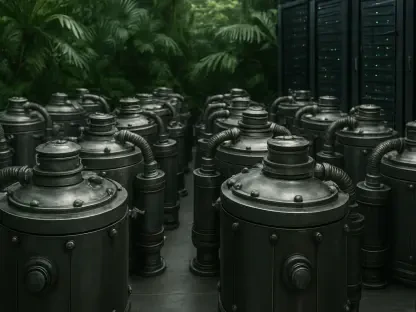
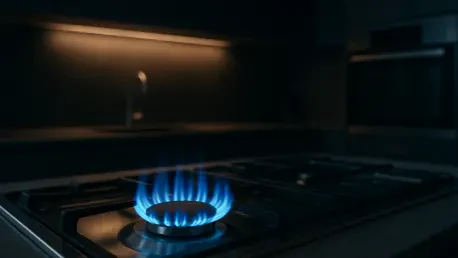
The fundamental appeal of biomethane lies in its chemical profile, which makes it a “drop-in” replacement for the natural gas currently fueling millions of Australian kitchens. This fuel is generated through a biological process known as anaerobic digestion, where microorganisms break down organic waste—such as sewage, food scraps, and agricultural residues—in an oxygen-free environment. This process produces raw biogas, a mixture primarily consisting of methane and carbon dioxide. To make this gas suitable for the national grid, it undergoes an intensive “upgrading” phase to strip away impurities like hydrogen sulfide and excess CO2. The final product is essentially indistinguishable from conventional fossil gas, meaning it meets the stringent safety and performance standards required for existing distribution pipelines. Because of this chemical identity, the transition to biomethane requires no hardware changes within the home. A stove, hot water system, or central heater that runs on natural gas today will function with identical precision on biomethane. This plug-and-play capability is the primary selling point for distributors who hope to avoid the massive costs associated with decommissioning gas networks and forcing consumers to invest in new electric appliances.
Environmental Impact and Carbon Neutrality
While the physical combustion of biomethane still releases carbon dioxide into the air, its classification as a carbon-neutral or low-emission fuel stems from the origin of that carbon. Unlike fossil fuels, which release ancient carbon that has been locked underground for millions of years, biomethane utilizes biogenic carbon. This is carbon that was recently absorbed from the atmosphere by the plants or animals that eventually became organic waste. In this closed-loop cycle, the emissions released during cooking or heating are roughly equal to the amount of CO2 the organic material removed from the environment during its lifespan. This distinction is critical for Australia’s climate strategy, as it offers a theoretical pathway to decarbonize household energy without the immediate upheaval of total electrification. For many homeowners, especially those in older dwellings where retrofitting electrical wiring for induction cooktops or heat pumps can cost thousands of dollars, the promise of a carbon-neutral gas supply is incredibly enticing. It represents a potential middle ground that maintains the familiar user experience of gas while aligning with broader national sustainability goals. However, the environmental benefits are only as significant as the volume of gas available, and this is where the theoretical promise meets a challenging practical reality.
Assessing Supply and Infrastructure Realities
The transition from a fossil-based gas system to one powered by renewable sources is not merely a question of chemistry; it is a monumental logistical challenge. Australia’s vast geography and the dispersed nature of its organic waste sources create unique hurdles that are not easily overcome by policy alone. While the country possesses significant agricultural and urban waste resources, the infrastructure required to collect, process, and inject this gas into the grid is still in its infancy. Furthermore, the economic framework surrounding these projects is often complicated by the high costs of transporting raw materials to processing facilities. As energy providers look toward 2027 and 2028, the focus is shifting toward how to build a reliable supply chain that can provide consistent volumes of gas to metropolitan areas. The success of this endeavor will depend on massive capital investments and a clear understanding of the difference between what is possible in a laboratory and what can be achieved on a national scale within a functioning market.
The Gap: Theoretical Potential Versus Actual Supply
A deep dive into industry data reveals a startling disconnect between the theoretical potential of biomethane and the volume that can realistically reach consumers. Projections for Australia’s production capacity vary wildly, with some expansive reports claiming the country could produce upwards of 2,600 Petajoules annually—a figure that would more than double the nation’s current domestic gas usage. These optimistic forecasts often assume a perfect world scenario where every scrap of agricultural waste and every liter of sewage in the country is efficiently collected and processed. In reality, more grounded estimates suggest a recoverable potential of about 371 Petajoules, which is significant but hardly enough to replace the entire gas ecosystem. The logistical nightmare of collecting waste from dispersed rural areas and transporting it to centralized processing plants often renders many potential projects economically unviable. For a suburban household, theoretical potential offers no warmth on a cold winter night. The gap between these figures highlights a critical risk: if policy decisions are based on the highest possible production numbers, the country may over-invest in gas infrastructure that eventually runs dry, leaving consumers with no choice but to revert to fossil fuels or undergo a delayed transition to electricity.
Current Project Benchmarks: The Malabar Reality
The limitations of scaling renewable gas are perfectly encapsulated by the Malabar facility in Sydney, currently Australia’s most advanced grid-connected biomethane project. While it serves as a triumphant proof of concept, its operational scale provides a sobering perspective on the challenges ahead. At its current capacity, the facility produces approximately 95 Terajoules of gas per year, which is only enough to supply about 6,300 homes with renewable energy. Even when looking at the project’s expansion goals for 2027, which aim to double production to cover roughly 13,300 homes, the numbers remain a drop in the bucket compared to the broader energy needs of New South Wales. For context, the residential gas demand in that state alone exceeds 27,000 Terajoules annually. This means that even the country’s flagship project, operating at peak efficiency, addresses less than one percent of the residential market’s requirements. This massive disparity suggests that for the vast majority of Australians, the arrival of renewable gas at their front door is not a matter of a few years, but potentially several decades. The slow pace of infrastructure development raises serious questions about the feasibility of biomethane as a primary solution for the millions of households currently reliant on the gas grid for their daily needs.
Infrastructure Barriers and Capital Constraints
Beyond the supply of raw materials, the structural requirements for a national biomethane rollout are immense and prohibitively expensive. Constructing anaerobic digesters and the accompanying gas-upgrading facilities requires massive upfront capital expenditure, with each site functioning as a bespoke, long-term infrastructure project. Unlike the modular nature of solar panels or battery storage, which can be deployed quickly and across a variety of scales, biomethane plants take years to move from the planning stage to full operation. Furthermore, the existing gas distribution network was designed for a one-way flow from massive central basins to end-users. Injecting gas at multiple local points along the tail ends of the grid requires significant technical upgrades at every connection point to ensure pressure stability and gas quality. These upgrades add another layer of cost and complexity to a system that is already aging. As a result, the expansion of renewable gas is likely to remain a fragmented, localized process rather than a systemic national shift. This creates a geography-based lottery for homeowners, where those living near a major sewage treatment plant or large-scale agricultural hub might see renewable gas sooner, while those in metropolitan centers remain tethered to traditional fossil-derived gas for the foreseeable future.
Comparing Household Options and Future Trends
The energy landscape for Australian homes is shifting toward a model that prioritizes efficiency and local generation, often putting gas technologies at a disadvantage. While the concept of renewable gas offers a way to maintain the status quo, homeowners are increasingly presented with data that suggests a full move to electric systems is more economically sound. High-efficiency heat pumps and induction cooktops have become the gold standard for new builds, as they offer lower operating costs and the ability to integrate directly with rooftop solar arrays. This transition is not just driven by environmental concerns but by a pragmatic desire to gain independence from volatile global fuel markets. As we move from 2026 toward 2030, the competition between gas and electricity will likely be decided by the speed of technological adoption and the availability of subsidies for electrical retrofits. The decision for the individual consumer often comes down to a choice between an existing, familiar system that may become more expensive and a new, more efficient technology that requires a higher initial investment but offers long-term stability.
Feedstock Competition: Aviation Versus the Home
One of the most overlooked hurdles for residential biomethane is the intense competition for the very organic waste needed to produce it. Households are not the only sector seeking renewable alternatives; the aviation and heavy transport industries are currently in a fierce battle for high-quality feedstocks like tallow, used cooking oils, and agricultural residues. These sectors are frequently classified as hard-to-abate because they lack the easy path to electrification available to suburban homes. Consequently, federal support and investment are increasingly tilted toward the production of sustainable aviation fuels and renewable diesel through initiatives like the billion-dollar Cleaner Fuels Program. Because airplanes cannot fly on batteries and heavy freight trucks face significant range limitations with current electric technology, these industries are willing to pay a premium for liquid and gaseous biofuels. This market dynamic drives up the price of organic waste, making it more profitable for producers to sell their output to an airline than to a local gas distributor. For the average homeowner, this means that even if the technology is available, the cost of the gas itself could skyrocket as supply is diverted toward more desperate industries. This competition essentially puts residential heating at the back of the line for a limited pool of sustainable resources.
Efficiency Realities: The Strategic Use of Resources
Objective energy observers and efficiency experts are increasingly questioning the logic of using a high-value, scarce resource like biomethane for basic residential tasks. When comparing energy efficiency, the case for electrification becomes overwhelming. A modern electric heat pump can produce three to four units of heat for every one unit of electricity consumed by pulling warmth from the surrounding air. In contrast, burning gas—even renewable gas—to heat water or air is inherently limited by the energy content of the fuel itself. Using precious biomethane to perform a task that can be handled more efficiently by electricity is viewed by many as an suboptimal allocation of resources. The emerging consensus suggests that biomethane should be reserved for high-intensity industrial processes—such as glass manufacturing, steel production, or chemical synthesis—where electricity cannot yet provide the necessary heat or chemical reactions. For the suburban home, where highly efficient induction cooktops and heat pumps are already mature and commercially available, the push for renewable gas may be more of a marketing strategy for gas infrastructure companies than a practical necessity for consumers. As the grid becomes greener with wind and solar power, the rationale for maintaining a separate, secondary energy network for households continues to weaken under the weight of economic and physical reality.
Strategic Recommendations for Future Energy Planning
The investigation into Australia’s renewable gas landscape revealed a technology that was scientifically sound but logistically overwhelmed by the sheer scale of residential demand. While biomethane demonstrated a clear ability to function within existing pipelines, the data showed that production volumes lagged behind household needs by a staggering margin. The Malabar project served as a vital milestone, yet it also highlighted the reality that niche solutions could not easily be transformed into universal ones. Policy decisions shifted to prioritize industrial and transport sectors for limited organic feedstocks, effectively leaving the residential market to seek alternatives. Consequently, the transition toward high-efficiency electric appliances emerged as the most reliable pathway for homeowners. Those who moved away from gas connections avoided the risks of rising costs and infrastructure gaps that characterized the mid-2020s. The lesson for the future was clear: while renewable gas played a key role in specific heavy industries, the most sustainable and cost-effective choice for the average home remained the total electrification of all household energy needs. This shift allowed residents to capitalize on local solar generation and a rapidly decarbonizing electricity grid, ensuring long-term energy security without the need for a complex and constrained fuel supply. Moving forward, the focus for urban developers shifted toward building all-electric communities, while renewable gas became the backbone of a specialized industrial economy.