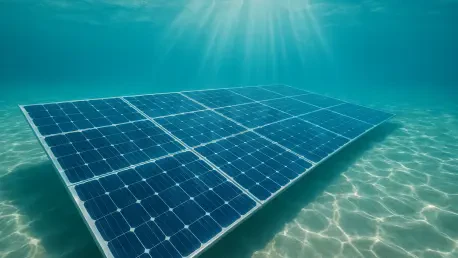

Engineers have confirmed that customized laboratory systems can now simulate and optimize light absorption for energy harvesting at varying subaquatic depths. This technical milestone addresses the long-standing difficulty of maintaining power for submerged electronics without relying on cumbersome physical tethers. As researchers push the boundaries of marine exploration, the necessity for a localized and renewable energy source has become increasingly apparent. Traditional photovoltaic cells were historically deemed ineffective in water because the medium acts as a powerful filter, rapidly stripping away the red and infrared wavelengths that land-based panels rely on. However, recent collaborative experiments involving teams from Yunnan University and Swiss engineering firms have fundamentally altered this perspective by demonstrating that light penetration is surprisingly harvestable. By moving beyond the limitations of standard solar technology, the industry is now poised to deploy autonomous systems that can remain operational for years at a time.
The Science of Light: Overcoming Subaquatic Attenuation
Wide Bandgap Engineering and Spectral Selection
The primary breakthrough involves the strategic use of wide-bandgap semiconductors that are specifically tuned to the blue and orange segments of the light spectrum. Unlike terrestrial solar panels that struggle under the sea, these customized cells capitalize on the specific wavelengths that travel deepest through the water column. In recent field trials conducted in the South China Sea, experimental arrays were submerged to a depth of 10 meters to evaluate their real-world output potential.
These tests yielded remarkable data, showing that the system could generate up to 324 megawatt-hours of energy during a brief two-hour window of peak sunlight. This level of performance proved more than sufficient to charge high-capacity lithium-ion batteries used in subaquatic vehicles. By focusing on the spectral window where water is most transparent, researchers successfully bypassed the energy dissipation that typically renders underwater electronics dependent on external sources. This achievement signals a significant departure from conventional energy strategies.
Specialized Filtration and Laboratory Optimization
To bridge the gap between theoretical physics and marine application, the research team developed a customized laboratory system capable of mimicking high-pressure, low-light environments. This setup utilized specialized optical filters to reproduce the exact lighting conditions found at various subaquatic depths, allowing for rapid iterative testing. By simulating the precise refractive index of saltwater, engineers optimized the absorption layers of the photovoltaic cells before any sea deployment occurred.
This meticulous optimization process allowed for the identification of thin-film materials that minimize reflection and maximize photon capture. The filters served a dual purpose: protecting the delicate semiconductors from the environment while refining the incoming light to match the bandgap of the material. As a result, the transition from controlled laboratory simulations to the open ocean was seamless, confirming that the performance metrics observed in a dry environment could be replicated in the unpredictable currents and turbidity of the natural sea.
Marine Durability: Resilience in Harsh Saltwater Conditions
Material Resilience in Corrosive Environments
Durability remains a cornerstone of marine technology, as the corrosive nature of saltwater usually limits the operational lifespan of electronic components. The panels underwent rigorous submersion testing for a continuous 1,160 hours, a period during which they were exposed to fluctuating salinity levels and biological fouling. Remarkably, the structural integrity of the solar cells showed zero degradation throughout the experiment, proving that the encapsulation techniques employed were robust enough for the task.
Further testing focused on the long-term storage and stability of the semiconductor material itself. After being kept for 300 days in a marine-simulated storage environment, the cells retained approximately 96% of their initial energy conversion efficiency. This level of stability is critical for industrial applications where maintenance is difficult and expensive. The ability of these panels to resist both chemical corrosion and electrical decay ensures they can provide a reliable power source for long-term scientific installations and underwater sensors.
Scalable Strategies for Deep Ocean Exploration
Building on the success of shallow-water trials, the project established a roadmap for deploying solar-integrated systems at even greater depths. Scientists identified that while light intensity diminishes, the stability of the energy harvested remains high enough to support low-power autonomous monitoring. This approach laid the groundwork for future expeditions targeting extreme regions like the Mariana Trench. By integrating these panels with modular battery systems, the industry moved closer to creating a persistent surveillance network across the ocean floor.
Stakeholders prioritized the development of standardized solar-powered docking stations for autonomous underwater vehicles. These units simplified logistics by allowing robots to recharge without returning to a surface vessel, thereby reducing the carbon footprint of marine research. The integration of wide-bandgap technology effectively neutralized the energy barriers that once restricted the duration of deep-sea missions. These advancements established a clear path forward for the mass adoption of subaquatic solar power in global maritime operations and environmental conservation efforts.