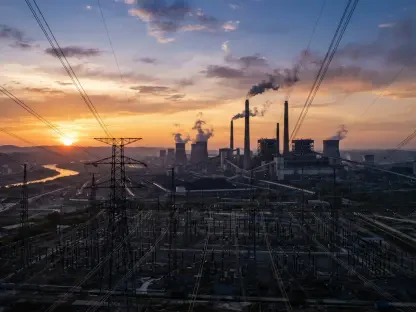

The landscape of the Venezuelan energy sector is experiencing a monumental shift as the administration formally enacts a suite of deregulatory measures designed to attract international capital. This 122-article statute, which serves as the operational framework for a reformed Hydrocarbon Law, represents a definitive move toward prioritizing the financial viability of private investments over traditional state control. For decades, the industry was defined by rigid oversight and declining production, but the new rules aim to leverage the nation’s vast reserves by empowering external operators. By offering a more predictable legal environment, the government hopes to reverse the stagnation that has hindered economic development. This transition is not merely a technical adjustment but a fundamental reimagining of how energy wealth is generated and managed within a global market. As the country navigates this complex transformation, the balance between national interest and foreign participation remains central.
Structural Changes in Governance
Beyond State-Driven Models: Dismantling the 2001 Hydrocarbon Law
The systematic dismantling of the 2001 Hydrocarbon Law represents a profound departure from the “Sovereign Oil” policy that dictated national energy strategy for over two decades. This updated framework effectively curtails the role of the state as the primary operator, allowing private corporations to assume greater control over oilfield management and production activities. By shifting toward concession-style agreements and minority joint venture partnerships, the government has signaled a willingness to prioritize operational efficiency over ideological dominance. These changes were necessitated by the realization that state-led models lacked the agility to respond to rapidly fluctuating global market conditions and the technological requirements of aging oil fields. The move toward a more flexible regulatory environment is intended to restore investor confidence and provide a stable platform for the long-term extraction of the nation’s massive heavy crude reserves, which have remained largely untapped due to the previous lack of sufficient technical resources.
PDVSA Omission: Streamlining Bureaucracy and Operational Autonomy
A particularly striking aspect of the current legislation is the total absence of the state oil company, PDVSA, within the 122 articles of the new statute. This deliberate omission suggests a strategic intent to distance the new energy projects from the bureaucratic inefficiencies and international legal entanglements that have historically plagued the national oil giant. By allowing private entities to manage sales and operations directly, the framework removes several layers of administrative oversight that previously acted as a deterrent to foreign participation. This shift places the responsibility for production growth squarely on the shoulders of private operators, who are now granted the autonomy to implement modern recovery techniques and supply chain optimizations. The government believes that this hands-off approach will facilitate a more rapid expansion of output, as companies can bypass the capital constraints that have long hampered state-owned enterprises. Consequently, the new legal landscape treats oil production as a commercial venture rather than a political instrument.
Financial Incentives and Centralized Oversight
Fiscal Overhauls: Tax Reductions and Competitive Royalty Caps
Central to the success of this regulatory overhaul is an aggressive fiscal incentive package designed to make domestic projects competitive on a global scale. The legislation introduces significant reductions in both taxes and royalties, capping the latter at 30 percent to ensure that investors retain a larger share of their gross revenue. For undeveloped “greenfield” projects, the combined fiscal contribution can be as low as 20 percent, a move intended to encourage exploration in previously neglected regions. Furthermore, the corporate income tax for new energy projects has been slashed from 50 percent to 34 percent, with additional discounts available for firms investing in offshore operations or refining infrastructure. These measures are specifically tailored to offset the higher risks associated with operating in a complex geopolitical environment. By lowering the financial barriers to entry, the administration hopes to trigger a surge in capital inflows that can fund the necessary modernization of extraction facilities and export terminals.
Executive Authority: The Expansion of Discretionary Oversight
A significant trend identified in this new regulation is the centralization of power within the executive branch, granting the president unprecedented authority over the sector. The acting president now holds the power to grant case-by-case reductions in royalties and taxes to maintain economic equilibrium for specific high-priority projects. This discretionary power is notably exempt from mandatory oversight by the National Assembly, providing a level of contractual flexibility rarely seen in major oil-producing nations. This move is designed to offer investors a sense of security, allowing for rapid adjustments to fiscal terms without the need for lengthy and unpredictable legislative debates. However, this concentration of power also raises questions about the long-term stability of contracts if future administrations choose to reverse these individual agreements. While the goal is to provide a “fast-track” for investment, the lack of traditional checks and balances remains a point of concern for some legal analysts who favor a more institutionalized approach to governance.
International Relations and Operational Shifts
Geopolitical Dynamics: The Paradox of Foreign Investment Lobbying
The synthesis of the new energy policy reveals a complex relationship between the administration and foreign powers, where economic necessity often dictates the direction of reform. Despite the continued presence of sanctions, representatives from various international interests have been actively involved in shaping these regulations to ensure they align with global standards. This lobbying effort led to the inclusion of alternative arbitration mechanisms intended to provide legal certainty for investors navigating the complexities of international law. However, a significant bottleneck remains: the US Treasury continues to mandate that revenue from licensed Western firms be deposited into specific controlled accounts, restricting the flow of funds back to the domestic government. This arrangement creates a financial paradox where production may increase, but the immediate economic benefits to the state are delayed. Navigating these constraints requires a delicate diplomatic balancing act that remains a core challenge for the country’s energy leadership.
Infrastructure Modernization: Promoting Private Self-Sufficiency
Beyond fiscal terms, the new regulations impose specific operational mandates that force oilfield operators to become more self-sufficient and environmentally conscious. Companies are now legally obligated to capture associated gas—which was previously wasted through atmospheric flaring—for reinjection into wells or for domestic industrial use. Additionally, operators must secure their own electricity supply, coinciding with parallel legislative efforts to privatize the generation and distribution of power across the country. By decoupling oil operations from the struggling national grid, the government hopes to ensure that private energy projects remain insulated from broader infrastructure crises. This push for self-sufficiency not only protects production levels from frequent power outages but also encourages the development of localized micro-grids and renewable energy sources. The requirement to manage gas and power independently represents a significant shift in responsibility, moving the burden of infrastructure maintenance from the state to the private sector.
Evaluating Economic Risks and Current Performance
Economic Insulation: Critiques of the Emerging Enclave Model
Expert critique suggests that these regulations risk turning the energy sector into an “enclave” that operates independently of the broader national economy. Some analysts argue that treating royalties as a flexible variable rather than a non-negotiable sovereign right is a dangerous practice that may sacrifice long-term national wealth for short-term gains. The concern is that while the regulations may attract foreign firms, they fail to guarantee that the resulting wealth will be integrated into or benefit domestic industries in a meaningful way. There is a fear that the oil sector will become a high-tech island of prosperity surrounded by an underdeveloped economic landscape, with few spillover effects for local workers or businesses. To counter this, some advocates suggest that future iterations of the law should include stricter local content requirements. Ensuring that the energy industry serves as a catalyst for wider economic diversification remains a primary hurdle for the administration as it attempts to balance investor needs with national development goals.
Future Resilience: Addressing Production Stagnation and Sustainability
The strategic path forward necessitated a dual approach that prioritized transparency while ensuring the integration of energy wealth into the broader social fabric. Decision-makers recognized that the mere presence of foreign capital did not guarantee long-term stability unless it was accompanied by robust legal frameworks that protected both the investor and the sovereign entity. To mitigate the risk of creating isolated economic zones, the government initiated programs that incentivized private firms to source labor and materials locally, thereby fostering a more inclusive industrial ecosystem. These efforts aimed to transform the oil sector from a standalone extraction engine into a catalyst for national technological advancement and infrastructure modernization, ultimately providing a sustainable blueprint for other resource-rich nations facing similar geopolitical constraints. Industry leaders emphasized that for these reforms to reach their full potential, a commitment to consistent policy application was required to maintain the trust of the international community during this transition.