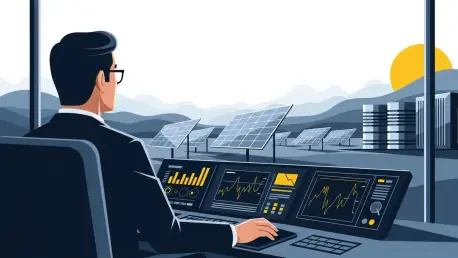

The seamless integration of generative models into everyday corporate workflows has effectively transformed electricity from a background utility into a primary strategic constraint. While software capabilities continue to evolve at an unprecedented pace, the physical infrastructure supporting these advancements has reached a critical inflection point where power availability dictates progress. Organizations that once viewed data center operations as a secondary concern now find themselves navigating a landscape where the scarcity of electrical capacity can delay product launches by months or even years. This shift requires a fundamental reassessment of how digital tools are deployed, moving away from a model of infinite scalability toward one defined by careful resource allocation. As the demand for high-performance computing surges, the global energy grid is being remapped to accommodate the immense thermal and electrical loads generated by the newest generation of processing hardware. To remain competitive, leadership teams must look past licensing and treat electricity as a strategic resource.
The Economic Shifts of Data Center Expansion
The rapid construction of massive data centers is creating a direct impact on the cost of electricity across the domestic market. Because these facilities run high-performance processors and liquid cooling systems around the clock, they place an immense strain on the existing electrical grid that was never designed for such concentrated loads. In regions like the American West and the Northeast, this surge in demand is already contributing to significant price hikes for all utility customers, illustrating a classic struggle between limited supply and skyrocketing demand. This economic ripple effect extends even to businesses that are not heavy users of artificial intelligence themselves. Because most companies share the same regional power infrastructure as massive tech hubs, they are subjected to the same inflationary pressures on their monthly utility bills. Consequently, energy costs are becoming a primary factor in budgeting and profit margin stability, forcing organizations to adopt more proactive management strategies to mitigate rising operational expenses.
Part 1: Utility Inflation and Grid Pressure
The massive scale of current hardware deployments has forced utility providers to rethink their long-term infrastructure investments. In many high-density tech corridors, the existing transmission lines are reaching their thermal limits, necessitating multi-billion dollar upgrades that are often subsidized by rate increases for the general public. This pressure is most evident in regions where legacy coal or gas plants are being retired faster than new renewable sources can be brought online.
As a result, the reliability of the grid has become a point of contention for local manufacturers and service providers who compete with data centers for the same megawatt-hours. While tech giants often have the capital to negotiate favorable rates, smaller enterprises are left vulnerable to the volatility of the spot market. This creates a divided economic landscape where energy security is a luxury afforded only to those with the highest margins, leading to a migration of industrial activity toward areas with more robust or underutilized power generation capabilities.
Part 2: Indirect Financial Burdens for Local Enterprise
Businesses that do not operate their own servers are still finding their balance sheets impacted by the expansion of the digital economy. The cost of local real estate and construction labor has risen sharply in areas where data centers are being built, as these projects consume vast amounts of specialized materials and skilled trade hours. Furthermore, the increased demand for backup power solutions, such as industrial-scale batteries and generators, has led to supply chain bottlenecks that affect anyone trying to maintain resilient operations.
This environment has necessitated a shift in how financial officers approach secondary overhead costs, as electricity is no longer a fixed or predictable expense. Companies are now forced to invest in energy auditing services and power-saving technologies just to maintain their current margins against the rising tide of regional utility costs. This indirect financial burden serves as a reminder that the digital revolution is deeply anchored in the physical world, where the consumption of one resource inevitably affects the availability and price of others across the entire regional ecosystem.
The Shift Toward Sustainable Power Solutions
In a surprising turn of events, the high energy demand of modern computation is actually accelerating the global transition to renewable power sources. To meet their massive electricity needs while staying within strict environmental regulations, technology leaders are investing heavily in solar, wind, and next-generation battery storage. This shift is driven by a combination of economic viability—as renewables become more cost-effective—and the need to meet rigorous Environmental, Social, and Governance standards. Beyond large-scale utility projects, the market is seeing a major rise in the use of Renewable Energy Credits to offset carbon footprints. Smaller businesses are increasingly using these credits to market themselves as sustainable providers, suggesting that environmental consciousness is becoming a key differentiator in the marketplace. Being green is no longer just an ethical obligation; it is a branding tool and a strategic necessity for long-term operational viability in a world where carbon intensity is increasingly penalized by both regulators and the investing public.
Part 1: Renewable Energy as a Strategic Catalyst
Tech giants have transitioned from being passive consumers of green energy to becoming the primary financiers of new renewable projects. By signing long-term power purchase agreements, these companies provide the financial certainty needed for developers to break ground on massive solar arrays and offshore wind farms. This trend has fundamentally changed the risk profile of renewable energy investments, allowing for faster deployment of clean tech that benefits the entire grid rather than just the initial corporate sponsor.
Moreover, the integration of large-scale battery storage at data center sites is helping to solve the intermittency problems traditionally associated with solar and wind power. These facilities can draw power during periods of excess production and feed it back into the grid during peak demand, acting as a stabilizing force for regional utilities. This symbiotic relationship ensures that the expansion of computational power does not necessarily lead to a corresponding increase in carbon emissions, provided that the infrastructure is managed with a focus on long-term sustainability and grid health.
Part 2: The Market Valuation of Environmental Accountability
The rise of “Green AI” as a specific service category reflects a broader shift in consumer and corporate preferences toward low-carbon digital products. Many clients are now demanding transparency regarding the carbon intensity of the models they use, leading to the development of software tools that can track and report energy usage in real-time. This level of accountability is becoming a prerequisite for securing government contracts and large-scale enterprise partnerships, as organizations seek to reduce their Scope 3 emissions.
Consequently, companies that fail to adopt sustainable energy strategies risk being excluded from high-value supply chains. The market is beginning to assign a premium to services that can demonstrate a net-zero or carbon-negative footprint, turning environmental performance into a measurable financial asset. As the industry matures, the ability to balance high-performance computing with a minimal ecological impact will likely become the primary factor that determines which platforms achieve dominant market share and which ones are relegated to secondary status due to their inefficiency.
Maximizing Operational Efficiency and Oversight
Reducing energy waste has emerged as the most immediate and effective way for businesses to combat the rising utility costs associated with modern technology. Industry data shows that a large portion of the energy used in commercial buildings and data centers is wasted through inefficient lighting, outdated climate control, and legacy hardware. By optimizing facility management and adopting energy-efficient processing units, companies can create a financial buffer that protects them against the price volatility of the regional power grid. Successful organizations are also beginning to treat compute time as a finite resource that requires careful auditing and executive oversight. Using specialized dashboards to monitor exactly how much power specific tasks consume allows leaders to eliminate redundant or low-value computations. This proactive approach ensures that digital growth remains both affordable and responsible. Focusing on awareness and alignment with green energy allows an organization to thrive in an increasingly energy-strained world where every watt must be justified by its contribution to the bottom line.
Part 1: Implementing Smarter Resource Management
Modern facility management has evolved into a high-tech discipline where sensor arrays and automated systems work in tandem to minimize power consumption. By implementing smart HVAC systems that adjust cooling based on real-time server loads, operators can significantly reduce the “non-IT” energy overhead of their facilities. These optimizations often pay for themselves within a few months, especially in regions where peak electricity rates have seen double-digit increases over the current production cycle.
Furthermore, the adoption of liquid-to-chip cooling technologies is replacing traditional air-based systems in high-density environments. These advanced thermal management solutions are far more efficient at removing heat from high-performance processors, allowing for greater computational density without a proportional increase in energy usage. This move toward physical efficiency represents a critical step in decoupling business growth from the physical constraints of the power grid, ensuring that facilities can continue to scale even when local utility capacity is limited.
Part 2: Computational Auditing and Task Optimization
The intersection of high-performance computing and energy infrastructure reached a point where passive consumption was no longer a viable strategy for any growth-oriented enterprise. Organizations that thrived in this environment were those that recognized early on that electricity was a volatile asset requiring active management and long-term planning. They moved beyond simple utility bills and began to integrate energy procurement directly into their technology roadmaps, often partnering with local governments to modernize regional grids. This integrated approach allowed them to bypass the inflationary pressures that burdened slower competitors, who found themselves unable to scale their digital initiatives due to local power limitations. The transition focused heavily on creating a resilient ecosystem where software efficiency was balanced against the hard realities of physical infrastructure, ensuring that technological progress did not come at the expense of regional economic stability or environmental integrity.
To prepare for the continued evolution of this sector, forward-thinking leaders established new protocols for auditing every aspect of their digital and physical footprints. These actions included the decommissioning of inefficient legacy systems and the adoption of decentralized energy solutions, such as microgrids, to provide localized stability during periods of high demand. Strategic investments in next-generation cooling and energy-efficient hardware became the standard for maintaining operational viability as the cost of power remained a significant factor in total ownership costs. By prioritizing transparency and sustainability, these companies did more than just lower their overhead; they built a foundation for a new era of digital industrialization that was both economically sound and socially responsible. This shift emphasized that the true measure of a company’s technological prowess was no longer just the complexity of its algorithms, but the efficiency with which those algorithms were powered and sustained over time.