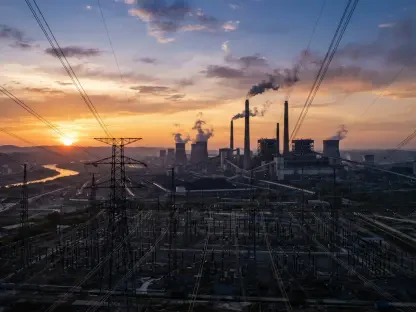

The global energy market is currently witnessing a historic realignment that places India’s economic stability at the center of a high-stakes geopolitical confrontation between major powers. India stands at a critical juncture in 2026, facing an unprecedented energy security challenge that threatens to stall its rapid economic ascent. As the third-largest consumer of crude oil globally, the nation is caught in a geopolitical “double squeeze” orchestrated by shifting foreign policies and escalating volatility in the Middle East. The simultaneous loss of access to Russian crude and the blockade of Iranian supply routes through the Strait of Hormuz have created a precarious supply deficit. This analysis explores whether India’s long-standing doctrine of strategic autonomy can withstand these external pressures or if economic growth is destined to become collateral damage in a broader global power struggle.
The Foundations of Vulnerability: Historical Context and Import Reliance
The current crisis is deeply rooted in a structural dependence on foreign energy markets, a vulnerability that has shaped Indian foreign policy for decades. Historically, the nation has imported over 85% of its crude oil requirements to fuel industrialization and the mobility of its 1.4 billion citizens. This reliance has traditionally forced New Delhi to maintain a delicate balancing act, sourcing energy from a diverse array of suppliers including the Middle East, Africa, and Russia.
Past shifts in the global landscape taught policymakers the importance of diversification, yet the modern landscape is far more complex. The “strategic autonomy” doctrine, which once allowed for free trade with competing global powers, is now being tested by a more assertive international environment. Understanding this background is essential to grasping why the current expiration of sanctions waivers and regional blockades are not just market fluctuations, but existential threats to macroeconomic stability.
The Geopolitical Squeeze and Economic Resilience
The Collapse: Russian and Iranian Supply Lines
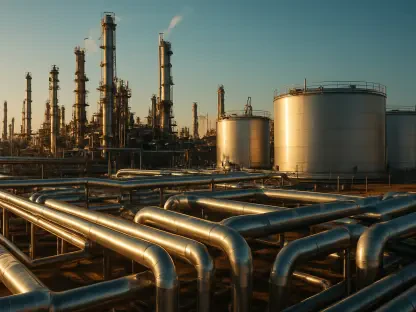
A critical aspect of the current crisis is the sudden evaporation of India’s most reliable energy “safety valves.” For the past few years, Russian oil served as a vital, discounted alternative that shielded the economy from global price spikes. However, with the expiration of specific sanctions waivers in April, refiners lost the legal pathway to procure these heavy volumes. Simultaneously, the blockade of the Strait of Hormuz has severed the Iranian supply line, which was intended to offset global shortages. This dual disruption has removed millions of barrels from reach, leaving the nation to scramble for more expensive and less reliable alternatives.
Macroeconomic Impact: The Shortfall of Strategic Reserves
The consequences of this energy squeeze are already rippling through the domestic economy, as reflected in softening growth projections. High energy prices act as a regressive tax, increasing logistics costs and dampening consumer demand, which has led the Finance Ministry to warn of considerable downside risks to GDP targets. A major complicating factor is the thin margin for error regarding Strategic Petroleum Reserves. Unlike other major powers that maintain massive buffers, the current reserves are estimated to last only 30 days. This lack of a significant storage cushion leaves the domestic market highly susceptible to prolonged disruptions, turning a temporary supply dip into a potential national emergency.
The Erosion: Autonomy Amidst Diplomatic Pressure
Beyond the immediate economic data, there is a deeper concern regarding the systematic constraint of independent decision-making. In recent times, external diplomatic pressure has been utilized to steer New Delhi away from specific energy partners. This creates a “seesaw” effect that forces policymakers into a reactive cycle: when they pivot to the Middle East to satisfy diplomatic demands, regional instability renders those supplies inaccessible; when they return to northern suppliers, they face the threat of secondary sanctions. This dynamic suggests that as the nation aligns more closely with global partners to counter regional rivals, it risks losing the very independence it considers fundamental to its sovereignty.
Emerging Trends: The Future of Energy Security
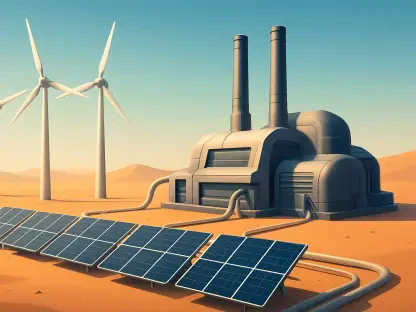
Looking ahead, several trends are likely to redefine the energy landscape. There is an accelerated push toward a total energy transition, with the government likely to double down on green hydrogen and large-scale solar projects to reduce long-term dependence on imported fossil fuels. However, in the immediate term, technological and regulatory shifts will be driven by necessity. Analysts predict that major global powers may eventually offer new, limited waivers to prevent a global inflationary meltdown, but these will likely come with stringent conditions. Furthermore, there is a move to expand storage capacity through private sector partnerships, shifting toward a decentralized model to mitigate the risks of a centralized blockade.
Actionable Strategies: Navigating Energy Volatility
To survive this crisis, a multi-pronged strategy must be adopted that balances short-term survival with long-term structural changes. The priority must be the rapid expansion of strategic reserves and the formalization of long-term supply contracts with neutral producers in South America and Africa. For businesses, adopting energy-efficient technologies and diversifying supply chains away from fuel-intensive logistics is no longer optional but a requirement for survival. Additionally, professionals should prepare for a period of sustained inflation by shifting toward electric mobility and localized energy solutions where possible. Proactive hedging against price volatility will be the hallmark of successful enterprises in this era of uncertainty.
The Long-Term Outlook for a Rising Power
In conclusion, the energy crisis functioned as a definitive test of status as an emerging global power. The convergence of geopolitical maneuvers and regional instability exposed the fragility of a growth model built on imported carbon. The path forward required more than just diplomatic maneuvering; it demanded a fundamental re-evaluation of how the nation secured its essential resources. Whether the government maintained its strategic independence while fueling an economic miracle became the defining question of the decade. Ultimately, the resolution of these challenges reshaped the geopolitical map and established a new framework for resource security in a fragmented world.