
Christopher Hailstone, a seasoned veteran in utilities and grid reliability, brings a wealth of knowledge to the table during a critical turning point for global energy security. As geopolitical tensions disrupt traditional fuel lanes, the conversation around domestic self-reliance has never been more urgent. In this discussion, we explore the strategic pivot from imported Liquefied Petroleum Gas (LPG) to homegrown ethanol, examining how massive industrial investments can transform the humble kitchen into a cornerstone of renewable energy policy. We delve into the logistics of surplus management, the engineering behind high-efficiency burners, and the socioeconomic ripple effects for the agricultural sector, specifically focusing on how decentralized production can empower regional economies.
Recent geopolitical shifts have tightened LPG supplies, forcing a prioritization of household use over commercial needs. With domestic ethanol production capacity reaching 2000 crore liters annually, how can this surplus be diverted to kitchens, and what logistics are needed to transition rural users to this fuel?
The shift toward ethanol is not just a matter of convenience; it is a calculated response to the nearly 240,000 crore that has already been poured into the domestic ethanol industry. We are currently seeing a successful 20% blending level in petrol, which accounts for over 353 crore liters, but the sheer scale of our 2000 crore liter annual capacity means we are sitting on a goldmine of unused potential. Diverting this surplus to kitchens requires a robust distribution network that mirrors the localized nature of the fuel itself, moving away from the heavy infrastructure of centralized gas imports. To successfully transition rural users, we must establish regional supply hubs that reduce the physical distance between the refinery and the stovetop. This creates a resilient energy ecosystem where energy security is maintained even when international markets are in a state of total upheaval.
Ethanol stoves typically produce 1.5 to 3 kW of heat, though the fuel has a lower calorific value than LPG. How do modern burner designs bridge this efficiency gap for daily cooking needs, and what specific cost savings does hydrous ethanol offer by bypassing the dehydration process?
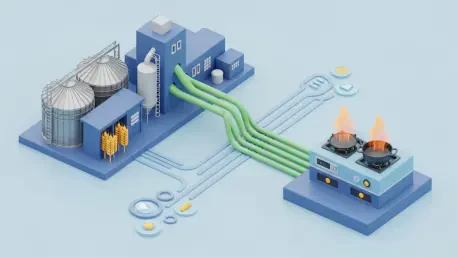
While it is true that ethanol has a lower calorific value on paper, the practical reality of a modern ethanol stove is incredibly impressive, delivering a consistent heat output of 1.5 to 3 kW. This is more than sufficient for the intense heat required in traditional cooking, and advancements in optimized burners ensure that the fuel delivery is both clean and efficient. One of the most exciting aspects of this transition is the use of hydrous ethanol, which eliminates the energy-intensive and expensive dehydration process required for fuel blending. By using the “wet” version of the fuel, we significantly lower production costs, offering a price advantage that can compete directly with commercial LPG. The sensory experience for the user is also improved, as ethanol provides a cleaner combustion with far fewer particulate emissions, making the air in a small kitchen feel much lighter and safer.
A decentralized energy model allows ethanol to be produced and supplied locally rather than through centralized imports. How would this shift specifically benefit regional economies and farmers growing feedstocks like maize or rice, and what steps are necessary to build a reliable local supply chain?
A decentralized model turns the traditional energy hierarchy on its head by placing the power of production directly into the hands of regional stakeholders. Farmers who cultivate rice, maize, and sugarcane stand to benefit the most, as they transition from being simple food producers to vital participants in the national energy value chain. By creating a reliable local supply chain, we ensure that the value generated from these crops stays within the community rather than being exported to foreign oil-producing nations. This requires a coordinated effort to build small-scale processing units and local storage facilities that can handle the projected increase in production capacity to over 2400 crore liters by 2026-27. When a farmer sees their surplus grain being converted into the very fuel they use to cook their family’s dinner, it creates a sense of pride and economic stability that is hard to overstate.
Moving from petrol blending to household cooking requires new safety and performance standards for cookstoves. What specific regulatory frameworks must be established to protect consumers, and how will technical prototypes and white papers help validate these solutions for large-scale adoption in semi-urban environments?
Transitioning a fuel from an industrial engine to a kitchen environment requires a rigorous focus on consumer safety and standardized performance metrics. We need the Ministry of Petroleum & Natural Gas to establish a clear policy framework that defines the exact quality and safety benchmarks for ethanol-powered cookstoves. Collaborating with premier institutes to develop detailed white papers and technical prototypes is a crucial first step, as these documents provide the data-driven validation needed for mass-market confidence. These prototypes will undergo stress tests to ensure they can handle the daily rigors of semi-urban life, providing a blueprint for manufacturers to scale up production. Once these standards are in place, the path to adoption becomes much clearer, allowing institutional kitchens and small food businesses to make the switch with total peace of mind.
What is your forecast for ethanol-based cooking solutions?
My forecast is that ethanol will evolve from a niche “green” alternative into a primary pillar of our domestic energy mix within the next three to five years. As our production capacity climbs toward that 2400+ crore liter milestone, the economic pressure to find new demand avenues will make ethanol stoves a common sight in both rural households and commercial food stalls. We will likely see a phased rollout where semi-urban areas lead the charge, followed by a massive rural expansion fueled by decentralized local refineries. This shift will not only stabilize our energy costs but also provide a critical buffer against the volatile swings of the global LPG market. Ultimately, the sight of a clean-burning ethanol flame will become a symbol of our national resilience and our commitment to a self-reliant, sustainable future.