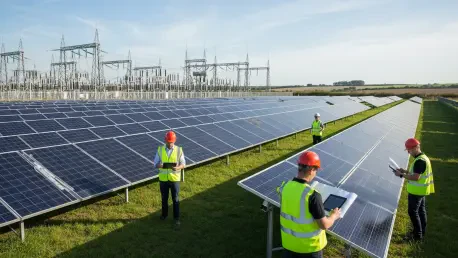

The rapid acceleration of the United Kingdom’s transition toward a decentralized energy grid has fundamentally altered the risk appetite of global infrastructure funds and independent power producers seeking stable returns. As the nation pushes toward its ambitious decarbonization milestones, the traditional model of developing solar farms from scratch has begun to lose favor among those who lack the patience for multi-year planning hurdles. Instead, a distinct preference for Ready-to-Build (RTB) projects has emerged as the gold standard for immediate capital deployment. These projects, which have already secured planning consent and grid connection agreements, offer a streamlined pathway to generation that minimizes the volatility associated with early-stage development. This shift signifies a maturing market where the value of a project is no longer tied solely to its potential capacity, but rather to the certainty of its delivery. Consequently, the premium on RTB assets has reached record levels as the industry pivots.
Eliminating Bottlenecks: The Value of Permission and Connectivity
The primary driver behind the surge in RTB demand is the sheer complexity of navigating the British planning system, which has become increasingly restrictive for large-scale utility projects. Developers often spend years negotiating with local authorities and community stakeholders to secure the necessary permissions, a process fraught with legal challenges and local opposition. By purchasing a project that has already cleared these regulatory hurdles, an investor effectively buys out the most significant time-based risk in the development cycle. This allows for a much more accurate financial forecast, as the project timeline becomes a matter of procurement and construction rather than bureaucratic uncertainty. Furthermore, the specialized nature of early-stage land rights and environmental impact assessments means that only a few developers can handle these tasks effectively. The transition to RTB allows institutional players to focus on their core competency of long-term asset management rather than local development logistics.
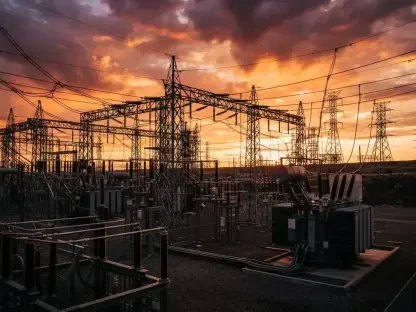
Grid connectivity remains the most formidable barrier to entry for new solar installations across the United Kingdom, making any project with a secured connection date a highly valuable commodity. The national transmission and distribution networks are currently grappling with a massive backlog of connection requests, with some projects facing wait times that extend well into the late 2020s or beyond. In this environment, a Ready-to-Build project with an active grid offer and a confirmed energization window represents a rare opportunity for immediate market entry. Investors are willing to pay a significant premium for these assets because they provide a clear and definitive timeline for when the facility can start exporting power and generating revenue. Without a secured grid connection, even the most technologically advanced solar array remains a stranded asset, unable to fulfill its economic potential. This bottleneck has forced a strategic reconfiguration of the market, where the secondary trade of connected sites is the engine.
Strategic Asset Management: Maximizing Throughput and Portfolio Value
Institutional investors, including pension funds and large insurance firms, are increasingly pressured by environmental, social, and governance (ESG) mandates to deploy massive amounts of capital into renewable infrastructure within tight windows. These organizations typically do not have the internal expertise or the risk tolerance required to manage a portfolio of speculative, early-stage solar developments. By focusing on RTB assets, these funds can aggregate large-scale portfolios of high-quality projects that are ready for immediate construction, thereby meeting their sustainability targets much faster than through organic development. This strategy also simplifies the financing process, as banks and lenders are far more likely to offer favorable terms for projects where the technical and legal risks have already been mitigated. The ability to deploy capital efficiently across a diverse range of geographies within the UK allows these institutional players to hedge against localized weather patterns or regional grid outages during production.
To thrive in this evolving landscape, market participants prioritized the standardization of technical due diligence and fostered closer relationships with transmission system operators to navigate the grid queue effectively. Industry leaders moved toward more transparent data-sharing practices, which reduced the time required for asset evaluation and accelerated the closing of complex transactions. Developers who invested in high-resolution topographical mapping and advanced environmental modeling at the earliest stages consistently commanded higher valuations for their RTB portfolios. Strategic partnerships between landholders and infrastructure funds also became a primary method for securing the long-term viability of solar sites across diverse UK regions. Those who ignored the necessity of early-stage risk mitigation quickly found themselves sidelined by competitors who could offer turnkey solutions to institutional buyers. Moving forward, the focus shifted toward maximizing the efficiency of the land through bifacial modules.