
Christopher Hailstone brings decades of high-level experience in energy management and electricity delivery to our discussion today, serving as a vital voice on the intricacies of grid reliability. As global energy consumption patterns shift toward decentralization, his insights into how companies navigate seasonal spikes and infrastructure scaling are more relevant than ever. This conversation explores the impressive operational surge seen in the first quarter of the fiscal year, touching on the strategic expansion of distribution networks and the move toward more robust in-house manufacturing. We delve into the logistics of modern energy storage, the introduction of advanced solar power conditioning units, and the critical role of localized service centers in maintaining consumer confidence during extreme weather events.
With sales reaching 118,000 units during the first quarter, how do you interpret the current climate of the energy market and the specific factors driving such a significant volume of transactions for home power solutions?
The sheer volume of selling 1.18 lakh units in a single quarter signals a profound shift in how residential and commercial users perceive energy security. We are seeing a market that is no longer satisfied with passive reliance on the central grid, especially when you consider the sweltering temperatures that gripped northern India recently. When the mercury rises and electricity consumption peaks, the immediate, palpable relief provided by home UPS systems and solar panels becomes a necessity rather than a luxury. This demand is bolstered by a growing preference for solar power conditioning units (PCUs) that allow families to harness the sun’s intensity while ensuring their batteries remain charged for the long, humid nights. It is a sensory transition from the anxiety of a flickering light bulb to the quiet, steady hum of a reliable power backup system.
The expansion into nine states with thirty-two new distributors suggests a massive logistical undertaking. Could you elaborate on how scaling infrastructure, such as the new 5,200 square-foot warehouse, changes the game for energy providers trying to meet seasonal surges?
Expanding a footprint across North, East, West, and South India by onboarding 32 new distributors is a calculated move to eliminate the distance between the product and the person who needs it most. By commissioning a 5,200 square-foot warehouse in Gurugram, the logistics chain becomes much more responsive, allowing for a buffer against the chaotic spikes in demand we often see during peak seasons. You can imagine the floor of such a facility, stacked high with batteries and solar components, ready to be dispatched the moment a heatwave is forecasted. This infrastructure doesn’t just improve inventory management; it provides a strategic stronghold in northern and north-western markets, ensuring that “out of stock” is a phrase consumers rarely hear. Efficient warehousing is the backbone of reliability, turning a fragmented supply chain into a streamlined delivery engine.
Achieving a record in-house production of approximately 6,600 battery units in a single month at the Baddi facility is a major milestone. What does this internal manufacturing push signify for the broader reliability of the power grid and consumer trust?
Hitting a production high of 6,600 units in June 2026 at the Baddi plant in Himachal Pradesh is a testament to the power of localized manufacturing. When a company takes control of its production line, it isn’t just about the numbers; it is about the meticulous oversight of every cell and circuit that goes into a storage solution. This in-house capability creates a direct feedback loop between the engineering floor and the end-user, fostering a level of trust that outsourced components simply cannot match. As they progress with the development of even more manufacturing facilities, they are essentially building the “muscles” of the energy grid, one battery at a time. The rhythm of the assembly line and the sight of hundreds of units passing quality checks every day give consumers the peace of mind that their energy resilience is backed by rigorous operational excellence.
Innovation seems to be at the heart of this growth, particularly with the launch of the HELIX 1100–1250 series. In your view, how do these technological advancements and the expansion of service capabilities redefine the relationship between energy companies and their customers?
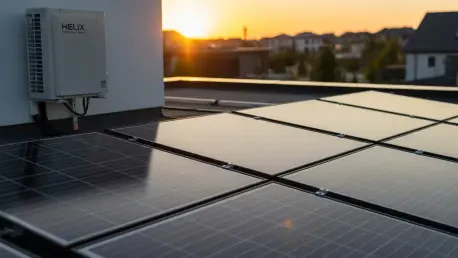
The introduction of the HELIX 1100–1250 series, specifically featuring MPPT-based solar power conditioning units, represents a significant leap in how efficiently we can harvest renewable energy. By adding these and two new battery models to the portfolio, the company is effectively giving users more sophisticated tools to manage their own energy needs at home. However, the technology is only half the story; the expansion of in-house after-sales service and franchise centers ensures that the relationship doesn’t end at the point of sale. There is an emotional component to knowing that if a system falters, a trained technician from an established service network is available to restore power quickly. It turns the purchase of a solar unit from a one-time transaction into a long-term partnership focused on sustained energy independence and localized support.
What is your forecast for the future of residential solar adoption as companies continue to scale their manufacturing and distribution so aggressively?
I anticipate that the residential solar sector will move from being an “emergency backup” market to the primary energy source for millions of households. As production capacities increase and distribution networks become as common as grocery chains, the cost of entry will drop while the sophistication of energy storage systems, like the HELIX series, will continue to climb. We are moving toward a reality where every rooftop is a miniature power plant, and every garage houses a high-capacity battery, making the traditional grid a secondary safety net rather than the sole provider. This democratization of power will be driven by the infrastructure we see being built today, creating a more resilient, sun-powered society that is largely immune to the traditional causes of blackouts. The momentum we are seeing now is just the foundation for a much larger, greener revolution in how we live our daily lives.