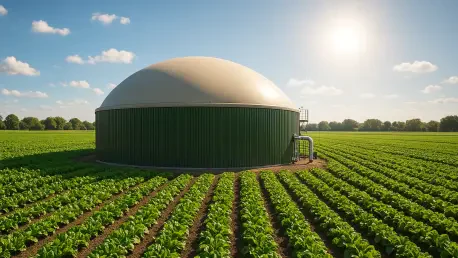

Christopher Hailstone joins us today, a veteran in the utilities sector whose expertise in grid reliability and renewable integration has shaped modern energy management. With his deep understanding of how we can turn waste streams into stable power sources, he offers a unique perspective on projects like the one in Naivasha, where agriculture and electricity generation merge. His work focuses on the intersection of security and sustainability, ensuring that decentralized systems can withstand the demands of industrial-scale operations.
Vegpro’s Naivasha facility processes 45,000 tonnes of vegetable waste into biogas to power daily farm operations. What are the specific technical challenges of maintaining this scale of production, and how do you ensure a consistent methane output for reliable electricity generation?
Managing 45,000 tonnes of organic matter is a massive logistical dance that requires precise biological monitoring. When you are dealing with that volume of vegetable waste, the biggest hurdle is maintaining the delicate bacterial balance inside the digesters to keep the methane production from plummeting. We ensure a consistent output by carefully monitoring the feedstocks to keep the carbon-to-nitrogen ratio stable, effectively turning a pile of scraps into a predictable fuel source. It is incredibly rewarding to walk through the facility and hear the steady hum of generators, knowing that yesterday’s harvest waste is literally keeping the lights on today.
Incinerating municipal waste can reduce its volume by up to 96% while generating approximately 500 kWh of electricity per tonne. Beyond volume reduction, what are the primary economic trade-offs when choosing incineration over traditional landfilling, and what pollution-control measures are most critical for safety?
The shift from landfilling to incineration is a heavy financial lift upfront, as the capital cost for a high-efficiency plant is significant compared to digging a hole in the ground. However, you gain a massive advantage by generating 500 kWh for every tonne processed, which offsets the facility’s operational costs and provides a steady revenue stream. Safety is non-negotiable here, so we implement rigorous scrubbing systems and fabric filters to capture particulate matter and neutralize gases before they ever leave the stack. There is a profound sense of relief in seeing a 96% reduction in physical waste, knowing that the remaining ash is just a fraction of the environmental burden of a traditional landfill.
Gasification and pyrolysis convert wood and plastic waste into a gas mixture of carbon monoxide and hydrogen. How do these thermal processes differ from anaerobic digestion in terms of infrastructure requirements, and which specific waste compositions are best suited for these high-temperature technologies?
While anaerobic digestion is a slow, biological process, gasification and pyrolysis are high-intensity thermal events that require sophisticated reactors capable of handling extreme heat without oxygen. The infrastructure is much more complex, involving specialized cooling and cleaning systems for the resulting hydrogen and carbon monoxide gas mixture. These technologies are best suited for “dry” wastes like wood scraps and plastics that do not break down easily in a standard biogas digester. It is fascinating to see how we can take a piece of rigid plastic or a discarded timber beam and chemically disassemble it into high-energy gases that rival traditional fuels in utility.
Transitioning to on-site energy production requires a tight integration between agricultural waste management and power systems. What step-by-step protocols should a facility implement to move from simple waste disposal to a fully circular energy model, and what metrics define a successful transition?
To move toward a circular model, a facility must first conduct a thorough audit of their waste streams, quantifying exactly how much vegetable matter or horticultural debris they generate weekly. The next step is installing the infrastructure to capture and process that waste on-site, followed by integrating the power output directly into the local grid or farm equipment. Success is defined by the displacement of external energy purchases and the stability of the on-site power load. It is about creating a closed loop where the farm feeds the energy plant, and the energy plant, in turn, powers the very harvest that created the waste.
High-reduction waste streams often contain significant amounts of paper, cardboard, and horticultural waste. In regions where waste composition varies seasonally, how can energy recovery systems be adjusted to maintain efficiency, and what anecdotes can you share regarding the impact of contaminated feedstocks?
Seasonal variations can be a headache; for instance, a sudden influx of paper and cardboard during peak shipping months can spike the heat value of your feedstock, requiring us to adjust the combustion air or feed rates. Contamination is the silent killer of these systems, and I have seen instances where metal or glass impurities made their way into a thermal reactor, causing expensive slagging that forced a complete shutdown. You can feel the frustration of the engineering team when a perfectly good batch is ruined by a few stray non-combustibles. To maintain efficiency, we use pre-sorting protocols that act as a gateway, ensuring only the 95% or 96% reducible material makes it into the heart of the system.
What is your forecast for the future of decentralized waste-to-energy systems in the global agricultural sector?
I forecast a massive shift toward localized energy independence, where facilities like the 45,000-tonne plant in Naivasha become the global standard rather than the exception. As the cost of grid electricity fluctuates, farms and municipalities will realize that their waste is actually a high-value asset that can provide 500 kWh of energy per tonne. We are going to see a “micro-grid revolution” where the physical distance between waste generation and power consumption disappears entirely. It is a future where the smell of compost or the sight of wood scraps represents not a disposal problem, but the security of a reliable, self-sustaining power supply.