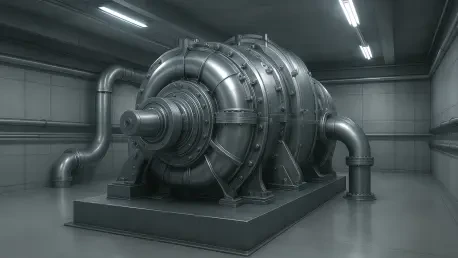

The machine hall at the Boundary Hydroelectric Project was created by excavating five hundred thousand cubic yards of rock from a limestone cavern. This staggering feat of engineering is just one example of how the United States has tucked its most vital energy infrastructure deep within the bedrock of its mountain ranges. While the soaring crests of dams and the expansive blue of reservoirs often capture the public’s imagination, the true mechanical heart of these facilities—the massive turbines and high-voltage generators—operates in total darkness, shielded by millions of tons of ancient stone. These subterranean structures are not merely basements for machinery; they are highly sophisticated intersections of geology and advanced technology, meticulously designed to solve the persistent challenge of balancing the national energy supply with the volatile nature of consumer demand. By moving water between reservoirs at different elevations, these facilities act as “water batteries,” storing potential energy during periods of low usage and discharging it with incredible precision when the electrical grid faces its heaviest loads.
The Titan: Tennessee Valley Authority Operations
Beyond the visible landmarks of the American South, the Tennessee Valley Authority has mastered the art of hiding massive industrial power within the natural landscape. These projects were born from a need to provide reliable electricity to a rapidly growing industrial corridor, leading to some of the most ambitious excavation projects in the history of the Western Hemisphere. The geological profile of the region, rich in stable limestone and deep river valleys, provided the perfect canvas for engineers to design facilities that could withstand both environmental extremes and the immense pressures associated with high-capacity hydroelectric generation. This strategic placement ensures that the core components of the energy grid are protected from surface-level threats while utilizing the natural structural integrity of the mountains to support equipment that weighs hundreds of tons.
Subterranean Scale: The Raccoon Mountain Complex
The Raccoon Mountain Pumped-Storage Plant, located near Chattanooga, serves as a premier example of how subterranean architecture can reach staggering proportions. To construct the facility, workers in the 1970s carved a powerhouse chamber nearly one thousand feet below the surface of the mountain’s upper reservoir. This cavernous hall is roughly the size of a football field and was designed to house four massive reversible pump-generators. The excavation was a logistical triumph, requiring the removal of millions of pounds of rock to create a space that could remain stable under the weight of the mountain above. The resulting environment is a sterile, temperature-controlled vault where the hum of industrial progress is the only sound, far removed from the wooded trails and wildlife that occupy the mountain’s surface.
To facilitate the movement of both water and technical personnel, engineers bored approximately twelve thousand feet of tunnels through the limestone mass. Access to this hidden industrial world is granted through a specialized portal on the north side of the mountain, leading down a winding road that descends deep into the earth’s crust. This network of tunnels is not just for access; it includes massive penstocks and tailrace tunnels that must manage the hydraulic forces of thousands of gallons of water rushing through the system every second. The precision required to align these tunnels with the powerhouse while maintaining the structural integrity of the surrounding rock remains a benchmark for civil engineering projects worldwide, especially as the facility continues to operate at peak efficiency decades after its initial completion.
Operational Dynamics: Grid Stability and Peak Management
The operational rhythm of Raccoon Mountain is dictated by the pulse of the regional electrical grid, functioning as a critical buffer against instability. During the night, when the demand for electricity drops and surplus power is available from other sources, the plant enters its “pumping mode.” Using this excess energy, the reversible units spin backward to push water from the Nickajack Reservoir up the mountain into an upper pool held behind a massive rockfill dam. This process effectively stores energy in the form of water elevation, waiting for the moment when the grid requires an immediate infusion of power. It is a seamless transition between consuming and generating energy that allows the Tennessee Valley Authority to maintain a steady and reliable supply for millions of residents and industrial partners.
When the sun rises and the demand for power spikes—driven by morning routines and the activation of heavy machinery across the region—the plant switches to its “generation mode.” The gates at the upper reservoir are opened, and gravity pulls the water down through the mountain’s internal shafts at high velocity. As this water strikes the turbine blades, it generates up to 1,700 megawatts of electricity, which is then fed back into the grid within minutes. This “instant-on” capability is far superior to traditional coal or nuclear plants, which can take hours or even days to reach full capacity. By acting as a massive flexible reservoir of power, Raccoon Mountain ensures that the regional energy infrastructure can handle the most extreme peaks in consumption without the risk of blackouts or brownouts.
Innovation: The Blue Ridge and New England Frontier
Moving toward the East Coast, the engineering focus shifts toward maximizing the efficiency of high-head systems in diverse geological settings. From the granite-rich foothills of South Carolina to the rugged ridges of Massachusetts, these facilities have been continuously adapted to meet the demands of a changing energy landscape. The focus here has transitioned from simple power generation to the strategic integration of renewable energy sources, utilizing the natural verticality of the landscape to compensate for the intermittent nature of wind and solar production. These plants are no longer just supporting traditional power sources; they are the primary stabilizers that allow for the widespread adoption of green technology across the modern electrical grid.
Modernization: The Evolution of Bad Creek
The Bad Creek Hydroelectric Station in South Carolina stands as the modern benchmark for efficiency and technological adaptation. Carved into a massive granite formation with a vertical drop of 1,200 feet between its reservoirs, the facility provides an immense amount of hydraulic pressure to its generating units. Recently, the station completed a comprehensive five-year modernization project that concluded in 2024, which significantly enhanced its operational capabilities. This upgrade involved the replacement of aging internal components with high-efficiency turbines and updated control systems, adding 320 megawatts to the plant’s total capability. The result is a facility that produces approximately 1,680 megawatts, making it one of the most powerful and reliable energy storage sites in the United States.
The modernization of Bad Creek is particularly vital for the ongoing transition toward a carbon-neutral energy grid. Duke Energy, the facility’s operator, utilizes the plant to absorb the massive amounts of surplus electricity generated by solar farms during peak daylight hours. Without a place to store this energy, much of the solar production would be wasted when it exceeds the grid’s immediate needs. By pumping water into the upper reservoir during the day, Bad Creek “saves” that solar energy for use after the sun sets. When solar production drops off in the evening, the stored water is released to fill the gap, ensuring that the transition to renewable energy does not compromise the stability of the power supply. This synergy between subterranean engineering and surface-level renewables represents the future of national energy policy.
New England Reservoirs: Northfield Mountain and Bear Swamp
In the northern reaches of the United States, the Northfield Mountain and Bear Swamp facilities provide the heavy-duty storage required to keep the New England power grid functional. Northfield Mountain, completed in 1972 and located in Massachusetts, remains the largest energy-storage facility in the region. Its powerhouse is buried deep within a wooded ridge, leaving the surface nearly untouched and available for public recreation. This dual-use approach highlights the environmental benefits of underground construction; while the facility can power over one million homes for several hours, the local ecosystem remains undisturbed. The intricate system of pressure shafts and penstocks connects the high-elevation reservoir to the Connecticut River, allowing for rapid response to fluctuations in regional power demand.
Further along the Deerfield River, the Bear Swamp facility demonstrates a different approach to subterranean design, focusing on verticality to overcome geological constraints. The powerhouse cavern at Bear Swamp is uniquely shaped, standing more than twice as tall as it is wide to accommodate two reversible Francis units. This design allows the plant to provide a robust 666 megawatts of capacity despite a smaller horizontal footprint. The vertical arrangement of the machinery is a direct response to the narrow, steep-walled canyons of the region, proving that engineers can adapt the layout of an underground plant to fit the specific rock formations available. Together, these New England sites act as the primary defense against the sudden shifts in weather and demand that characterize the region’s energy market.
Challenges: Western Geography and Resource Management
The mountainous terrain of the Western United States offers some of the most dramatic elevation changes in the country, providing ideal conditions for high-head hydroelectric projects. However, the region also presents unique challenges, including the need to excavate through massive granite formations and the increasing impact of climate-driven hydrological shifts. The facilities in this region are not only engineering marvels but also front-line indicators of how energy infrastructure must adapt to environmental change. From the Sierra Nevada to the Pacific Northwest, these plants are being pushed to their limits as they balance the need for reliable power with the realities of water scarcity and the rapid expansion of variable renewable energy.
Granite Vaults: Sierra Nevada and Oroville Operations
California’s Helms Pumped Storage Plant represents a pinnacle of granite excavation, located deep within the Sierra Nevada mountain range. To access the powerhouse, which sits 1,100 feet below the surface, personnel must navigate a 3,723-foot access tunnel bored through some of the hardest rock on the planet. This facility moves water between Courtright Lake and Lake Wishon, serving as a vital stabilizer for a state that has invested heavily in wind and solar power. Since its commissioning in 1984, the Helms plant has been essential for managing the “duck curve” in California’s energy demand, where solar production exceeds consumption during the day but drops off sharply just as evening demand begins to climb. The plant’s three vertical units provide the necessary inertia to keep the state’s grid balanced.
However, the Edward Hyatt Powerplant, integrated into the massive Oroville Dam, serves as a sobering reminder of the limitations of hydroelectric power in an era of shifting climates. While the facility’s underground machinery is a masterpiece of 1960s engineering, its operation is entirely dependent on the surface-level hydrology of Lake Oroville. In 2021, the plant was forced to go offline for the first time in its history due to historically low water levels that reduced the “head” below operational requirements. Although generation resumed after subsequent winter storms, the event highlighted a critical vulnerability: even the most advanced subterranean technology cannot function without adequate water resources. This reality is forcing grid operators to rethink how they manage these “mountain batteries” during periods of prolonged drought.
Boundary Project: Efficiency in the Pacific Northwest
The Boundary Hydroelectric Project in Washington State offers a distinct variation on the underground theme. Unlike the pumped-storage facilities that dominate the landscape elsewhere, Boundary is a traditional “run-of-river” plant. However, it utilizes a massive limestone cavern to house its machinery for reasons of spatial efficiency and structural protection. Located on the Pend Oreille River, the machine hall was once the largest underground powerhouse in the world. By placing the turbines and generators inside the mountain adjacent to the 340-foot arch dam, engineers were able to maximize the power output from a narrow, steep-sided canyon where surface space was non-existent. This configuration allows the plant to provide up to 35 percent of the electricity used by the city of Seattle.
The success of the Boundary project underscores the versatility of underground construction beyond the scope of energy storage. The limestone cavern provides a stable, protected environment for the generators, shielding them from the harsh winter weather of the Pacific Northwest and the potential for rockfalls from the surrounding cliffs. The project proves that subterranean housing is often the most logical choice for hydroelectric facilities located in rugged terrain, regardless of whether they are designed for pumping or simple generation. As urban centers like Seattle continue to grow, the ability to generate high volumes of clean electricity from a compact, hidden site remains a cornerstone of the region’s sustainable development goals, demonstrating that the oldest underground sites are still among the most effective.
Legacy: The Future of Subterranean Energy Strategy
The enduring success of these underground facilities is rooted in their foundational reliance on the geological properties of the earth itself. By utilizing stable rock formations like granite and limestone, engineers have created structures that are inherently more durable than any surface-level building. This structural stability is combined with a strategic advantage: the ability to provide “peak shaving” and “instant-on” power. In a world where the electrical grid is becoming increasingly complex and reliant on intermittent sources, these hidden giants provide the physical inertia and storage capacity necessary to prevent system-wide failures. They are the silent sentinels of the American energy landscape, operating without the need for constant public attention or visual intrusion.
Foundations: Geological Stability and Strategic Value
The geological consensus among energy providers is that the host rock of these facilities is their most valuable asset. The immense pressure exerted by the water columns and the vibrations generated by massive turbines require a level of containment that only the Earth’s crust can provide. This natural armor also protects the machinery from natural disasters and human-caused threats, making these sites some of the most secure points in the national infrastructure. Furthermore, the longevity of these facilities is unparalleled; because the primary “building” is the mountain itself, the structures do not degrade in the same way as steel or concrete surface plants. This allows for a cycle of internal upgrades where only the mechanical and electronic components need to be replaced, extending the life of the plant indefinitely.
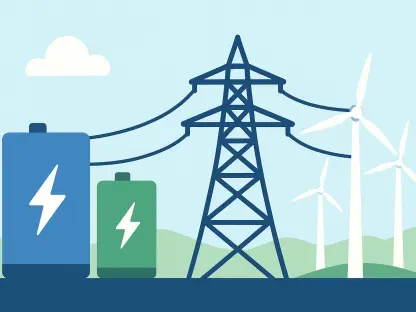
The strategic value of these plants has only increased as the energy market has evolved. While they were originally built to support coal and nuclear baseloads, they have found a new and even more critical purpose in the age of renewable energy. Their ability to switch from pumping to generating in a matter of minutes makes them the perfect partner for wind and solar farms. By absorbing excess energy and releasing it during peaks, they solve the “intermittency problem” that has long been the primary obstacle to a fully renewable grid. This role as a stabilizer is not just a technical function; it is an economic one, as it reduces the need for expensive and environmentally taxing “peaker plants” that burn natural gas.
Integration: Navigating the 2026 Energy Transition
As the energy sector progressed through 2026, the integration of these “mountain batteries” became the primary focus for grid operators looking to achieve carbon-neutrality. The shift in energy policy necessitated a move away from fossil-fuel-based stability toward mechanical storage solutions that could handle the massive influx of renewable power. Engineers realized that the existing fleet of underground plants represented a pre-built solution to the storage challenges of the modern era. This realization sparked a wave of modernization efforts across the country, focusing on upgrading the efficiency of the pumps and the responsiveness of the control systems. These enhancements allowed the facilities to participate more actively in the daily balancing of the grid, responding to fluctuations in wind speed and cloud cover in real-time.
The evolution of these sites showed that the most effective solutions to modern problems were often found in the robust engineering of the past. The industry moved toward a hybrid model where underground hydroelectric storage worked in tandem with emerging battery technologies to create a multi-layered defense against grid instability. The shift also prompted renewed interest in identifying new sites for subterranean pumped storage, particularly in regions where the transition to renewables was most aggressive. By looking back at the massive excavations of the 20th century, modern planners found the blueprint for a resilient and sustainable future. The success of these projects proved that the intersection of human ingenuity and the natural landscape remained the most powerful tool available for securing the nation’s energy future.