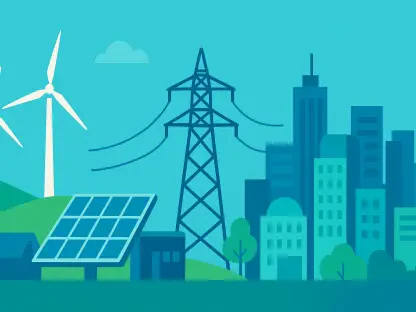

The sudden and aggressive reallocation of global capital from sustainable infrastructure toward the massive computational requirements of artificial intelligence has created a volatile economic environment where previous environmental commitments are being discarded in favor of silicon dominance. This shift represents more than just a change in investment strategy; it is a fundamental restructuring of how nations prioritize their long-term survival against immediate competitive advantages. As massive data centers begin to dominate the landscape, the promises of a green transition are being tested by the insatiable power demands of neural networks and large language models. The financial gravity of the AI sector is pulling resources away from traditional sectors, leaving a wake of abandoned projects and a workforce struggling to adapt to a reality where human labor is often viewed as a secondary concern to processing power. This tension defines the current decade, as the world balances the promise of digital intelligence against the physical needs of the planet.
Political Reversals and the Social Cost of Energy Shifts
A significant departure from climate-focused trajectories has manifested in the systematic dismantling of large-scale wind power initiatives across the American landscape. Billions of dollars in federal funds are currently being funneled into the cancellation of existing offshore contracts and the freezing of active permits, a move that effectively halts the progress of a greener power grid. This reversal involves using public resources to buy out private developers, ensuring that these companies remain solvent while their physical projects are left to rust or are never started at all. Policymakers argue that this strategic adjustment is necessary to stabilize energy prices and refocus on more immediate technological needs, yet the sheer scale of these buyouts highlights a massive waste of previous years’ investments. Instead of building the turbines that were supposed to power the future, the government is now paying to make them go away, signaling a major victory for short-term fiscal planning over the goal of total energy independence.
Beyond the stalled infrastructure lies a more personal crisis for the thousands of unionized workers who were trained for a renewable energy revolution that is now being abruptly paused. These specialized professionals, from turbine technicians to marine engineers, find themselves in a state of economic limbo as their roles are eliminated through no fault of their own. The threat is twofold: the immediate loss of high-paying union wages and the long-term risk that their highly specific certifications will become obsolete before they can even be utilized in the field. This situation represents a catastrophic failure in the social component of Environmental, Social, and Governance standards, as public money is prioritized for corporate protection while the labor force is left without a safety net. The displacement of these workers raises difficult questions about the sincerity of a “just transition” when the workers themselves are the first to be sacrificed. Without a clear path to redeploy this specialized talent, the industrial knowledge base required is eroded.
Corporate Restructuring and the Dominance of AI Infrastructure
Within the corporate sphere, the race for semiconductor dominance is fracturing internal company cultures and creating significant labor unrest at tech giants like Samsung. The disparity in compensation and bonuses between high-demand chip manufacturing divisions and traditional departments has led to historic strikes and a breakdown in organizational cohesion. When one segment of a workforce is rewarded with massive incentives while others face stagnation or layoffs, the resulting friction threatens the very export consistency that these global firms rely on. This internal competition for resources is mirrored at Microsoft, where the gaming division has faced significant downsizing to free up capital for AI-driven hardware and cloud infrastructure projects. Legacy departments that once defined a company’s brand are now being treated as secondary assets, illustrating a broader trend where historical revenue streams are sacrificed to feed the growing appetite of generative intelligence models and the massive server farms required to host them.
The pivot is further evidenced by the migration of hardware resources away from volatile sectors such as cryptocurrency mining toward more stable, long-term AI hosting partnerships. Firms that previously dedicated vast amounts of processing power to Bitcoin are now restructuring their entire business models to secure lucrative leases with AI developers. In this new environment, the demand for specialized chips and cooling systems far exceeds the available supply, making existing data centers more valuable than the digital assets they were originally built to produce. This shift has transformed the landscape of the technology market, as companies that were once market leaders in consumer electronics or decentralized finance find themselves relegated to the role of infrastructure providers. The reallocation of these physical resources ensures that the development of AI remains the primary driver of global economic activity, but it also means that other technological innovations are being sidelined or delayed in the current cycle from 2026 to 2028.
The realization that technological progress could not be sustained without a stable social foundation eventually prompted a reevaluation of how AI and labor were integrated. Policy leaders recognized that decoupling energy needs from green initiatives was a strategic error that increased long-term operational costs for data centers. They established new frameworks where AI developers were required to invest directly in the retraining of displaced energy workers, ensuring that the labor force evolved alongside the technology. Furthermore, the integration of modular nuclear reactors and localized microgrids became a mandatory component for new server farms, which effectively mitigated the strain on the public grid and prevented energy price spikes for local communities. Corporations that succeeded in this transition were those that prioritized transparent bonus structures to maintain internal morale and prevent the brain drain associated with division-based favoritism.