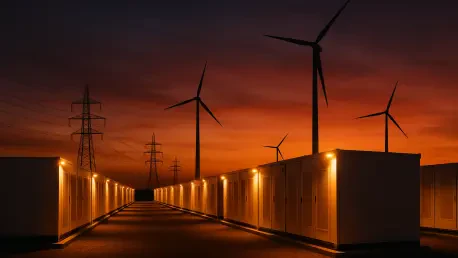

Ireland’s ambitious transition toward a fully decarbonized power grid hinges on the ability to capture and deploy electricity with surgical precision during periods of high demand and low generation. Global energy systems are rapidly pivoting toward Battery Energy Storage Systems (BESS) to solve the inherent variability of renewable power. In North Mayo, the Mullafarry project serves as a definitive case study in how existing industrial sites can be repurposed for the next generation of energy infrastructure. By situating the new 320 MWh facility adjacent to the Tawnaghmore Power Station, SSE leverages existing grid connections and minimizes the environmental footprint of new construction. This strategy of colocation allows for immediate integration into the national network, providing a blueprint for utility-scale efficiency.
The Growing Role of Utility-Scale Storage in Modern Power Grids
The significance of the Mullafarry project extends beyond its local impact, positioning it as a cornerstone of national energy security. Ireland’s commitment to carbon reduction requires a technological landscape that can support large-scale lithium-ion storage solutions. These systems act as a critical shock absorber for the grid, absorbing excess energy from wind farms and releasing it when the wind stops blowing. By optimizing land use through proximity to existing power infrastructure, the project ensures that the transition to green energy remains both economically viable and physically feasible.
Strategic Drivers and Market Dynamics Shaping the Irish Energy Sector
Technological Advancements and the Demand for Long-Duration Storage
The technical shift from short-burst frequency response to four-hour reserve capacity marks a maturation of the Irish energy market. Modern storage solutions now prioritize depth over speed, ensuring that the grid can withstand prolonged lulls in wind activity. To protect these high-density assets, the Mullafarry facility will employ advanced HVAC systems to manage thermal loads, preventing degradation and ensuring safety over its operational lifespan. This evolution is crucial for maintaining the stability of the Northwest region as it becomes a hub for renewable generation.
Projecting Growth and Economic Contributions within the Regional Market
Beyond grid stabilization, the 80 MW output of the Mullafarry project acts as a hedge against volatile electricity prices by providing a flexible buffer during peak usage. The financial commitment by SSE represents a significant injection of capital into the Mayo economy, promising a two-year construction phase from 2026 to 2028 that will stimulate local employment. Long-term commercial rate payments will further support regional public services, creating a symbiotic relationship between corporate investment and community welfare.
Technical and Logistical Hurdles in Developing High-Capacity Storage
Implementing such a massive array of 64 battery units within the Killala Business Park requires meticulous logistics and engineering coordination. Developers must navigate global supply chain fluctuations while ensuring that local infrastructure can handle the increased load during the installation phase. Thermal management remains a primary concern; therefore, the design incorporates redundant fire safety protocols and specialized ventilation to mitigate risks associated with high-voltage energy environments. Meeting these technical standards is essential for the project to stay on schedule and reach full capacity.
The Regulatory Path and Compliance Standards for Energy Projects
The project’s progress depended heavily on the planning approval from Mayo County Council, which weighed the environmental impact against the necessity for modern power solutions. Navigating the rigid Irish national grid codes required SSE to align its technical specifications with the EirGrid requirements for high-voltage installations. Local governance played a pivotal role in this process, ensuring that the facility met strict safety standards while remaining consistent with the regional development goals for sustainable industrial growth.
Future Outlook for Decarbonization and Grid Innovation
Synergies between large-scale storage and wind farm portfolios, such as Glenora and Sheskin South, represent the next phase of integrated energy management. These homegrown systems reduce dependence on imported gas and oil, shielding the Irish economy from global geopolitical shifts. As the grid moves toward a fully diversified model, the introduction of long-duration storage will likely pave the way for more sophisticated market mechanisms that reward flexibility and carbon-free reliability.
Final Perspective on the Mullafarry BESS and Its Regional Legacy
Industry leaders recommended that the expansion of the Mayo energy cluster required immediate focus on workforce upskilling in high-voltage maintenance. These specialists ensured that future infrastructure expansions remained technically viable while fostering a self-sustaining regional economy. Stakeholders identified clear pathways for further integrating hybrid power systems, which effectively mitigated the risks of energy intermittency while lowering long-term costs for consumers across the Northwest region. This strategic shift established Mayo as a pioneer in the broader European movement toward resilient, storage-first power architectures.