
Despite the surge in project announcements, the International Energy Agency reports that low-emission technologies currently supply less than 1% of the global hydrogen demand. This stark reality underscores the monumental scale of the transition required as the global energy landscape moves away from carbon-intensive fossil fuels toward sustainable molecular alternatives. Central to this transformation is the Green Ammonia and Renewable Methanol Market, a sector that has effectively become the cornerstone of international decarbonization strategies. By the midpoint of this decade, the market has reached a valuation of USD 6.2 billion in 2026, yet this figure serves only as a baseline for the explosive expansion anticipated over the next ten years. Driven by a robust Compound Annual Growth Rate of 18.4%, the sector is on track to surge to USD 33.6 billion by 2036. This trajectory reflects a fundamental restructuring of global trade, where renewable hydrogen and biogenic carbon pathways are replacing traditional hydrocarbons to serve industries that cannot be easily electrified, such as deep-sea shipping and heavy chemical manufacturing. These sectors require high-density energy carriers that maintain existing operational efficiencies while meeting increasingly stringent environmental mandates.
Regulatory Frameworks and Industrial Demand Drivers
Shipping as a Central Growth Engine: Mandatory Standards
The maritime industry has emerged as the primary engine for green molecule demand, largely due to a shift from voluntary corporate pledges to mandatory operational requirements. Historically, the shipping sector relied on heavy fuel oil, but the introduction of aggressive environmental standards has forced a pivot toward cleaner alternatives. In January 2025, the European Commission implemented a critical requirement that compels covered vessels to reduce their onboard energy greenhouse-gas intensity by 2%. This regulatory trigger has effectively converted environmental goals into a hard cost of doing business, pushing shipowners to secure reliable supplies of green ammonia and methanol. As a result, marine fuel is projected to capture a 27.0% share of the application category by 2026. This growth is anchored in the predictable nature of shipping logistics, where vessels on fixed trade routes, such as the Asia-Mediterranean lanes, provide the recurring revenue streams necessary for fuel providers to scale production.
Beyond the European mandates, the International Maritime Organization has signaled an increasingly stringent stance on carbon emissions, which has accelerated the adoption of dual-fuel engines across the global fleet. Major carriers are no longer just experimenting with these technologies; they are placing massive orders for methanol-enabled and ammonia-ready vessels to future-proof their operations. This institutional shift is critical because it provides port authorities with the justification needed to invest in the specialized infrastructure required for bunkering these new fuels. The presence of dual-fuel vessels at major terminals acts as a proof of concept, encouraging a feedback loop where increased availability of fuel leads to more ship conversions. By the end of 2026, the integration of these green molecules into the global logistics chain will likely be seen as the standard for any carrier wishing to maintain access to major Western ports and high-value cargo contracts.
Global Mandates: The Push for Industrial Decarbonization
The broader industrial sector is also facing a reckoning as national governments tie economic subsidies and market access to carbon performance. Hard-to-abate sectors, including large-scale agriculture and heavy chemical manufacturing, have historically struggled to transition to electricity alone because their core processes require high-temperature heat or chemical feedstocks that batteries cannot provide. This is where green ammonia and methanol offer a realistic and immediate path forward. By providing a low-carbon alternative for existing industrial processes, these molecules allow companies to achieve net-zero targets without the need to dismantle and rebuild their entire infrastructure. This “drop-in” capability is particularly valuable in the chemical industry, where existing synthesis loops can be adapted to handle renewable versions of traditional feedstocks with minimal technical risk or operational downtime.
Regulatory frameworks in the United States and East Asia are increasingly mirroring the European approach, creating a more unified global market for green commodities. Tax credits and production incentives are being used to narrow the price gap between renewable and fossil-derived molecules, making it economically feasible for industrial giants to sign long-term purchase agreements. These mandates are not just about environmental protection; they are also about energy security and the creation of new domestic industries. Countries that can successfully integrate renewable energy generation with molecular synthesis are positioning themselves as the new leaders of the energy export market. This shift is creating a competitive environment where industrial units must either adapt to the green molecular economy or risk being phased out by carbon border adjustment mechanisms and other trade barriers designed to penalize carbon-intensive production.
Product Evolution and Strategic Market Positioning
The Operational Dominance: Green Ammonia and the Fertilizer Link
Green ammonia is projected to lead the product category with a dominant 61.0% market share in 2026, a position it holds because of its dual utility as both a fuel and a fundamental industrial building block. The global fertilizer industry, which relies on ammonia for nitrogen-based products, provides an immediate and massive market that can absorb green production as it comes online. Because ammonia synthesis via the Haber-Bosch process is a well-established industrial practice, the transition to green versions primarily involves replacing fossil-derived hydrogen with hydrogen produced via renewable electrolysis. This allows for a “brownfield” advantage, where producers can leverage existing storage, transport, and handling infrastructure. Industrial users can qualify renewable hydrogen within their familiar systems, which significantly minimizes the technical risks often associated with adopting entirely new chemical processes or fuel types.
The scale of ambition in the green ammonia sector is reflected in the massive projects currently under development in regions with high solar and wind potential. These projects are designed to produce hundreds of thousands of metric tons annually, targeting the international export market through integrated port facilities. By focusing capital on expanding electrolyzer capacity rather than building new logistics from scratch, developers can achieve economies of scale faster than other renewable fuel types. These renewable energy zones are becoming the new powerhouses of the chemical world, feeding into plants that can easily export their products via traditional gas tankers. As the maritime sector also begins to adopt ammonia as a primary bunkering fuel, the cross-industry demand will likely ensure that ammonia remains the most influential molecule in the green transition through the next decade.
Renewable Methanol: The Versatile Alternative for Global Trade
While ammonia leads in volume, renewable methanol is gaining significant traction due to its superior handling characteristics and ease of application. As a liquid fuel at ambient temperatures, methanol is much simpler to manage within existing maritime logistics than ammonia, which requires specialized refrigeration or high-pressure vessels for storage and transport. This ease of use makes it a preferred choice for shipping companies looking for a fuel that requires fewer modifications to vessel design and port infrastructure. Renewable methanol is being pursued through two primary pathways: e-methanol, which is synthesized from green hydrogen and captured carbon dioxide, and bio-methanol, derived from biomass or waste gasification. The simplicity of using methanol as a “drop-in” fuel has made it an attractive first step for many logistics providers who are hesitant to commit to the more complex infrastructure required for ammonia.
The primary challenge for methanol producers lies in the sourcing of eligible carbon that meets strict environmental standards. To be considered truly renewable and carbon-neutral, the carbon used in the synthesis process must be biogenic or captured directly from the atmosphere. This ensures a closed-loop cycle that does not add new carbon to the atmosphere when the fuel is eventually burned. Despite these sourcing complexities, the growing demand from high-end consumer brands to decarbonize their supply chains has created a lucrative market for methanol. Shipping lines are finding that their customers are willing to pay a premium for “green lanes,” where goods are transported using renewable methanol. This market “pull” is providing the necessary financial signal for producers to invest in new carbon capture technologies and biomass gasification plants, further diversifying the feedstocks available for the green molecular economy.
Technical Innovation and Economic Viability
Feedstock Innovation: Managing Renewable Intermittency in Synthesis
The market is increasingly segmented by production pathways, with the “Renewable Hydrogen + Nitrogen” route projected to lead with a 42.0% share in 2026. This pathway forms the backbone of green ammonia production, and its success is heavily dependent on the declining costs of renewable electricity and water electrolysis. As the efficiency of electrolyzers improves, the economic feasibility of large-scale chemical production becomes more attractive. However, the most significant technical hurdle remains the intermittent nature of wind and solar power. Traditional chemical synthesis plants are designed for steady-state operations, meaning they prefer a constant flow of feedstock. To address this, new dynamic synthesis technologies are being pioneered to allow plants to ramp production up or down quickly in response to the variable output of hydrogen electrolyzers.
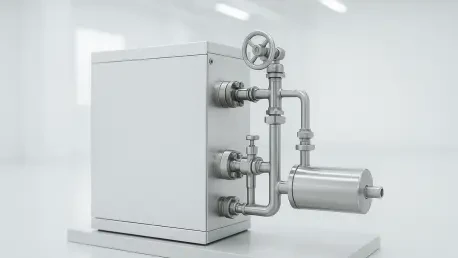
These dynamic operations are essential for reducing the need for massive and expensive hydrogen storage buffer tanks. By creating plants that can follow the “curve” of renewable energy generation, producers can significantly lower their capital expenditures and improve the overall efficiency of the process. This technological shift is also leading to the development of modular synthesis units that can be co-located with smaller renewable energy installations, allowing for a more decentralized production model. This innovation is particularly important for regions that may not have the land area for massive “mega-projects” but still possess significant wind or solar resources. As these technologies mature, they will likely become the standard for any new green molecule project, ensuring that chemical production is fully integrated with the modern, variable power grid.
Financial Mechanisms: Establishing Long-Term Bankability and Security
A critical consensus among market analysts is that the transition to green molecules cannot happen without clear revenue visibility and robust financial structures. The high capital expenditure required for green hydrogen and ammonia plants makes them difficult to finance without guaranteed buyers. To solve this, the industry has shifted toward creating sophisticated offtake models that provide the “bankability” required by lenders and institutional investors. Long-term contracts are expected to account for 43.0% of the offtake model category in 2026. These arrangements bridge the gap between project construction and routine production by ensuring a guaranteed market for the output at a predictable price. For example, national agencies and major industrial units are already allocating massive volumes of green ammonia under ten-year arrangements to stabilize the supply chain for the fertilizer and shipping sectors.
This move toward contractual security is also being supported by government-backed “contracts for difference” and other subsidy mechanisms that protect producers from price volatility in the early stages of market development. By guaranteeing a floor price for green molecules, these programs encourage private capital to enter the space, accelerating the build-out of production capacity. Furthermore, the standardization of these contracts is helping to create a more liquid global market, where green molecules can be traded more like traditional commodities. As the market moves toward 2036, the reliance on these long-term agreements may decrease as spot markets for green ammonia and methanol emerge, but for the current phase of growth, they remain the essential foundation upon which the entire industry is being built.
Geographic Landscapes and Market Realities
Strategic Hubs: Scaling Export Capacities in Emerging Energy Corridors
The growth of the green ammonia and methanol market is globally distributed but highly concentrated in regions that possess either immense renewable energy potential or strategic positions as major shipping hubs. Saudi Arabia is currently positioning itself as a global export powerhouse by integrating massive solar and wind farms with dedicated port facilities. Their strategy is built on the concept of scale, aiming to dominate the European and Asian export markets through high-volume shipping corridors. Similarly, Australia is leveraging its existing industrial base and clean-energy precincts to move quickly from pilot projects to full commercial scale. By integrating renewable hydrogen into established industrial systems, Australia can lower the export cost for multiple producers using shared infrastructure, making its green molecules highly competitive on the global stage.
In contrast, the United States is focusing on technological validation and domestic industrial use, proving new synthesis technologies that can be co-located with existing agricultural and chemical clusters. The American approach is driven by domestic policy that encourages the production of green hydrogen for local consumption, which in turn fuels the growth of a domestic green ammonia market. Meanwhile, Germany and Japan are primarily focused on their roles as consumers and logistics hubs. Germany’s growth is tied to its aggressive decarbonization targets and its position as a major European gateway, where ports are already being upgraded for methanol and ammonia bunkering. Japan is focusing on securing import chains and perfecting the technical aspects of ship-to-ship bunkering to ensure a steady supply of renewable molecules for its resource-poor but technologically advanced economy.
Identifying Systemic Barriers: Addressing Scarcity and Cost Premiums
Despite the optimistic growth projections, several significant friction points remain that could potentially delay the market’s expansion. The most pressing issue is the scarcity of renewable hydrogen, as low-emission technologies currently supply only a tiny fraction of total global hydrogen production. This scarcity keeps the delivered cost of green ammonia and methanol significantly higher than their fossil-fuel counterparts. To bridge this gap, producers often require substantial government subsidies or “green premiums” from end-users who are under pressure to decarbonize. Without a clear path to cost parity or a global carbon price, the economic viability of many projects remains fragile, particularly those that do not have the benefit of being located in the most renewably rich regions of the world.
Infrastructure gaps also pose a risk to long-term investment and market fluidity. While ammonia can utilize some existing storage tanks and transport vessels, methanol and hydrogen often require specific upgrades to port infrastructure and ship designs that are not yet universally available. Furthermore, the economic viability of these projects often hinges on complex carbon accounting standards that are still being refined. Shifts in the political climate or delays in international agreements on how to measure and verify the carbon intensity of green molecules can create uncertainty for investors. This uncertainty can lead to a “wait-and-see” approach, where capital is withheld until more stable regulatory and technical frameworks are established. Addressing these bottlenecks will require a coordinated effort between governments, port authorities, and private industry to ensure that the physical and financial infrastructure is ready to meet the projected demand.
Strategic Outlook for Integrated Energy Systems
Corporate Competition: Value Chain Integration and Engineering Expertise
The competitive environment of the green molecule market is currently fragmented, with companies playing distinct roles ranging from molecule production and technology licensing to logistics and end-use. Incumbent chemical giants are shifting their massive global logistics networks to accommodate renewable versions of their products, utilizing their deep experience in handling hazardous materials to gain a competitive edge. At the same time, a new breed of specialized project developers has emerged, focusing on integrating renewable energy generation directly with molecular synthesis at an unprecedented scale. These developers often act as the primary movers in the market, bringing together the various stakeholders needed to get a project from the drawing board to the construction phase.
Technology providers act as the architects of this new market, licensing the chemical processes and providing the engineering expertise needed to build complex, integrated plants. These firms are increasingly focusing on improving the efficiency of electrolyzers and synthesis loops, as even small gains in productivity can have a massive impact on the bottom line of a multi-billion-dollar project. On the other end of the chain, major end-users like shipping lines and global fertilizer distributors are creating the necessary “pull” by committing to purchase agreements and investing in their own green infrastructure. This vertical integration, where the consumer is also a strategic partner in the production process, is becoming a hallmark of the green molecular economy. By aligning the interests of producers and consumers, the industry is creating a more resilient and predictable market structure.
Forward Planning: Establishing the Liquid Battery Economy
The development of the green ammonia and methanol sectors was accelerated by the strategic prioritization of infrastructure by global governments and corporations. In the early stages of the decade, public-private partnerships focused on creating the first commercial-scale export hubs, which successfully demonstrated that renewable molecules could be traded as reliably as fossil fuels. These early successes provided the data needed to refine carbon accounting standards and establish the long-term offtake models that now underpin the market’s growth. As the industry moved toward maturity, the focus shifted from simple substitution of fossil fuels to the creation of an integrated energy system where molecules and electrons work in tandem to balance the power grid and provide energy security.
Moving toward 2036, the industry must now focus on the next level of systemic integration, where green ammonia is utilized as a “liquid battery” for long-duration energy storage. As electricity grids become increasingly dependent on intermittent renewables, the ability to store energy in molecular form for months at a time will be critical for grid stability. This represents the ultimate promise of the market: a decarbonized global economy where energy is not just produced cleanly, but also stored and transported in a form that is compatible with existing industrial and logistics systems. Stakeholders should prioritize the expansion of shared-infrastructure zones and the development of more dynamic synthesis technologies to drive down costs. By continuing to foster international cooperation and focusing on technical efficiency, the industry will ensure that green ammonia and methanol transition from niche alternatives to the primary fuels of the modern era.