
International maritime authorities have cautioned that the threat of a full-scale disruption to the Strait of Hormuz remains the most significant tail risk for the global economy. This warning comes as global crude oil benchmarks, specifically Brent and West Texas Intermediate, recently broke out of a stubborn period of stagnation by surging roughly 5% within a single trading week. Investors and traders are now grappling with a resurging geopolitical risk premium that reflects deep-seated anxieties regarding the stability of energy supply lines. As regional instabilities intensify, the market is forced to recalibrate its expectations for the remainder of the year, moving away from a focus on inventory and toward the potential for sudden physical shortages. The current climate suggests that the relative calm seen in previous months was merely a prelude to a more volatile era where energy flows are increasingly used as leverage in international disputes. Such a shift in sentiment highlights the extreme sensitivity of the global energy landscape to any perceived risk.
Strategic Disruptions: Maritime Vulnerability and Political Stand-offs
Navigating Risks: Physical Threats in the Strait of Hormuz
The Strait of Hormuz serves as the world’s most critical energy artery, facilitating the daily passage of nearly 20% of global oil and liquefied natural gas shipments. Recent escalations have seen a series of targeted drone strikes on commercial tankers and an assertive increase in Iranian maritime patrols, which have collectively spiked fears of a localized conflict. These physical threats to infrastructure are no longer viewed as isolated incidents but as part of a coordinated strategy to exert influence over global trade routes. Consequently, maritime insurance premiums have climbed, and logistics companies are reconsidering their routing strategies to avoid high-risk zones. Market analysts are now incorporating the possibility of a total passage shutdown into their pricing models, recognizing that even a temporary closure would have catastrophic effects on global energy prices. This heightened state of alert forces energy-dependent nations to scrutinize their strategic reserves and maritime defense capabilities as they prepare for further disruptions.
Diplomatic Escalation: The Washington and Tehran Deadlock
Diplomatic relations between Washington and Tehran have entered a particularly intense phase, with U.S. officials actively discussing the implementation of naval blockades and severe financial penalties to curb regional aggression. In a direct retort, the Iranian parliament recently proposed legislation that would ban vessels from so-called adversary nations, including the United States and Israel, from utilizing the waterway. This escalating rhetoric has created a precarious environment where military posturing and economic sanctions directly threaten the security of global shipping lanes. The standoff has essentially turned the Strait of Hormuz into a geopolitical chessboard where every move by one side is met with a high-stakes countermove by the other. Such persistent tension ensures that any minor miscalculation at sea could spiral into a broader regional confrontation, further driving up the cost of crude oil and destabilizing international commerce. For the global energy market, the political deadlock represents a permanent floor for prices that resists downward pressure from other factors.
Economic Realities: Market Dynamics and Strategic Resilience
Market Volatility: Balancing Consumption with Investor Sentiment
While geopolitical threats exert upward pressure on oil prices, a cooling global economy currently provides a significant counterweight that prevents a runaway price spiral. Both OPEC and the International Energy Agency recently adjusted their oil demand projections for the 2026 to 2028 period, lowering growth estimates due to a visible slowdown in industrial activity across major manufacturing hubs. This reduction in demand is largely a result of high energy costs causing demand destruction, where consumers and industries are forced to scale back operations or switch to alternative energy sources. The resulting tug-of-war between supply-side fears and weakening global consumption has created a volatile but range-bound market for Brent and West Texas Intermediate. Policymakers are closely watching these trends, as the delicate balance between maintaining affordable energy and ensuring regional security remains a top priority for central banks aiming to avoid a stagflationary environment, ensuring that high prices do not trigger a deep recession.
Future Readiness: Implementation of Robust Energy Security Protocols
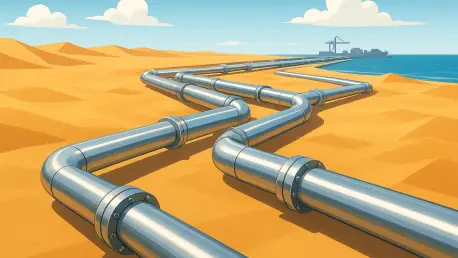
The global energy sector eventually pivoted toward a model of decentralized resilience as a direct response to these recurring Middle Eastern tensions. Governments successfully accelerated the development of land-based pipeline networks that bypassed the Strait of Hormuz entirely, ensuring that crude oil could reach international terminals through more secure terrestrial routes. These infrastructure projects were complemented by a massive reinvestment in domestic strategic petroleum reserves, which provided a critical buffer during peak periods of regional instability. By diversifying the sources of energy production and prioritizing localized supply chains, the global community reduced its sensitivity to localized geopolitical shocks. This shift toward a more robust energy grid not only stabilized price volatility but also encouraged the adoption of advanced monitoring technologies to protect undersea pipelines. Leaders focused on long-term stability by fostering international cooperation on maritime security and establishing clear protocols for emergency energy sharing during times of crisis.