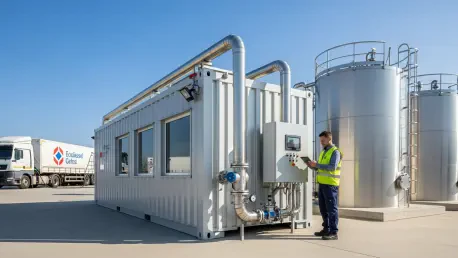

The ongoing volatility of international oil markets has forced regional industries to re-evaluate their dependence on imported fuels in favor of more resilient on-site production methods. As global supply chains face increasing disruptions, the necessity for localized energy solutions has transitioned from a sustainability goal to a core requirement for operational continuity. This shift is particularly evident in heavy industry and agriculture, where fuel availability dictates the success of entire production cycles.
The Shift Toward Decentralized Energy: The Rise of Local Biodiesel Production
The transition of biodiesel from a niche environmental alternative to a critical pillar of regional fuel security reflects a broader change in energy philosophy. For years, renewable fuels were viewed primarily through the lens of carbon reduction, often struggling to compete with the sheer volume of mineral diesel. However, innovators in South Australia, such as 34MJ, have redirected this focus toward containerized, turnkey solutions that allow for immediate on-site fuel refining in remote locations.
This decentralized model allows primary producers to convert agricultural byproducts directly into high-grade fuel. By processing canola oil into biodiesel on-site, heavy industry bypasses the logistical vulnerabilities associated with centralized refineries and international shipping. The evolution of this technology has finally bridged the gap between financial competitiveness and environmental stewardship, making localized production a practical choice for large-scale operations.
Reshaping the Fuel Landscape: Market Drivers and Growth Metrics
From Global Instability to Local Autonomy
Geopolitical shocks, such as instability in the Strait of Hormuz, have historically left local industries vulnerable to sudden price spikes and supply shortages. In response, primary producers are prioritizing fuel certainty during critical windows like seeding and harvesting, where a single week of delay can result in significant financial loss. This drive for autonomy is the primary engine behind the adoption of independent fuel sources that remain unaffected by distant political conflicts.
The success of these systems is grounded in the energy excess model, which ensures the process is physically efficient. The technology yields significantly more energy, specifically thirty-four megajoules, than is consumed during the refining process itself. This surplus makes the “34MJ” approach a net gain for the operator, providing a buffer against rising energy costs while maintaining a consistent supply of combustible energy for machinery.
Quantifying the Impact of On-Site Bio-Refining
The initial deployment of localized bio-refining has already yielded measurable results, including a reduction of 810 tons of carbon emissions across early adoption sites. These performance indicators suggest that the environmental benefits are a natural byproduct of a system designed for industrial efficiency. By producing over 300,000 liters of fuel within localized networks, the viability of replacing mineral diesel with high-quality bio-alternatives has been firmly established.
Market projections indicate a rapid expansion for these modular systems, with goals to establish ten additional sites within the current fiscal year. This trajectory highlights a shift toward a technology-focused business model rather than a traditional fuel retailing approach. By selling the refining equipment rather than the fuel itself, providers empower local entities to manage their own energy destiny, facilitating a scalable solution for regional autonomy.
Overcoming the Barriers to Scalable On-Site Bio-Refining
Historically, the primary barrier to biodiesel adoption was the lack of price parity with subsidized mineral diesel. Modern engineering has addressed this by optimizing the purification process and reducing the overhead associated with large-scale industrial plants. By housing the entire refinery within a standard shipping container, companies have eliminated the high capital expenditure typically required for permanent infrastructure, allowing for faster returns on investment.
Technical complexities and feedstock consistency also presented significant hurdles in the past. To ensure the fuel meets rigorous standards, current systems incorporate localized canola seed crushing and advanced filtration layers. This ensures that the raw agricultural input is transformed into a consistent, engine-ready product. Developing robust equipment that survives the harsh conditions of heavy engineering and commercial viticulture has been essential for maintaining operational readiness.
Navigating Compliance and Fortifying Regional Fuel Security
Ensuring that localized fuel production meets official national fuel standards is non-negotiable for industrial compliance. Sophisticated purification requirements must be met to protect high-value machinery from damage or performance degradation. Modern turnkey systems now include integrated testing and quality control mechanisms that provide the same level of assurance as centralized commercial refineries, allowing for seamless integration into existing fleets.
Regulatory frameworks are increasingly facilitating the adoption of these renewable fuels as governments recognize their role in national security. Reducing the reliance on international shipping lanes and centralized hubs creates a more resilient domestic energy profile. Interest from international governments suggests that this decentralized energy policy is becoming a global trend, as nations seek to protect their core industries from external energy shocks.
The Road Ahead: Scaling Sustainable Innovation Beyond the Farm
Future growth for modular bio-refining extends into heavy engineering, mining, and large-scale manufacturing sectors. These industries share a common need for high-density energy and are often located in remote areas where fuel logistics are most expensive. The potential for international technology transfer represents a major disruptor to the traditional global fuel supply chain, as energy production becomes a localized manufacturing process rather than a logistical challenge.
Modular manufacturing allows for the rapid deployment of energy infrastructure, with some systems becoming fully operational within a single week of arrival. This speed is a significant advantage over traditional energy projects that take years to develop. As global economic conditions continue to fluctuate, the ability to deploy and scale energy production quickly will remain a defining feature of the next generation of industrial innovation.
Localized Biodiesel as the New Standard for Energy Resilience
The shift toward on-site fuel production demonstrated that financial viability and practical security are now the primary drivers of renewable energy adoption. The investigation into the current fuel landscape showed that technology-focused models provided a more robust solution than traditional retail approaches. Initial deployments proved that converting local agricultural byproducts into fuel minimized logistical risks while significantly lowering the carbon footprint of heavy operations.
Stakeholders and investors found that the most successful strategies involved empowering local producers with the tools for energy independence. The long-term outlook for biodiesel was redefined as a cornerstone of economic stability, providing a clear path away from international supply chain fragility. As the industry moved forward, the integration of modular bio-refining became a standard practice for ensuring that regional industries remained operational regardless of global market shifts.