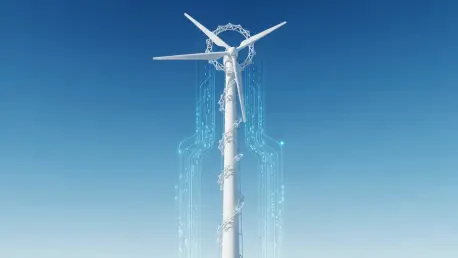

The massive logistics involved in transporting and assembling traditional wind turbines have historically acted as a significant bottleneck for the expansion of renewable energy across the globe. Conventional construction methods rely heavily on crawler cranes and massive truck-mounted lifts, which require flat terrain, extensive road reinforcements, and favorable weather conditions to operate safely at extreme heights. As turbine hubs reach heights exceeding 150 meters, the availability of cranes capable of such lifts has become increasingly scarce, leading to project delays and inflated operational costs. The emergence of crane-free technology, specifically self-climbing robots and nacelle-integrated hoisting systems, offers a transformative alternative that bypasses these physical and economic constraints. By allowing components to be hoisted using the tower itself as a support structure, developers can explore previously inaccessible regions such as dense forests, steep mountain ridges, and remote offshore sites.
Technological Integration: Maximizing Efficiency and Scaling Future Capacity
The financial implications of eliminating large-scale crane deployments are profound when considering the day rates and mobilization fees associated with heavy-lift machinery. In the current market, hiring a specialized crane often involves months of advanced scheduling and millions of dollars in logistical overhead before a single bolt is even tightened on-site. Self-climbing installation systems, such as those developed by specialized engineering firms, attach directly to the base of the turbine tower and crawl upward using hydraulic friction or geared mechanisms. This method significantly reduces the environmental footprint of the construction site since there is no longer a need for the massive gravel pads typically required to stabilize 1,000-ton cranes. Furthermore, these compact systems are less sensitive to wind speeds, which allows for a wider “weather window” for installation. Consequently, the reduction in downtime translates directly into higher project yields and a more predictable development timeline for utility-scale farms.
Moving beyond the site-specific benefits, the transition to crane-less methodologies addresses the last mile transport problem that has long plagued the wind industry. Traditional crane components require dozens of heavy-haul trailers to move from one site to another, often necessitating the temporary removal of power lines and the widening of public roads. In contrast, self-climbing systems are designed to be modular and can often be transported on standard flatbed trucks, making them ideal for repowering projects in mature markets. As older turbines are decommissioned and replaced with more efficient models, the ability to perform these upgrades without clearing new land for crane access is vital for maintaining local ecological balance. This modularity also simplifies the supply chain, as smaller equipment can be deployed from regional hubs. The efficiency gained here is not merely about speed; it is about the fundamental ability to scale wind power in regions where infrastructure was previously deemed insufficient.
The shift toward crane-free technology established a new baseline for the wind energy sector by addressing the physical limitations of terrestrial and maritime logistics. Industry leaders recognized that the path to a fully decarbonized grid required more than just larger turbines; it demanded a fundamental rethink of how those machines were built and serviced throughout their operational life. Engineers and project managers shifted their focus from heavy machinery toward automated, integrated lifting solutions that minimized environmental disruption and maximized safety. These advancements ensured that offshore wind farms, particularly those in deep-water environments, became economically viable. The adoption of these systems moved the industry toward a decentralized model where maintenance was no longer tethered to a few specialized vessels. Stakeholders prioritized the integration of active structural assembly into new project designs, ensuring that the next generation of super-tall turbines remained serviceable through internal hoisting mechanisms.