
Christopher Hailstone has spent decades at the intersection of energy management and grid reliability, carving out a reputation as a leading authority on how remote regions can transition away from legacy fuel systems. As an expert in electricity delivery and renewable integration, he has spent significant time analyzing the unique pressures faced by islanded microgrids that cannot simply plug into a neighbor’s supply when the wind stops blowing or the sun goes down. Today, we sit down with him to discuss the complex balancing act occurring in Maui, where the push for total energy independence is colliding with the urgent need to protect the island’s most vulnerable native species. We explore the high economic stakes of fossil fuel dependency, the specific technological hurdles of large-scale wind farms, and the unconventional methods—ranging from trained canines to pheromones—being deployed to ensure that the march toward a green future doesn’t come at the cost of local biodiversity.
The economic burden of imported energy is a heavy weight for many Pacific nations. How does this reliance on foreign oil fundamentally reshape the way these communities function and plan for their future?
The financial reality for these island nations is quite stark when you realize they are often forced to spend up to 13% of their national gross domestic product just to keep the lights on with imported fuel. Because these islands sit in the middle of the open ocean, the logistics of transporting diesel over vast distances drive electricity prices up to three times higher than what you would see on the mainland. In Hawai’i, specifically, we are still seeing nearly 60% of electricity produced from imported oil, which creates a volatile economic environment where local families and businesses are at the mercy of global shipping costs and oil market fluctuations. This isn’t just an abstract policy issue; it’s a daily struggle where remote microgrids lack any emergency backup interconnections, making localized clean energy generation a matter of survival rather than just a preference. Moving away from this carbon-intensive model is the only way to stabilize these economies and ensure that a massive chunk of their GDP stays within the local community rather than flowing out to foreign oil producers.
With the global climate crisis placing small islands at the front lines of sea-level rise and habitat loss, how critical is the role of high-capacity wind projects like the Kaheawa facility in Maui for achieving long-term resilience?
Islands are essentially the “canaries in the coal mine” for the climate crisis, facing immediate threats to their freshwater aquifers and coastal infrastructure as ice sheets melt and sea levels climb. To combat this, Hawai’i has set an ambitious target of reaching 100% renewable energy by 2045, and high-capacity wind power is the engine that will get them there. A project like the 30-MW Kaheawa Wind Power 1 facility is a powerhouse in this regard because wind provides a high energy density and can produce electricity around-the-clock, which is a significant advantage over solar in certain geographies. Even though island nations contribute less than 1% of total global greenhouse gas emissions, their leadership in rapid decarbonization is vital for setting a global standard and protecting their own fragile ecosystems from being submerged. By replacing massive volumes of imported oil with local wind, they are essentially insulating themselves from the worst-case environmental and economic scenarios of the next few decades.
As these wind farms expand, we have seen a conflict emerge between renewable energy infrastructure and native wildlife. Why have the initial projections for species “take limits” proved to be so different from the reality on the ground?
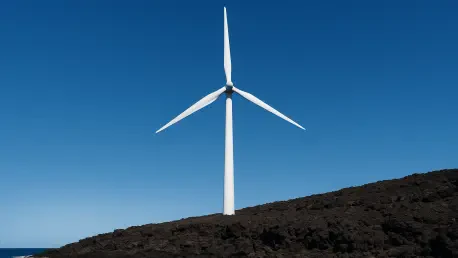
The discrepancy between our early models and the actual fatality rates for birds and bats boils down to the complex foraging behaviors and the unique atmospheric conditions at high elevations. In Maui, we’ve observed that high-elevation winds and specific foraging patterns bring the protected nēnē geese and Hawaiian hoary bats much closer to the sweeping blades of the 20-turbine wind farm than anyone originally anticipated. Because these animals are navigating through their natural migratory pathways, the moving blades become a lethal hazard that simply wasn’t fully understood during the initial permitting phases. This led to a situation where state regulatory reviews had to mandate revised limit calculations, forcing us to use more sophisticated data modeling and Interim Direct Environmental Measures to understand the combined impact on these populations. It is a humbling reminder that even the most well-intentioned green energy project can have unintended consequences on a local ecosystem if we don’t remain adaptive and hyper-aware of the native fauna’s behavior.
The state has suggested some rather unorthodox methods to mitigate these risks, including the use of “airport-style” dogs. How do these active deterrents work in practice to keep endangered species like the nēnē geese safe?
The use of trained hazing dogs is a fascinating example of applying a low-tech, biological solution to a high-tech industrial problem. These dogs are essentially used to scare away foraging geese before they can get anywhere near the danger zone of the turbine blades, mimicking a natural predator-prey interaction that the birds instinctively avoid. Beyond the dogs, we are looking at a multi-sensory approach that includes visual scare devices, low-frequency acoustic deterrents, and even bio-based chemical repellents like pheromones. The goal is to create an environment that feels “unpleasant” or “unsafe” for the geese and bats without actually causing them physical harm, effectively training them to steer clear of the facility. By combining these active interventions, the wind farm can continue its mission of vital energy production while fulfilling its ecological duty to protect the species that make the island’s biodiversity so unique.
What is your forecast for the future of island energy grids as they attempt to balance these aggressive decarbonization goals with the preservation of their unique ecosystems?
My forecast is that we will see a much more localized and adaptive approach to energy infrastructure, where the success of a project is measured as much by its ecological footprint as its megawatt output. Currently, a single 30 MW facility like the one on Maui is already powering roughly 17,000 homes annually and offsetting almost 77,000 tons of emissions every year, proving that the benefits to the human community and the global climate are undeniable. Over the coming years, I expect to see the “Maui model” of using adaptive deterrents and native-environment interventions become the global standard for any project located in a sensitive habitat. We will move away from static permits and toward dynamic, data-driven mitigation strategies that allow wind capacity to expand without triggering the extinction of the very wildlife we are trying to save from climate change. Ultimately, the survival of island nations depends on this harmony; they must become 100% renewable to survive the rising tides, but they must also remain vigilant so that the technology of today doesn’t destroy the natural heritage of tomorrow.