
The city of Cheyenne has suddenly suspended all industrial wastewater intake from Meta’s expansive data center campus following the discovery of biological contaminants that threaten to destabilize the local sanitation network. This unprecedented move highlights the growing tension between rapid digital infrastructure expansion and the finite capacity of municipal utility systems to handle specialized industrial waste. While the facility provides critical digital services for millions of users, the biological load produced by its advanced evaporative cooling systems has introduced specific bacterial strains into the public sewers that local treatment plants were never designed to remediate. Consequently, officials have mandated an immediate halt to discharge until a mitigation strategy is approved and implemented. This situation underscores the necessity for tech corporations to account for the biological footprint of their physical hardware, which extends far beyond the electricity consumption typically debated.
The Challenge: Assessing Biological Risks to Infrastructure
The core of the problem lies in the chemical and biological composition of the “blowdown” water, which is the byproduct of the evaporative cooling process used to keep massive server racks at optimal temperatures. To prevent mineral buildup and Legionella growth within their own systems, data centers often treat their cooling water with a variety of biocides and stabilizers that alter the wastewater’s chemical profile. In Cheyenne, the specific concern involves a resilient strain of bacteria that has adapted to the nutrient-rich environments of industrial cooling towers, creating a biofilm that is resistant to standard municipal chlorine treatments. When this water enters the city’s sewer lines, it introduces non-native microorganisms that compete with the beneficial bacteria used in the city’s secondary treatment processes. This competition diminishes the effectiveness of the local plant’s ability to break down organic matter, potentially leading to violations of federal clean water standards.
Beyond the immediate biological concerns, the sheer volume of discharge from high-density computing facilities places an immense mechanical strain on the aging pump stations and filtration systems throughout the metropolitan area. The Cheyenne Board of Public Utilities noted that the sudden surge in industrial flow during peak summer months often exceeds the hydraulic capacity of the local interceptor lines, leading to potential backflows or bypass events. Furthermore, the high temperature of the discharged water can accelerate the degradation of concrete piping and alter the metabolic rates of the microorganisms in the treatment basins, further complicating the stabilization of the wastewater stream. This misalignment between industrial output and public utility capabilities demonstrates a fundamental flaw in current zoning and infrastructure planning models. Municipalities are now realizing that accepting tech tenants requires more than just power; it demands a reassessment of waste protocols.
The Solution: Implementing Localized Pre-Treatment Systems
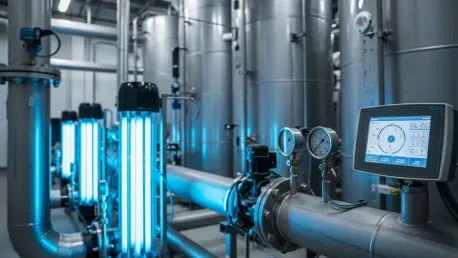
To resolve this impasse, the municipal leadership recommended that all future data center developments incorporate dedicated on-site pre-treatment facilities capable of neutralizing specialized biological loads before they reach public infrastructure. This proactive approach included the installation of advanced ultraviolet disinfection systems and membrane bioreactors that filtered out the problematic bacterial strains identified during the recent audit. Engineering teams from Meta collaborated with local hydrologists to develop a closed-loop recycling program that significantly reduced the total volume of discharge by repurposing gray water for landscaping and non-critical industrial use. These measures established a new standard for corporate environmental responsibility, ensuring that high-tech growth did not come at the expense of public health or ecological stability. By prioritizing the integration of modular treatment technologies, the city provided a scalable blueprint for others.
Future facility blueprints now mandate the inclusion of real-time microbial monitoring sensors that provide the city’s utility department with a continuous data stream regarding the pH, temperature, and biological oxygen demand of all outgoing fluid. This transparency allowed for the implementation of an automated shut-off valve system that triggered whenever the discharge deviated from established safety parameters, preventing a single facility from jeopardizing the entire regional sanitation network. Furthermore, the transition toward liquid-to-chip cooling technologies was accelerated to minimize the reliance on large-scale evaporative towers, which are the primary source of the problematic concentrated wastewater. These technical adjustments were complemented by revised municipal codes that required tech companies to contribute to a dedicated infrastructure fund for the upkeep of shared water treatment facilities. Such efforts ensured that the digital economy remained stable.