
A strategic policy of tactical hibernation has become the primary survival mechanism for renewable energy stakeholders throughout the Gulf Coast region. This defensive posture is a direct response to a federal administration that has actively sought to dismantle the progress of offshore wind through restrictive executive orders and the suspension of leasing cycles. By intentionally slowing down development, Louisiana’s energy sector aims to keep its core components functional without burning through limited capital during a period of intense federal opposition. The industry has effectively circled early 2029 as the pivotal moment for a potential market restart, aligning its long-term planning with the conclusion of the current presidential term. This period of waiting is not an admission of defeat but rather a calculated effort to protect the billions of dollars already invested in regional infrastructure and to ensure that the state remains positioned as a future leader in the renewable energy market once the political landscape eventually shifts toward support.
Economic Deconstruction: The Costs of Regulatory Withdrawal
Federal authorities have implemented aggressive strategies to halt renewable expansion, most notably through a massive payout program designed to incentivize the permanent abandonment of active projects. By allocating approximately $4 billion in taxpayer funds to compensate developers for relinquishing their leases, the government has effectively removed nearly 21 gigawatts of potential energy capacity from the national grid. This capacity, which could have powered over five million American households, represented the culmination of years of environmental reviews and technical planning. For Louisiana, this federal intervention led to the cancellation of a major 2-gigawatt wind farm in the Gulf of Mexico that was intended to provide clean electricity to hundreds of thousands of residents via regional utility partnerships. The scale of these financial settlements highlights a determined effort to override market demand with administrative mandates, creating a difficult environment for private firms that had previously viewed the Gulf as a primary hub for growth.
Beyond the direct cancellation of leases, the current federal environment is characterized by a “stop-work” atmosphere that has frozen pending permits and halted ongoing construction. Developers who have invested heavily in site surveys and engineering designs now find their projects trapped in an indefinite administrative limbo, as federal agencies have shifted their focus toward fossil fuel prioritization. This regulatory shift is often accompanied by rhetoric that challenges the economic viability of wind energy, citing concerns over property values and local wildlife that many industry experts believe are overstated. The result is a significant chilling effect on the broader investment climate, as capital that was once earmarked for Louisiana’s offshore projects is diverted to more stable international markets. To survive this period, state-level advocates have focused on maintaining legal standing for their permits, hoping to prevent the total expiration of environmental assessments that took years to complete and cost millions to fund.
Industrial Foundations: Repurposing Maritime Expertise for Renewables
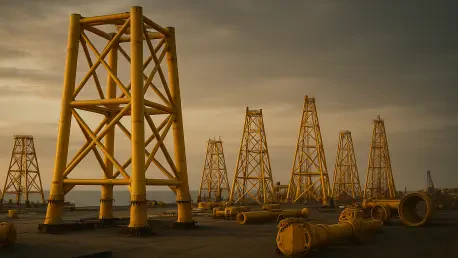
Louisiana’s ability to withstand this federal halt is largely due to its deep-rooted history in the offshore oil and gas industry, which provided a ready-made blueprint for wind development. The state’s maritime engineering firms and fabrication shipyards did not need to build new capabilities from scratch; instead, they leveraged decades of expertise in constructing complex offshore platforms to secure a dominant position in the wind supply chain. By the middle of the current decade, Gulf-based companies had successfully captured nearly a quarter of all offshore wind contracts in the United States, representing over a billion dollars in regional investment. This industrial synergy allowed local firms to pivot into the renewable sector, participating in the construction of the nation’s earliest wind farms as far back as 2016. This established infrastructure serves as a physical buffer against the current political volatility, ensuring that the heavy machinery and technical knowledge necessary for energy projects remain available within the state.
Maintaining the viability of these specialized facilities requires a delicate balancing act of seeking temporary contracts that do not permanently shift focus away from renewable energy. Fabrication yards in coastal parishes, which were previously buzzing with the assembly of turbine foundations and offshore substations, are now searching for niche projects in adjacent maritime sectors to keep their lights on. The goal is to prevent the specialized equipment and logistical networks that were specifically tailored for offshore wind from falling into disrepair or being liquidated. Industry leaders emphasize that the technical and economic rationale for Gulf wind energy remains sound, as the region’s shallow waters and existing pipeline networks offer unique advantages for cost-effective deployment. Despite the administrative barriers, the state’s industrial core remains ready to mobilize, treating the current pause as a period of maintenance rather than a terminal decline, while continuing to advocate for the eventual integration of wind into the state’s diverse energy portfolio.
Strategic Safeguards: Securing the Regional Talent Pipeline
Stakeholders addressed these systemic challenges by prioritizing the retention of human capital and realigning regional education to protect the future of the energy workforce. Institutions like Nunez Community College and the University of New Orleans maintained their specialized turbine and engineering programs, ensuring that the talent pipeline did not completely dry up during the federal standstill. To mitigate the risk of a permanent brain drain, private firms pivoted their highly skilled engineering teams toward temporary roles in the aerospace and defense sectors, preserving the technical expertise required for a future resurgence. Regional leaders focused on securing existing utility partnerships and maintaining the physical integrity of shipyards, which allowed the industry to stay ready for an eventual policy shift. By fostering these cross-industry collaborations, Louisiana successfully prevented the total loss of its specialized workforce, keeping the essential skills within the state’s economic ecosystem during the prolonged administrative pause.
The preservation of this industrial capacity offered a blueprint for other regions facing similar regulatory hurdles, highlighting the importance of sector diversification. Long-term strategies focused on strengthening state-level autonomy over offshore resources and exploring legal avenues to protect existing environmental assessments from expiration. By treating the hiatus as an opportunity to refine fabrication techniques and improve supply chain efficiencies, the regional sector ensured that its next phase of growth would be more cost-effective and resilient. These actions demonstrated that a temporary federal halt did not necessitate the permanent decline of the industry if the underlying technical foundations were maintained through strategic planning. The focus transitioned from immediate construction to the development of next-generation turbine designs and grid integration solutions, positioning the region for a rapid return to the market. This approach allowed Louisiana to exit the period of hibernation with its infrastructure intact and its workforce prepared for the next era of energy production.