
Christopher Hailstone brings decades of front-line experience in energy management and grid reliability to the table, making him a definitive voice on the intersection of utility security and renewable fuel integration. As a seasoned expert in electricity delivery and energy strategy, he has navigated the complexities of how national policies translate into real-world stability for both governments and consumers. Today, he breaks down the strategic implications of Malaysia’s B15 biodiesel plan, exploring how leveraging domestic palm oil can serve as both an economic shield and a strategic energy asset in an increasingly unpredictable global market.
How could transitioning to B15 biodiesel impact national fiscal health and inflation rates?
The shift to a B15 blend is a calculated move that could provide significant fiscal breathing room by reducing the massive burden of fuel subsidies. If palm oil remains cheaper than gasoil, the government could see its fiscal costs plummet by more than RM1 billion by 2026, which is a staggering amount of capital that can be redirected into other infrastructure needs. By stabilizing fuel prices through domestic feedstocks, the state can exert better control over inflation, preventing the sudden price shocks that usually follow global oil market disruptions. However, this strategy isn’t without risk; if market conditions shift and palm oil prices climb above gasoil, the financial pressure would flip, potentially squeezing both the national treasury and the average consumer’s wallet.
What role does this shift toward higher biodiesel blends play in fortifying a nation’s energy security amidst global instability?
In today’s world, where geopolitical tensions can disrupt traditional oil supply chains overnight, moving toward higher biodiesel blends like B15 is a vital step toward self-sufficiency. By cutting down on the volume of imported diesel, a country can insulate its economy from the whims of international exporters and volatile shipping lanes that are often prone to conflict. We are looking at a scenario where biodiesel acts as a strategic buffer, ensuring that essential transport and industrial sectors keep moving even when the global oil supply feels the heat of instability. While such programs might require higher government spending in certain price environments, the long-term benefit of securing a reliable, locally-sourced energy supply far outweighs the initial investment risks.
Could you elaborate on the logistical hurdles and financial investments required to make such a significant transition in fuel standards?
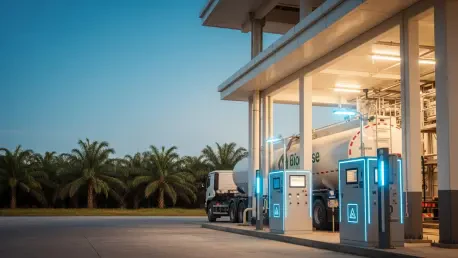
Transitioning from a B10 to a B15 or even a B20 mandate isn’t as simple as changing a label on a pump; it requires a massive, coordinated overhaul of the underlying infrastructure. Industry estimates suggest that we need to inject roughly RM643 million into upgrading depots to handle the increased palm oil content effectively and safely. This involves the rigorous task of reworking storage facilities, precision blending systems, and the entire distribution network to ensure that the fuel remains stable throughout the supply chain. There is also a psychological hurdle to clear with the private sector, as many companies are hesitant to invest their own capital when refinery margins are tight and government funding faces its own limitations.
How does this mandate influence the domestic palm oil market and the broader agricultural supply chain?
The B15 mandate acts as a powerful and predictable demand driver, expected to soak up an additional 300,000 to 400,000 tonnes of palm oil every single year. This brings the total consumption under the national biodiesel program to approximately 1.3 million tonnes, creating a robust internal market for local farmers. When you consider that Malaysia produces about 20 million tonnes of palm oil annually, this program alone could absorb up to seven percent of the total output, providing a much-needed floor for prices. This increased domestic uptake is crucial for managing stocks, which were hovering around 2.4 million tonnes in mid-2026, helping to stabilize the entire agricultural sector against the unpredictable waves of global demand.
What is your forecast for the future of palm-based biofuels in the global energy mix?
I anticipate that palm-based biofuels will increasingly become a cornerstone for tropical nations looking to balance their carbon commitments with the harsh realities of economic independence. We will likely see a push toward even higher blends like B20 as infrastructure matures and the RM643 million in necessary upgrades begins to bear fruit across the distribution network. While the price relationship between palm oil and gasoil will always be a point of tension for fiscal planners, the drive for energy security will likely override short-term market fluctuations. In the coming years, expect to see these mandates evolve into more sophisticated energy policies that prioritize domestic stability and strategic reserves over the cheapest possible import.