
Despite temporary increases in capital expenditure, the downward price trajectory of wind and solar power continues to put immense financial pressure on fossil fuels. This economic reality has reached a significant milestone as four-hour battery energy storage systems are now more cost-effective than traditional open-cycle gas turbines across forty-three major global markets. As manufacturing capacity expands at an unprecedented rate, the global benchmark for four-hour storage has plummeted to approximately seventy-eight dollars per megawatt-hour. This shift represents a decisive widening of the gap between flexible storage solutions and fossil-fuel alternatives that once dominated the peaking power sector. The transition is not merely a regional phenomenon but a fundamental restructuring of how grid stability is achieved in an era of high renewable penetration. Utilities and grid operators are recognizing that the long-term financial risks associated with gas price volatility and turbine supply chain constraints outweigh the initial costs of battery deployment today.
The Economic Displacement of Peaking Turbines
The current market environment reflects a unique set of factors that favor electrochemical storage over gas-fired combustion. While gas turbines have historically served as the primary tool for meeting peak demand, they are currently plagued by rising operational costs and significant shortages in high-efficiency turbine components. In contrast, the surge in global lithium-ion production has created a surplus that drives down the levelized cost of energy for storage projects worldwide. This structural decline is further accelerated by improvements in energy density and cycle life, allowing battery installations to provide more value over their operational lifespan. Furthermore, the integration of advanced software management systems has enhanced the ability of these assets to participate in multiple revenue streams, including frequency regulation and spinning reserves. This multi-use capability provides financial resilience that single-purpose gas peaking plants simply cannot match, effectively rendering them less competitive in modern merchant markets.
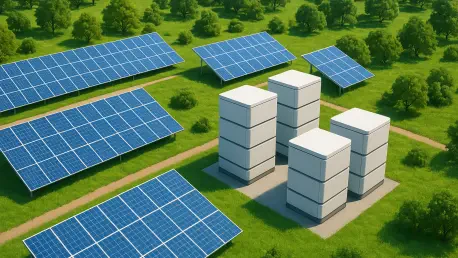
Looking specifically at high-growth regions like the Middle East and Africa, the synergy between solar photovoltaic installations and battery storage is creating a new blueprint for energy independence. In markets like Saudi Arabia and the United Arab Emirates, where solar costs are projected to fall below twenty dollars per megawatt-hour by 2033, the business case for co-located storage is undeniable. Current projections indicate that battery costs in these regions are moving from one hundred twenty dollars per megawatt-hour in 2026 toward eighty dollars by 2035. This dramatic reduction allows for the displacement of expensive liquid-fuel and gas peaking plants, which have historically been the backbone of regional grids. By leveraging their abundant solar resources alongside increasingly affordable storage, these nations are setting a global standard for cost-efficient decarbonization. This transition facilitates a more stable grid that can handle extreme temperature fluctuations and high cooling demands without relying on carbon-intensive peaking units.
Strategic Implementation and Future Grid Modernization
In North America and Europe, the landscape for storage is shaped by policy incentives and the rising costs of carbon emissions. While recent trade tariffs have introduced temporary pricing volatility for solar modules, battery storage continues to benefit from federal investment tax credits that stabilize the financial outlook for developers. Analysts expect that as domestic manufacturing facilities come online between 2026 and 2030, the reliance on imported materials will diminish, leading to a more secure and predictable price environment. Simultaneously, European carbon costs are expected to outpace fuel costs by 2030, making gas-fired generators increasingly unviable even during periods of peak demand. Consequently, the deployment of four-hour storage systems has become a central pillar of the strategy to maintain grid reliability while meeting ambitious climate targets. This long-range stability is crucial for utilities planning multi-decade infrastructure investments, providing a clear path away from the fuel-price sensitivities that undermine gas power.
Decision-makers in the energy sector prioritized the integration of battery systems as a fundamental financial requirement rather than a secondary environmental goal. As the global energy landscape shifted, the combination of solar power and lithium-ion technology cemented its position as the most viable path for modernizing outdated power grids. Stakeholders worked to standardize procurement processes and advocated for the removal of regulatory barriers that once hindered storage participation in wholesale markets. Investors shifted their capital toward hybrid projects that maximized the value of existing transmission infrastructure through intelligent energy management. To ensure long-term reliability, engineers focused on diversifying battery chemistries to mitigate material scarcity and enhance safety protocols across large-scale installations. By embracing these strategic adjustments, the global community successfully navigated the transition toward a more resilient and cost-efficient energy future where storage finally outpaced traditional gas generation.