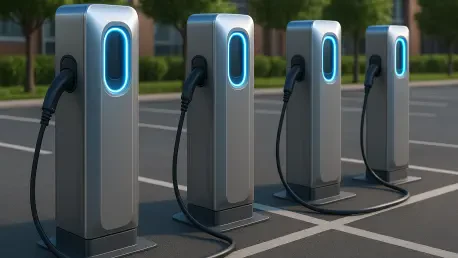

By combining state financial resources with internal departmental cooperation, the university is building a scalable network that supports both logistics and the community. This strategic initiative at UC Santa Cruz marks a significant shift in how academic institutions manage their carbon footprint while simultaneously providing essential services to the public. Recently, the university unveiled twelve new charging ports at the Central Heating Plant, a move designed to facilitate the complete phase-out of internal combustion engines within the campus fleet. These facilities represent a sophisticated blend of technology and utility, featuring four high-speed direct-current fast-charging ports alongside eight Level 2 ports, ensuring that the campus remains operational throughout the day. Furthermore, the 2026 sustainability assessments indicate that while the current fleet is only seventeen percent sustainable, the foundational groundwork is now in place to accelerate acquisitions of zero-emission vehicles over the coming years.
Efficiency and Accessibility: The Role of Fast-Charging
Strategic Integration of High-Speed Power Sources
The implementation of direct-current fast-charging technology is a cornerstone of the university’s strategy to maintain high operational standards during the transition to zero-emission vehicles. Unlike standard chargers, these fast-charging ports drastically reduce the downtime required for vehicles to return to service, which is particularly vital for medium- and heavy-duty trucks that handle campus logistics. This efficiency ensures that the shift away from fossil fuels does not result in a loss of productivity or delays in essential university maintenance and delivery schedules. Furthermore, the selection of the Central Heating Plant as a primary hub for this infrastructure was a calculated decision, placing the chargers in a central location that optimizes access for the most active vehicles in the fleet. By prioritizing speed and placement, the campus has created a model for institutional electrification that balances environmental goals with the practical realities of daily operations and long-term fleet management.
Dual-Purpose Utility and Community Support
One of the most innovative aspects of this new infrastructure is its dual-purpose scheduling, which maximizes the utility of the hardware beyond its primary logistical function. During standard operating hours from 6 a.m. to 5 p.m., the ports are strictly reserved for official university fleet vehicles, ensuring that the transition to zero-emission alternatives is fully supported. However, as the workday ends, these resources become available to the general public during evenings and weekends, directly addressing the local shortage of reliable electric vehicle charging options. This shared-use model not only improves the return on investment for the state-funded project but also fosters a stronger connection between the university and the surrounding community. By opening these gates to local residents and visitors, the institution is playing a pivotal role in the broader regional adoption of electric vehicles, proving that campus infrastructure can serve as a catalyst for wider societal change and environmental stewardship.
Systemic Infrastructure Expansion and Operational Resilience
The university successfully utilized state financial support through the California Energy Commission’s Clean Transportation Program to finalize this phase of the electrification roadmap. This project demonstrated that collaborative achievement involving Transportation and Parking Services, the Decarbonization Infrastructure Program, and the Sustainability Office was essential for overcoming technical hurdles. Moving forward, other large-scale institutions should prioritize the installation of high-voltage infrastructure before committing to full vehicle fleet turnovers to avoid operational disruption. It was determined that a tiered charging strategy, combining fast-chargers for heavy equipment and Level 2 chargers for long-term parking, provided the most resilient framework. Future considerations must include the integration of renewable energy sources directly into the charging grid to further reduce the net carbon impact. By establishing this foundational network, the campus solidified its position as a leader in sustainable logistics and provided a clear path for others.