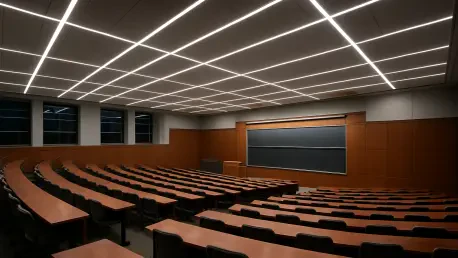

By upgrading to a 16-watt LED standard, the university is achieving a 65% decrease in electricity use per fixture compared to the 46-watt draw of traditional fluorescent systems. This massive transition at Southern Illinois University Carbondale represents a pivotal moment in the institution’s commitment to environmental stewardship and fiscal responsibility. The $9.9 million initiative is designed to touch nearly every corner of the campus, replacing outdated, energy-hungry lighting with state-of-the-art technology that offers superior illumination while drastically lowering the carbon footprint. Beyond immediate reductions in consumption, this project signals a shift in how modern higher education facilities manage aging infrastructure. By prioritizing these systemic updates, the university effectively addresses the immediate need for deferred maintenance and long-term goals of campus sustainability. This overhaul is not merely cosmetic but a fundamental shift in utility management.
Economic Strategy: Financial Sustainability and Resource Management
The financial structure of this $9.9 million project relies on a calculated return on investment that balances upfront capital expenditures with substantial long-term operational savings. By leveraging energy performance contracting, the university is able to fund these improvements through the guaranteed energy savings generated by the new equipment itself. This innovative funding model ensures that the institution can modernize its facilities without placing an undue burden on student tuition or state appropriations. Furthermore, the transition to solid-state lighting significantly reduces the labor costs associated with routine maintenance. Unlike traditional fluorescent tubes that require frequent replacement and the disposal of hazardous mercury-containing materials, the new LED systems are rated for tens of thousands of hours of continuous operation. This durability allows the facilities management team to redirect their efforts toward more critical infrastructure needs.
Economic benefits extend beyond direct energy savings and labor reductions to include substantial utility rebates and incentives. Southern Illinois University Carbondale has strategically aligned its lighting overhaul with regional energy efficiency programs to capture all available financial offsets, effectively lowering the net cost of the $9.9 million investment. These rebates serve as a catalyst for deeper energy retrofits, providing additional capital that can be reinvested into other green initiatives or facility upgrades. The precision of the new lighting controls also plays a major role in the overall financial strategy. By incorporating advanced sensors and dimming capabilities, the university can adjust illumination levels based on occupancy and natural light availability. This granular control minimizes wasted energy in unoccupied lecture halls and corridors, further accelerating the payback period for the installation, establishing a model for public institutions.
Operational Success: Strategic Implementation and Future Institutional Growth
The successful rollout of the lighting overhaul established a new standard for infrastructure projects at Southern Illinois University Carbondale. By meticulously planning the transition, the administration demonstrated that large-scale technological updates could be executed with minimal disruption to the daily academic calendar. This project served as a foundational step toward a more comprehensive smart-campus strategy, where integrated building systems communicate to optimize performance. The data collected from the new lighting controls provided invaluable insights into space utilization patterns, allowing administrators to make more informed decisions regarding future facility renovations. Moving forward, other departments within the university began to evaluate their own systems for similar efficiency gains, sparked by the tangible results of the LED transition. This initiative proved that sustainable practices were practical solutions that delivered measurable results.
To maintain this momentum, the university focused on the next logical steps in its modernization journey. Facilities leaders initiated a training program for staff to manage the sophisticated control software, ensuring the system remained optimized as campus needs changed. They also explored the potential for integrating the lighting network with heating and cooling systems to create a truly responsive environment. For other institutions looking to replicate this success, the primary takeaway was the importance of comprehensive energy audits prior to investment. By identifying the highest-usage areas first, Southern Illinois University Carbondale maximized its initial impact and built support for subsequent green projects. The transition successfully bridged the gap between environmental idealism and practical engineering, showing that a data-driven approach to facility management was essential for institutional longevity and continued operational excellence for many years to come.