
The silent decomposition of organic matter in landfills and farm lagoons represents a hidden reservoir of chemical energy that could revolutionize the American power grid if fully harvested. Every year, millions of tons of food waste, manure, and wastewater solids are hauled away or flushed, often viewed as a costly environmental burden. Yet, this organic matter currently fuels 2.7 million American homes through a network of 2,600 operational biogas facilities. While solar and wind dominate the headlines, biogas is quietly generating 28.6 billion kilowatt-hours of electricity, proving that what is discarded is actually a massive, decentralized fuel tank waiting to be drained.
The transition from viewing waste as a liability to seeing it as a resource marks a shift in the domestic energy strategy. By capturing methane—a potent greenhouse gas—and converting it into usable power, these facilities provide a dual benefit of climate mitigation and energy production. This infrastructure already exists in various stages of maturity across the country, but the current output represents only the beginning of a larger movement toward circular economic systems.
Turning the National Waste Stream Into a Reliable Kilowatt
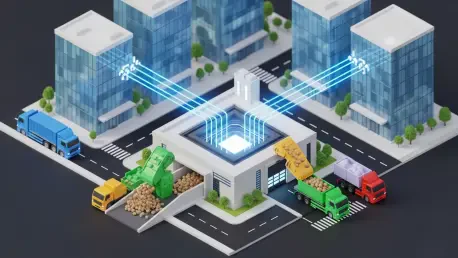
The mechanics of biogas production rely on anaerobic digestion, a natural process where microorganisms break down organic materials in the absence of oxygen. This process yields a methane-rich gas that can be burned to produce heat or electricity, effectively turning a landfill or a dairy farm into a miniature power station. Because the feedstock for this process is produced daily by human activity and livestock, the fuel supply is essentially inexhaustible and locally sourced.
Harnessing this energy does more than just keep the lights on; it transforms the economics of waste management for municipalities and private enterprises. Instead of paying tipping fees to dispose of organic solids, facility operators can generate a new stream of revenue or significantly lower their own operational overhead. This shift converted a linear “use and discard” model into a circular one where the remnants of yesterday’s dinner literally power the morning’s industrial shifts.
Why Basestock Power Is the Missing Piece of the Energy Puzzle
The American energy landscape is at a crossroads as data centers and heavy industries push the national grid to its limits. While renewable energy is expanding, the intermittent nature of wind and solar creates gaps that are difficult to fill without fossil fuels. Biogas addresses this intermittency problem by providing a steady, 24/7 baseload power supply. By tapping into waste streams that exist in every state, the U.S. can build energy resilience that is not dependent on the weather or complex international supply chains.
Moreover, the localized nature of biogas production offers a unique form of grid security. Because these facilities are often situated near the source of the waste—be it a farm, a factory, or a municipal treatment plant—they are ideal for creating microgrids that can function independently during larger grid failures. This reliability makes biogas an essential partner to solar and wind, acting as a stable foundation that balances the fluctuations of the natural environment.
The Four Sectors Driving Current Biogas Production
Current biogas output is divided among four distinct sectors, each utilizing different waste streams to generate power. Landfills are the heavy hitters, providing nearly three-quarters of the biogas used for electricity today. These sites capture the naturally occurring gases produced as municipal trash breaks down over decades. Wastewater treatment plants follow as the most widespread application, with 1,200 facilities using anaerobic digestion to offset their own massive energy costs.
On the agricultural front, about 200 farm-based systems convert manure into power, providing a lifeline for smaller operations. These systems allow farmers to manage nutrient runoff while creating a secondary product that stabilizes their income. Finally, the food waste sector, though currently the smallest, represents the fastest-growing opportunity for recycling organic materials into the grid. As more cities implement organic waste mandates, the volume of high-energy feedstock available for digestion continues to climb.
The 25-Gigawatt Vision: Data-Driven Growth Potential
According to industry data, the United States is currently utilizing only a fraction of its potential, with room for an additional 17,000 biogas systems. Realizing this expansion would result in a total output of 25 gigawatts of clean power—the equivalent of operating 200 large-scale power plants simultaneously. This leap in production would shift biogas from a niche utility to a foundational pillar of the American energy portfolio, capable of powering up to 25 million homes with always-on renewable energy.
This growth potential is not merely theoretical; it is backed by the sheer volume of unused organic matter generated by the world’s largest economy. As technology improves and the cost of anaerobic digesters decreases, the barrier to entry for smaller municipalities and mid-sized farms fell. The expansion of these systems promised to create thousands of specialized jobs in rural and urban areas alike, fostering a new industrial sector focused on waste-to-energy technology.
Practical Frameworks for Expanding the Biogas Footprint
Scaling the biogas industry required a multi-pronged approach to bridge the gap between waste management and energy production. Municipalities led the way by integrating anaerobic digesters into existing wastewater infrastructure to achieve energy neutrality. This proactive stance allowed cities to stabilize their utility rates while reducing the carbon footprint of their essential services. Agricultural operations focused on manure-to-watts systems, particularly in regions lacking gas pipeline access, to create localized microgrids that supported rural economic development.
Streamlining food waste collection at the industrial level ensured a steady feedstock for new facilities, turning a disposal cost into a revenue-generating energy asset. Policymakers helped by creating regulatory environments that favored the injection of renewable gas into existing pipelines and rewarded the reliability of baseload renewable power. These combined efforts shifted the national perspective, ensuring that the organic materials once discarded were recognized as the vital energy resources they always were.