
Christopher Hailstone is a distinguished authority in energy management and utility infrastructure, possessing a deep understanding of how power reliability dictates the success of modern industrial ecosystems. With years of experience navigating the complexities of electricity delivery and renewable integration, he has become a go-to strategist for developers and occupiers looking to future-proof their assets against grid constraints. In a landscape where electricity is now as vital as physical location, Hailstone provides the technical and economic perspective necessary to understand why the “power-ready” facility has become the gold standard of the current market cycle.
This discussion explores the evolving priorities of industrial occupiers who are shifting their focus toward sites with immediate utility capacity and robust infrastructure. We examine the rise of big-box facilities exceeding 200,000 square feet, the competitive pressure from AI and data center developers, and the specific market dynamics where net absorption is outpacing supply, particularly in hubs like Indianapolis and Dallas-Fort Worth. Hailstone also breaks down the financial implications of these trends, from the normalization of rental rates to the massive premium placed on properties in power-constrained markets like New York and New Jersey.
The industrial landscape is shifting, and it seems that access to the grid is now more important than highway access for many companies. How is the current demand for power-ready facilities fundamentally changing the way developers evaluate and market their properties?
The shift we are seeing is transformative because “location, location, location” has been joined by “power, power, power” as the primary driver of value. In the past, a developer might focus solely on transportation arteries, but now they are securing utility commitments earlier than ever and marketing that available capacity right alongside traditional building specifications. We are seeing a particular focus on Class A properties and modern big-box facilities of 200,000 square feet or larger because these sites can accommodate the heavy infrastructure required for today’s occupiers. When a site has access to substantial electrical capacity or an existing substation, it significantly reduces the uncertainty and anxiety around power delivery timelines. It is no longer just about four walls and a roof; it is about the invisible umbilical cord to the grid that allows a facility to breathe.
With the explosive growth of AI and data center infrastructure, there seems to be a collision between traditional logistics users and these new, energy-intensive industries. What does this competition for limited grid capacity mean for the long-term value of industrial real estate?
The competition is fierce and is creating a fascinating hierarchy in how we value real estate. In many power-constrained markets, a property’s redevelopment potential for data centers or AI infrastructure can actually create greater long-term value than its original logistics use. We are watching data center developers actively acquire industrial properties not for the warehouse space, but for their favorable interconnection positions. This “flight to quality” means that institutional-grade facilities that can support higher power requirements are better positioned to maintain occupancy and remain competitive over time. For many owners, the realization is setting in that the copper and transformers in the ground might be worth more than the concrete on the floor.
The use of automation is often cited as a way to increase efficiency, but it clearly comes with a significant electrical cost. How are industrial occupiers balancing the need to “do more with less people” while managing the resulting surge in power demand?
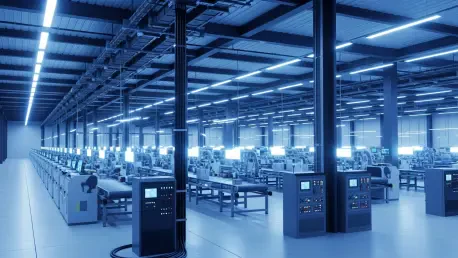
Occupiers are increasingly turning to sophisticated equipment to speed up their throughput, which creates a continuous requirement for more power. Whether it is old technology being upgraded or cutting-edge systems being installed, the goal is to use automation to remain competitive, but that machinery requires a constant, high-volume flow of energy. You can feel the change in these buildings; there is a certain hum of activity and a sensory density of equipment that didn’t exist a decade ago. To keep up, facilities must be able to adapt to these evolving operational requirements, which is why we see such a strong preference for modern buildings with high clear heights and ample infrastructure. If a building cannot support the silent, tireless work of robotic arms and automated sorting systems, it risks becoming obsolete in the next market cycle.
Looking at the data from the first quarter, national net absorption rose by 5.2% to 186 million square feet. What do these numbers tell us about the recovery of the industrial sector and the “normalization” process following the post-pandemic boom?
These figures indicate a broad-based recovery and a stabilization of the market after the record growth and subsequent over-building we saw between 2020 and 2023. While we faced a period where capital stayed on the sidelines and tariffs complicated construction, the current market seems much more promising as we move past that hump. The 19% increase in net absorption over the past year across the 25 largest U.S. industrial markets shows that occupier activity is regaining its momentum. We are seeing average rents in these top markets rise 0.8% to $9.72 per square foot, which signals healthy demand despite some remaining vacancies. It is a more measured, sustainable growth compared to the post-pandemic frenzy, and it highlights how occupiers are once again moving forward with their expansion aspirations.
There is a significant disparity between different regional markets, with some like Indianapolis seeing massive absorption while others struggle with negative growth. How should developers read these regional variations when planning their next projects?
The speed at which an area moves to the next cycle is highly dependent on local supply and demand dynamics. For instance, Indianapolis is a standout performer, putting only 3.9 million square feet on the market but achieving a staggering 15.7 million square feet of net absorption. Other hubs like Dallas-Fort Worth, Phoenix, and Chicago continue to benefit from their roles as population-growth and manufacturing centers. On the other hand, we see markets like the New York City Metro where rental rates have inched up to $17.06 per square foot—the highest in the country—even as vacancy rose by 48 basis points. Developers need to look closely at these specific pockets, as demand has yet to take off in areas outside of these primary key markets, where average warehouse asking rents actually declined slightly to $10.46.
What is your forecast for the intersection of industrial real estate and utility infrastructure over the next five years?
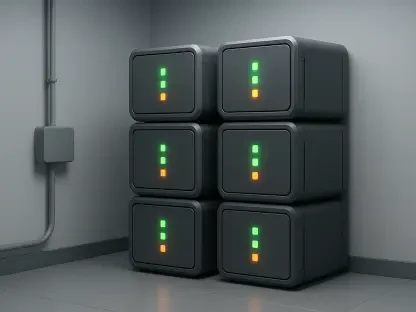
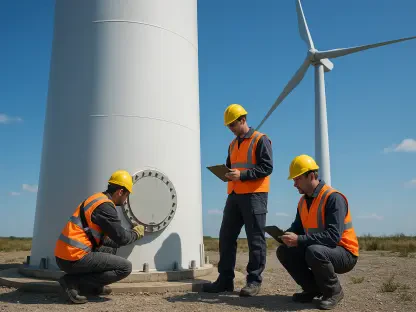
I expect that we will see a permanent decoupling of value between “power-privileged” sites and traditional industrial assets. As utility lead times continue to stretch due to the massive demands of AI and grid modernization, the premium for facilities with existing substations and high-voltage commitments will grow exponentially. We will see more industrial developers essentially becoming junior utility planners, working years in advance to secure power before even breaking ground on a foundation. The next five years will be defined by an intense focus on energy resilience, where the most successful industrial hubs will be those that can successfully integrate renewable energy and storage to bypass the bottlenecks of traditional utility delivery. High-quality, modern, institutional-grade facilities will not just be defined by their square footage, but by their megawatt capacity.