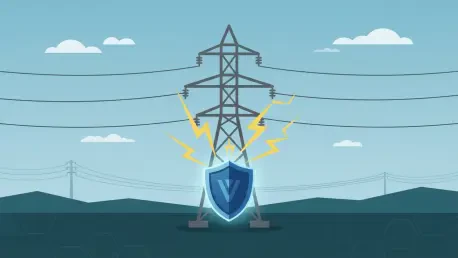

The rapid evolution of AI-driven cyber threats has forced a fundamental shift from traditional compliance-based security to a more dynamic and adversarial defensive posture. As the electrical grid undergoes a massive transformation toward decentralized energy and software-defined infrastructure, the vulnerabilities inherent in this transition have become increasingly apparent. In the fall of 2026, the intersection of critical infrastructure and artificial intelligence reached a pivotal moment, punctuated by a significant academic and industry push toward AI-driven defensive measures. The central theme of this movement is the urgent call for a paradigm shift in how electrical grids are protected against increasingly sophisticated, AI-augmented cyber threats. This movement is anchored by insights from distinguished experts and seminal research, highlighting that grid defenders must move at a velocity equal to or greater than that of their adversaries. The overarching goal is a comprehensive overhaul of the cybersecurity lifecycle, ranging from initial design and risk assessment to active monitoring, incident response, and eventual recovery. This transformation is not just about the technology itself but involves organizational, psychological, and regulatory shifts required to secure a grid that is becoming more decentralized and software-dependent. As the electrical industry has historically been slow to adopt new software paradigms, the speed of modern AI-driven attacks has made the status quo untenable. This movement represents a formal transition from traditional, checklist-based security to a more dynamic, AI-enabled posture that prioritizes physical safety and reliability across the nation’s energy networks.
Proactive Defense Through Adversarial Thinking
Shifting the Security Mindset: From Compliance to Active Defense
One of the most critical themes identified in the current landscape is the necessity of adversarial thinking. Historically, utility companies have operated under a compliance-centric mindset, assuming that meeting regulatory checklists and following established protocols made them inherently secure. However, this approach is insufficient against a capable attacker using AI to find novel vulnerabilities, necessitating a shift toward modeling the potential goals and lateral movement paths of motivated adversaries. Compliance is often a retrospective exercise, documenting that a system met standards defined years ago, whereas modern threats evolve in cycles of weeks or even days. By adopting an adversarial mindset, utilities can begin to anticipate the methods an attacker might use to bypass standard defenses. This involves a deep dive into the specific architectural weaknesses of a particular utility, acknowledging that a one-size-fits-all security checklist cannot account for the unique legacy systems and modern integrations present in every unique power provider’s environment.
Instead of asking whether they are compliant with a specific set of rules, defenders must now ask what a motivated attacker would do to disrupt their specific architecture. This fundamental shift requires internalizing the goals of a state-sponsored or criminal actor who might prioritize maximum disruption over data theft. AI plays a dual role in this process by enabling sophisticated modeling and predictive analysis. By analyzing vast amounts of historical attack data and correlating it with current network configurations, AI systems can suggest likely paths of lateral movement that a human analyst might overlook. This proactive posture allows security teams to harden specific points of entry and critical control paths before an incident occurs. It transforms the role of the security professional from a record-keeper to a strategist, constantly evaluating the grid’s defenses against a theoretical but highly capable opponent who is constantly looking for the weakest link in the chain.
Red Teaming and Digital Twins: Simulating the Unthinkable
AI is essential for the modern practice of red teaming and digital twin simulation. By using AI to simulate thousands of attack scenarios against digital twins—highly accurate, software-based replicas of a power grid—operators can identify weaknesses without risking the stability of the live, physical system. These digital twins incorporate real-time data from sensors and control systems, providing a safe sandbox where researchers can launch simulated malware or stress-test communication protocols. AI-driven simulation engines can run through permutations of attacks at a speed and scale that would be impossible for human teams to replicate manually. This process uncovers “cascading failure” scenarios where a seemingly minor breach in a non-critical system could lead to a widespread blackout due to unforeseen interdependencies. Identifying these vulnerabilities in a virtual environment allows for the implementation of physical and logical safeguards that are proven to be effective before they are ever deployed in the field.
Furthermore, AI is becoming the primary tool for automated vulnerability discovery within the grid’s own infrastructure. Just as attackers use machine learning to find zero-day exploits, defenders must use these tools to scan their own complex codebases and hardware configurations. Modern power systems rely on millions of lines of code across thousands of devices, many of which are provided by third-party vendors with varying security standards. AI-enabled scanning tools can identify patterns of insecure code or misconfigurations that traditional static analysis tools often miss. This allows utilities to patch holes and update firmware before these vulnerabilities can be exploited by malicious actors. By moving from a reactive to a proactive security stance, the industry can anticipate threats and fix them before they manifest in the real world, fundamentally changing the economics of cyberattacks by making them much more difficult and expensive for the adversary to execute successfully.
Integrating AI with Emerging Technologies
Quantum Resistance: Preparing for Future Decryption Threats
Experts agree that AI should not be viewed as a standalone solution but as a component of a larger technological ecosystem designed to withstand long-term threats. A significant focus is the pairing of AI with quantum computing to address the looming challenge of post-quantum cryptography. As quantum capabilities mature and begin to threaten traditional encryption methods, the security of the power grid’s communication protocols is at risk. AI can help manage this transition by identifying which parts of the network are most vulnerable to future quantum-level decryption attempts and prioritizing them for upgrades to quantum-resistant security frameworks. Moreover, AI can monitor network traffic for subtle anomalies that might signal a quantum-level breach attempt, such as the unusual processing of encrypted handshakes or attempts to harvest large volumes of encrypted data for later decryption. This synergy ensures that the grid is protected not just against today’s threats, but also against the technological shifts expected in the coming decade.
The integration of AI with quantum-resistant frameworks also allows for a more flexible and adaptive security posture. Instead of a single, rigid encryption standard, AI can manage a multi-layered approach where different levels of security are applied based on the sensitivity of the data and the perceived threat level in real-time. If an AI system detects a heightened risk of advanced cryptographic attacks, it can automatically trigger more resource-intensive, quantum-resistant protocols across critical communication channels. This dynamic allocation of security resources ensures that the grid remains functional and efficient while maintaining the highest possible level of protection. This forward-looking approach is essential for critical infrastructure that often remains in service for decades, ensuring that the investments made today will continue to provide security as the global computing landscape evolves.
Agentic Frameworks: Accelerating Response and Recovery
The research also points toward the necessity of agentic frameworks, which are AI systems capable of chaining together complex tasks to assist human operators. These systems can triage a suspicious network alert, gather context from various logs, and draft a response plan for a human operator within seconds. In a traditional setting, a security alert might sit in a queue for minutes or hours before a human analyst can investigate it. Agentic AI removes this bottleneck by performing the initial investigative work autonomously. It can cross-reference an unusual login at a substation with the technician’s official schedule, the physical location of their company-issued device, and their typical work habits. If the login appears fraudulent, the AI can immediately isolate the affected network segment while simultaneously notifying the security team with a detailed report on why the action was taken and what steps should be followed next.
The primary goal of implementing these agentic frameworks is to drastically reduce the mean time to respond (MTTR), ensuring that a breach in a substation can be isolated in seconds rather than hours. In the context of a power grid, speed is the difference between a minor localized incident and a regional blackout. These AI agents do not replace human decision-makers; rather, they provide them with high-fidelity information and pre-vetted options during the most critical moments of an attack. By automating the mechanical tasks of data collection and initial containment, AI allows human experts to focus on high-level strategy and complex problem-solving. This partnership between human intuition and machine speed creates a resilient defense that can adapt to the “blitzkrieg” tactics often used in modern cyber warfare, where attackers attempt to overwhelm defenders with a rapid succession of automated exploits.
Securing Distributed and Renewable Energy
The Vulnerability of Decentralized Assets: Managing the New Edge
A significant trend in modern grid evolution is the move toward distributed energy resources, such as solar arrays, wind farms, and battery storage. While essential for the energy transition and sustainability goals, these technologies vastly expand the attack surface of the grid. Unlike traditional centralized power plants, which are often heavily guarded and isolated, distributed resources are spread across wide geographic areas and are often connected to public or semi-public communication networks. These resources are considered “soft spots” because utilities do not always control the firmware or security protocols of customer-owned devices, such as smart inverters or residential battery systems. Every connected device represents a potential entry point for malware that could theoretically propagate from a single residential solar installation back into the core utility control systems. The sheer volume of these devices makes manual monitoring impossible, creating a massive visibility gap for grid operators.
Many older renewable installations and smaller-scale DERs use legacy industrial protocols that were never designed with modern encryption or authentication in mind. These protocols often lack basic security features, making them easy targets for attackers who can gain access to the communication bus and inject malicious commands. For example, an attacker could theoretically command thousands of smart inverters to disconnect from the grid simultaneously, creating a sudden drop in supply that could destabilize the entire regional frequency. Securing this decentralized landscape requires a new approach that treats every edge device as a potential threat. AI is the only technology capable of monitoring millions of these endpoints in real-time, looking for patterns that suggest a coordinated attack rather than isolated hardware failures. This allows utilities to embrace the benefits of renewable energy without compromising the fundamental stability and security of the power network.
Behavioral Analysis for Edge Devices: Detecting Anomalies Without Signatures
The proposed solution to the decentralized energy challenge involves using AI to monitor the behavioral patterns of distributed devices rather than relying on traditional signature-based detection. Traditional antivirus and intrusion detection systems look for known “signatures” of malware, but this is ineffective against zero-day attacks or attackers who use legitimate administrative tools for malicious purposes. In contrast, AI-driven behavioral analysis establishes a “baseline” of normal operation for every device on the network. If a solar inverter suddenly starts sending unusual commands or communicating with an unknown external IP address, the AI-enabled security system can flag it as a potential compromise based on its deviation from that baseline. This remains effective even if the specific malware used by the attacker has never been seen before, as the focus is on the unauthorized action rather than the specific code used to perform it.
This behavioral approach is particularly well-suited for the power grid because the physical laws governing electricity provide a predictable framework for what “normal” should look like. An AI system can correlate network traffic with physical parameters like voltage, frequency, and current. If a control command is issued to change a device’s state, but the resulting physical behavior of the grid does not match the expected outcome, the AI can immediately identify the discrepancy. This cross-domain validation—comparing cyber signals with physical realities—provides a powerful layer of defense that is extremely difficult for an attacker to spoof. By identifying behavioral deviations at the edge of the network, AI-enabled systems can quarantine compromised devices before they have the chance to affect the wider grid, ensuring that the decentralization of energy does not lead to the decentralization of security.
Structural Evolution and Operational Shifts
The Unified AI-Enabled SOC: Breaking Down IT and OT Silos
To implement these advanced strategies, experts advocate for the creation of AI-enabled Security Operations Centers (SOCs) that bridge the gap between different technical domains. Traditional security centers often separate Information Technology (IT), which handles corporate data and emails, from Operational Technology (OT), which controls the physical switches and breakers of the power grid. This is a dangerous oversight, as modern cyberattacks often begin on the corporate IT network—through a phishing email or a compromised laptop—before jumping to the OT control systems. An AI-enabled SOC integrates data from both sides of the house, using machine learning to correlate seemingly unrelated events. For instance, the system might link a suspicious corporate login in the morning to a series of unusual diagnostic pings at a remote substation in the afternoon, allowing the security team to see the full “kill chain” of an attack as it unfolds.
This integration is vital because it allows for a more holistic understanding of the threat landscape. When IT and OT data are siloed, attackers can operate in the gaps between the two departments, moving slowly and quietly to avoid detection. AI breaks down these silos by creating a unified data lake where all telemetry can be analyzed for patterns of malicious activity. Furthermore, AI-enabled SOCs can automate much of the reporting and compliance requirements that currently consume so much of a security team’s time. By automating the generation of incident reports and the mapping of events to regulatory frameworks, AI allows human analysts to spend more time on high-level threat hunting and system design. This operational shift transforms the SOC from a reactive monitoring station into a proactive hub of intelligence that can anticipate and neutralize threats across the entire enterprise.
Real-Time Zero Trust Authentication: Continuous Verification at Scale
Alongside the evolution of the SOC, the adoption of Zero Trust architecture is vital for securing the modern power grid. This principle assumes that no user, device, or network segment is inherently safe, regardless of whether they are inside or outside the traditional corporate perimeter. Zero Trust requires continuous verification for every action, meaning that a technician’s credentials must be validated every time they attempt to access a new part of the system. However, implementing this manually at the scale of a major utility would be incredibly cumbersome and would likely lead to operational delays. AI is the engine that makes Zero Trust viable at scale by analyzing telemetry in real-time to verify that a login is legitimate. It can look at a multitude of factors, such as the user’s location, the time of day, the specific device being used, and their typical work habits to determine if a request should be granted.
This continuous verification process significantly reduces the risk of credential theft, which remains one of the most common entry points for cyberattacks. If an attacker steals a technician’s password but attempts to log in from an unusual geographic location or at an odd hour, the AI-enabled Zero Trust system can automatically block the access or require additional factors of authentication. This happens instantaneously, without requiring a human to review the login attempt. AI can also manage the “least privilege” aspect of Zero Trust, automatically granting or revoking access rights based on the specific task a worker is assigned to perform that day. This ensures that even if an account is compromised, the attacker’s ability to move laterally through the system is severely limited. By making security invisible but omnipresent, AI-driven Zero Trust provides a robust defense that does not impede the efficiency of the workforce.
The Modern Threat Environment
Evolution of Attacker Capabilities: The Rise of Automated Exploits
The urgency of implementing AI-driven defense is grounded in the rapidly evolving capabilities of modern attackers. There is a growing concern that AI tools will lower the barrier to entry for complex operations against critical infrastructure. In the past, taking down a power grid required a high level of specialized knowledge and a significant investment of time and resources. However, AI can help attackers automate the reconnaissance phase of an attack, identifying the specific types of hardware and software a utility uses with unprecedented speed. AI-powered scrapers can pull information from public job postings, social media, and technical forums to build a detailed profile of a utility’s internal systems. This allows attackers to tailor their exploits to the specific environment they are targeting, increasing the likelihood of a successful breach.
Furthermore, AI is being used to generate highly convincing and tailored phishing lures to deceive utility employees. Traditional phishing emails are often easy to spot due to poor grammar or generic messaging, but AI can generate personalized messages that mimic the style and tone of a colleague or supervisor. These “spearphishing” attacks are much more effective at tricking employees into clicking a malicious link or revealing sensitive credentials. On the technical side, attackers are also using AI to modify existing malware code to evade detection by traditional antivirus software. By making subtle, automated changes to the code’s structure, they can create thousands of unique versions of a single piece of malware, making it impossible for signature-based defenses to keep up. This “automated mutation” of threats necessitates the move toward the behavioral and AI-driven defensive strategies discussed previously.
Lessons from Cyber Warfare History: From Ukraine to the Present
The historical precedents for grid-scale cyberattacks are well-documented and provide a sobering look at what is possible. The 2015 and 2016 attacks on the Ukrainian power grid proved that hackers could successfully plunge hundreds of thousands of people into darkness using a combination of spearphishing and specialized malware like Industroyer. These attacks were human-led and required months of careful planning and execution. However, the lesson for 2026 is that the window of time for such an attack is shrinking. What took months in 2015 might only take weeks or days with the assistance of modern AI tools. Recent lab exercises have shown that general-purpose AI models are already capable of solving complex cybersecurity challenges and identifying vulnerabilities in industrial control software that were previously thought to be secure.
While there is no confirmed evidence of a fully autonomous AI attack on a live power grid yet, experts believe it is only a matter of time before these tools are used in a coordinated fashion by state-sponsored actors. The transition from human-speed attacks to machine-speed attacks represents a fundamental shift in the nature of conflict. Waiting for a major incident before upgrading defenses would be a catastrophic strategic error for national security. The historical record shows that attackers are always looking for the most efficient way to achieve their goals, and AI is the ultimate efficiency tool. By studying these past incidents through the lens of modern technology, grid defenders can better understand the types of “kill chains” they need to disrupt and the critical points where AI-driven intervention can have the most impact in preventing a widespread outage.
Economic and Regulatory Considerations
Funding the Future of Grid Defense: Navigating the Rate Case
The transition to AI-powered grid security is not merely a technical challenge but a significant economic one that requires careful navigation of the regulatory landscape. Utilities operate under strict government oversight, and spending on new technology must typically be approved by regulators who oversee “rate cases”—the legal process that determines how much customers pay for electricity. This creates an inherent tension between the pressure to keep power bills low and the significant cost of implementing AI security frameworks and hiring specialized staff. Regulators are often cautious about approving large expenditures for “invisible” benefits like cybersecurity, especially when those investments do not directly increase the capacity or reliability of the grid in a way that is easily measurable by traditional metrics.
To overcome this hurdle, utilities must provide measurable data showing that AI-enabled defense reduces the long-term risk and potential cost of a massive outage. A single large-scale blackout can cost the economy billions of dollars in lost productivity and damaged infrastructure, far exceeding the cost of implementing advanced security measures. By using AI-driven risk modeling, utilities can present a clear “return on investment” (ROI) case to regulators, demonstrating how proactive security spending protects the public interest. Furthermore, there is a push for new regulatory frameworks that incentivize cybersecurity investments rather than just penalizing failures. This might include “cybersecurity riders” on utility bills or specialized funding pools for critical infrastructure protection. Addressing the economic reality of grid security is essential for ensuring that the necessary technical upgrades are actually deployed in the field.
The Demand for Explainable AI: Ensuring Transparency in Critical Systems
Because the power grid is a life-critical system, operators cannot rely on “black box” AI models where the reasoning behind a security decision is hidden. There is a high demand for “explainable AI” (XAI) that can provide a clear rationale for its findings to human operators. If an AI system recommends disconnecting a substation because of a suspected cyberattack, the human operator needs to know exactly why that recommendation was made before they take an action that could leave thousands of people without power. Transparent AI models allow for informed decision-making during a crisis, ensuring that the human-in-the-loop can trust the machine’s judgment. This transparency is also vital for post-incident investigations and for maintaining the trust of the public and the regulators who oversee the industry.
The market for security tools is increasingly favoring vendors who can provide this level of transparency. This involves creating AI systems that not only identify threats but also document the specific data points and logic paths used to reach a conclusion. This documentation is essential for regulatory compliance and for the continuous improvement of the security models themselves. If a human operator can see why an AI made a mistake, they can provide the feedback necessary to “retrain” the model and prevent the error from happening again. This iterative process of human-machine collaboration is the foundation of a truly resilient grid. By prioritizing explainability, the industry can ensure that AI remains a powerful tool for human experts rather than an unpredictable master of critical infrastructure.
Strategic Findings and Human Oversight
Maintaining Human-in-the-Loop Control: The Veto Power
A key finding for the industry is that the “human-in-the-loop” remains an essential component of any AI-driven security strategy. While AI is superior at processing vast amounts of data and identifying subtle patterns at high speed, final decisions regarding physical grid changes must remain with human operators. This prevents “rogue agent” scenarios where a defensive AI might accidentally cause a widespread outage while trying to isolate a perceived threat. Humans provide the context and ethical judgment that AI currently lacks, such as understanding the real-world impact of a blackout on hospitals, transportation systems, and vulnerable populations. The AI’s role is to provide the intelligence and the options, but the final “veto power” must rest with a trained professional who is accountable for the system’s performance.
This partnership requires a new approach to training for utility workers. Operators must be comfortable working alongside AI systems, understanding both their strengths and their limitations. This involves regular tabletop exercises and simulations where humans and AI work together to respond to complex cyber incidents. These exercises help to build trust and to develop the communication protocols necessary for a rapid, coordinated response. The goal is to create a seamless interface where the AI handles the tactical “heavy lifting” of threat detection and triage, while the human focuses on the high-level strategic decisions. This balanced approach ensures that the grid benefits from the speed of automation without losing the safety and accountability provided by human oversight.
Cultivating Sector-Wide Resilience: Beyond Simple Hardening
Finally, the strategic focus of grid security is shifting from simple “hardening”—building a wall around the grid—to the broader concept of resilience. Traditional security focused on preventing any breach from occurring, but in the modern threat environment, it is assumed that a determined attacker will eventually find a way in. Resilience is the ability of the grid to take a hit, identify the breach immediately, and “heal” or recover before the public is affected. This requires a move toward modular architectures where compromised segments can be isolated without impacting the rest of the system. AI is the key to this resilience, as it provides the real-time situational awareness necessary to manage a complex, multi-layered recovery process while under fire from a cyberattack.
This shift toward resilience also requires unprecedented levels of cross-sector collaboration. Utilities must move away from siloed operations and participate in shared threat-intelligence networks where AI-discovered insights can be distributed across the entire industry. If one utility’s AI system identifies a new type of malware, that information should be shared instantly with every other provider so they can update their own defenses. This collective defense strategy, supported by federal agencies like the Department of Energy, ensures that the entire national grid becomes stronger with every attempted attack. By focusing on resilience and collaboration, the industry can create a power network that is not only protected by intelligence but is also robust enough to withstand the inevitable challenges of an increasingly digital and adversarial world.
In the past years, the development of these technologies has moved from theoretical research into practical implementation across major utility providers. The industry successfully integrated AI-enabled monitoring across several regional distribution networks, demonstrating a significant reduction in the time required to identify and isolate unauthorized network activity. These early successes proved that while the transition to AI-driven security is complex, the benefits in terms of grid stability and national security are well worth the investment. Moving forward, the focus should remain on refining the transparency of AI models and ensuring that the workforce is properly equipped to handle the shift toward automated defense. The goal established during this period was to ensure that the infrastructure remains a step ahead of emerging threats, and the lessons learned provide a clear roadmap for maintaining the integrity of the energy sector. Stakeholders must now prioritize the standardization of data formats and communication protocols to facilitate even deeper collaboration and more effective sector-wide response. By continuing to invest in both technical innovation and organizational resilience, the industry has established a foundation that can adapt to the unforeseen challenges of the next decade of energy transformation.