
The rapid warming of the central and eastern tropical Pacific Ocean has triggered a sequence of atmospheric shifts that are currently testing the endurance of the American power grid in ways previously deemed unlikely by historical standards. While the total number of Atlantic hurricanes often decreases during these cycles, the current intensification is happening with such unusual speed that utility operators are facing a “fewer storms but higher risk” paradox that demands immediate tactical adjustments. This climate phenomenon disrupts traditional seasonal planning by introducing extreme volatility into regional weather patterns, making it harder for energy providers to predict where the next major system will strike. Instead of preparing for a broad season of moderate activity, grid managers are now forced to anticipate localized, high-intensity events that can overwhelm aging infrastructure in a matter of hours. The complexity of these changes means that the energy sector must look beyond simple storm counts to understand the intricate relationship between ocean temperatures and continental electrical stability.
Managing Long-Term Atmospheric Volatility and Regional Disparities
The current cycle shows a high probability of evolving into a “Super El Niño,” a designation that suggests these volatile weather patterns could persist well into 2027 without a significant cooling period. This extended duration complicates long-term resource planning for utilities, as they can no longer treat these conditions as one-off seasonal anomalies but must instead view them as a multi-year environmental shift. For example, persistent dry spells in certain regions weaken the structural integrity of wooden poles and increase the likelihood of soil shifting around substations. Meanwhile, other areas face the opposite problem, with saturated ground leading to frequent uprooting of trees that strike power lines. Utilities are now transitioning from reactive maintenance to more comprehensive asset management strategies that account for these sustained environmental stresses over several years. This foresight is critical because the cumulative effect of several years of harsh weather can degrade components faster than their engineered lifespan originally anticipated.
A defining characteristic of the current forecast is the “split summer” scenario, which creates a map of vastly different threats across the United States. In the Southwest and California, the primary concern revolves around atmospheric rivers and potential flooding that can submerge critical substations or wash out access roads for repair crews. Conversely, the Northwest and Northern Plains are contending with extreme drought conditions that elevate wildfire risks, requiring utilities to implement public safety power shutoffs more frequently to prevent equipment from igniting dry vegetation. At the same time, the Southeast and Gulf Coast must manage persistent heat domes that drive cooling demand to record-breaking levels, testing the physical limits of transformer cooling systems and load management protocols. This regional divergence prevents the industry from adopting a one-size-fits-all approach to grid reliability, requiring a localized strategy for every utility based on its specific geographical exposure and regional climate trends.
Hurricane Dynamics: Responding to Coastal Intensification and Shoreline Threats
Even though forecasters generally expect a lower total number of named storms during an El Niño year, those that do materialize are increasingly likely to develop and strengthen much closer to the American coastline. This geographic shift significantly reduces the lead time that utilities have to stage emergency equipment and mobilize mutual assistance personnel before a storm makes landfall. In previous decades, a storm forming in the central Atlantic provided several days of warning; however, current conditions favor rapid intensification near the coast, sometimes giving operators less than forty-eight hours to prepare. Recent data indicates that even a single category-one storm hitting a high-density urban corridor or a vital industrial hub can cause more systemic damage to regional transmission networks than a major hurricane striking a less populated area. Consequently, the focus has shifted from monitoring the total count of Atlantic depressions to developing rapid-response protocols that prioritize local asset protection and immediate restoration capabilities.
To combat these evolving risks, the American utility industry is currently allocating billions of dollars toward intensive grid hardening and proactive resilience measures. Companies are prioritizing aggressive vegetation management to remove overhanging limbs that pose a threat during high winds, while also replacing legacy wooden poles with ductile iron or composite materials designed to withstand hurricane-force gusts. In high-risk flood zones and densely populated neighborhoods, some utilities are selectively moving overhead lines underground to shield them from falling debris and wind damage. These physical reinforcements are supported by robust mutual assistance programs, which allow power companies to coordinate resources across state lines and pre-position repair crews in staging areas ahead of predicted weather events. By combining physical infrastructure upgrades with sophisticated logistics, utilities aim to minimize the duration of outages and ensure that critical facilities like hospitals and water treatment plants remain operational.
Operational Resilience: Balancing Technology and Economic Realities
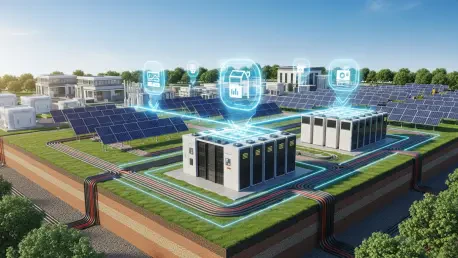
Modern technological solutions like microgrids and distributed energy resources are being deployed to allow localized sections of the power grid to operate independently during major regional outages. These systems utilize a mix of local generation, such as natural gas turbines or renewable sources, and high-capacity battery storage to maintain power for essential community services. However, these advanced tools are not immune to the unique challenges posed by El Niño; for instance, solar-heavy systems often see a significant drop in production during the prolonged cloud cover and heavy rainfall typical of these weather patterns. Furthermore, extreme temperatures can reduce the efficiency of large-scale battery storage units, requiring more energy just to maintain optimal operating conditions. Effective grid planning must therefore account for these potential performance dips by diversifying local energy sources and ensuring that backup systems are ruggedized against the very elements they are designed to outlast and protect against.
The transition toward a more resilient and technologically advanced grid demonstrated that the key to navigating the complexities of El Niño was a fundamental shift from reactive restoration to proactive resilience. Utility executives realized that addressing economic realities, such as the rising costs passed to consumers and potential federal budget cuts to forecasting, required transparent financial modeling and robust regulatory advocacy. Investing in localized energy storage and diversified microgrids proved essential for maintaining services in areas prone to isolation during extreme events. Regulatory agencies also played a pivotal role by establishing clear incentives for resilience projects that prioritized long-term stability over short-term savings. To maintain this momentum, stakeholders should have prioritized the continuous upgrading of communication networks that link smart grid devices, ensuring that autonomous systems can re-route power during physical damage. Future-proofing the grid required a commitment to integrating advanced forecasting.