
Bridging the Gap in India’s Electric Vehicle Ecosystem
The realization of widespread electric mobility in India has long been hampered by a fragmented digital landscape that forces drivers to juggle multiple platforms just to power their journeys. This strategic partnership between Bolt.Earth and ChargeZone addressed these logistical hurdles by unifying the charging landscape. By dismantling proprietary “walled gardens,” the collaboration offered a streamlined experience across the subcontinent. This move went beyond physical hardware, focusing on the digital interface to ensure that charging an electric vehicle felt as intuitive as visiting a traditional gas station.
The Evolution of India’s Charging Infrastructure
Historically, the domestic sector suffered from a disjointed deployment strategy. Early adopters faced significant “app fatigue” because they navigated dozens of software systems to access disparate charging points. This fragmentation, paired with inconsistent hardware standards, acted as a primary barrier for average consumers. As the market matured from 2026 to 2028, the focus transitioned from small, localized installations to large-scale, high-speed networks. This shift highlighted the necessity of a unified utility over isolated islands of infrastructure.
Analyzing the Impact of Network Integration
Interoperability: A Catalyst for National Mobility
The core value of this integration resided in the concept of interoperability. By enabling drivers to locate and pay for services through a single application, the partnership solved the industry’s most persistent pain point. Data-driven insights indicated that when charging became seamless, consumer confidence surged, leading to higher vehicle sales. The integration utilized a unified payment gateway and provided real-time status updates, ensuring that drivers avoided the frustration of arriving at occupied or broken terminals.
The Synergy: Urban P2P and High-Speed Highway Corridors
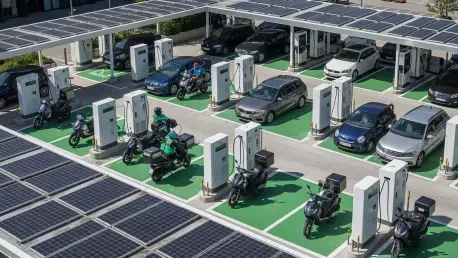
This collaboration leveraged the specialized strengths of two market leaders. ChargeZone provided a robust backbone of fast-charging stations along high-traffic highways, catering to intercity travel for four-wheelers and commercial fleets. Meanwhile, Bolt.Earth contributed a massive peer-to-peer network spanning over 2,000 cities, supporting two-wheelers and three-wheelers for last-mile connectivity. Together, they created a dense grid of over 1,500 fast-charging locations, supporting both daily urban commutes and long-distance travel.
Overcoming Hurdles: Technical Stack and Market Misconceptions
Merging distinct technological stacks involved navigating immense complexity. Engineers ensured that hardware protocols and software layers communicated without friction to provide a reliable experience. Additionally, the partnership worked to dispel the myth that charging was only for luxury car owners. By supporting a diverse range of vehicles, the initiative democratized access for delivery fleets and rickshaw drivers. Addressing these technical and economic diversities was a prerequisite for scaling infrastructure across a nation as vast as India.
Future Projections: The Interconnected EV Market
The partnership likely established a standard for “roaming” within the industry, mirroring the seamless functionality of cellular networks. Innovations in automated load management and renewable energy integration at charging hubs were expected to follow. As regulatory frameworks increasingly favored green energy, mandated interoperability across all providers became a probable outcome. Experts predicted that the consolidation of charging data would eventually allow for predictive maintenance, making range anxiety an obsolete concern for drivers.
Strategic Insights: Considerations for Stakeholders and Consumers
For business owners and fleet operators, this unified network offered a clear roadmap for cost-effective electrification. Managing charging needs through a single interface reduced operational overhead and improved logistics. Individual consumers were advised to prioritize platforms that offered the broadest interoperability to ensure maximum travel flexibility. Real-world applications showed that drivers could plan trips from urban centers to remote towns without fearing hardware incompatibility. Adopting a “one-app” strategy emerged as a best practice for efficiency.
Closing the Loop: Sustainable Transportation in Review
The collaboration between Bolt.Earth and ChargeZone functioned as a pivotal milestone for the unified ecosystem. It successfully merged an urban P2P network with a high-speed highway backbone to provide the reliability required for mass market adoption. This transition from fragmented services to a streamlined utility remained significant because it pushed the infrastructure toward an “EV-first” mindset. Stakeholders recognized that the standardization of payment and discovery protocols was the only viable path to a zero-emission future. Ultimately, the industry shifted toward a model where seamless connectivity became the baseline for all sustainable transport initiatives.