
Light commercial vehicle adoption remains the most significant untapped opportunity in the transport market, currently representing only one percent of total sector sales. Australia’s transition to sustainable transportation has moved at a pace that few analysts could have predicted a decade ago. According to the Electric Vehicle Council’s latest retrospective report, the nation has officially transitioned from the niche “early adopter” phase into the “early majority” category. This shift is characterized by a rapid acceleration in sales and a diversification of the consumer base. What was once a market defined by high-end luxury models is now a burgeoning industry reaching various socioeconomic levels across the continent. The speed of this transition is perhaps the most striking finding of recent market data, with a new electric vehicle now sold in Australia every 100 seconds. This surge is largely motivated by the dual consumer desire to slash personal transportation expenses and bolster national energy security. By reducing a heavy reliance on imported fossil fuels, Australians are increasingly viewing battery electric vehicles as a practical solution for both financial stability and environmental responsibility.
Market Dynamics: Accelerated Sales and Adoption Trends
The statistical milestones achieved between 2025 and 2026 highlight a significant doubling of sales for both battery electric vehicles and plug-in hybrids. While hybrid technology served as a vital bridge for many, the market maintains a clear 2:1 preference for fully electric drivetrains over their hybrid counterparts. This trend aligns with global shifts toward zero-emission technology, though the report warns of potential fragility in these figures. Future growth could be tempered by increasing pressure on public charging infrastructure or the potential implementation of new road user charges. Despite these vulnerabilities, the momentum behind electrification remains formidable. Projections that once seemed ambitious are now being outpaced by reality, as the adoption curve begins its steepest incline. With approximately 612,000 battery electric vehicles currently on the road, the industry is quickly moving toward the national target of 5 million vehicles by 2035. This growth is supported by a mix of established Western brands and a wave of competitive new entrants from overseas markets that are effectively driving down costs.
Consumer Sentiment: Domestic and Foreign Brand Competition
The Australian market is currently dominated by a mix of established Western brands and aggressive new entrants from China. Over the past twelve months, models like the Tesla Model Y and BYD Sealion 7 have seen massive success, proving that consumers are ready for high-tech, reliable electric options. This growth is supported by a mix of established players and a wave of competitive new entrants from overseas markets that are effectively driving down costs. Consumers are no longer just looking at the environmental benefits; they are focused on the long-term savings associated with avoiding volatile gasoline prices. This shift in sentiment is particularly noticeable in suburban and regional areas where daily mileage is higher, making the fuel savings even more impactful. As the choice of available models continues to expand, the diversity of the buyer profile is broadening, including families and younger drivers who previously viewed electric vehicles as out of reach financially. This competition is fostering a healthy environment where technology improves rapidly while prices remain accessible.
Charging Infrastructure: Home Systems and Public Reliability
A primary concern for prospective buyers has traditionally been the availability of public charging stations. However, recent data suggests that infrastructure development has largely kept pace with vehicle sales across the Australian continent. This success is bolstered by the unique local context, where the vast majority of electric vehicle owners perform the bulk of their charging at home using residential power connections. This decentralized approach reduces the immediate strain on public networks while providing owners with unparalleled convenience and significantly lower refueling costs compared to traditional fuels. Home charging remains the backbone of the ecosystem, accounting for approximately eighty percent of all energy delivered to the current fleet. This behavior pattern allows the public network to focus on supporting long-distance travel and providing solutions for apartment dwellers who lack private garage access, ensuring the transition is equitable. By leveraging existing electrical infrastructure, the nation has managed to scale its fleet without the immediate need for a total grid overhaul.
Network Expansion: Ensuring Regional Connectivity
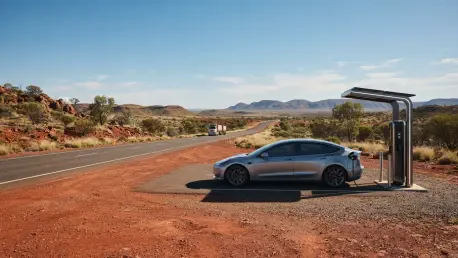
On a broader scale, the public network is expanding rapidly, with a thirty-one percent increase in individual connectors over the past twelve months alone. There are now over four thousand dedicated charging locations across the continent, ensuring that long-distance travel is becoming increasingly viable for the average driver. To avoid future bottlenecks as the vehicle population grows, the report emphasizes that continued investment in high-speed direct current charging is mandatory to maintain consumer confidence and support the next phase of mass adoption. State and federal government grants have played a crucial role in rolling out these high-capacity sites along major highway corridors. These developments are critical for dispelling range anxiety, as drivers can now find reliable charging options even in more remote coastal and inland regions. This network resilience is a key pillar in the strategy to reach five million zero-emission vehicles within the next nine years. Consistent maintenance and uptime monitoring will be the next technical hurdles to overcome.
Economic Landscape: Price Parity and Segment Voids
Price parity with traditional internal combustion engine vehicles is finally becoming a reality for the Australian consumer. The arrival of ultra-affordable models has pushed the entry price for electric vehicles below twenty thousand dollars, making them some of the most accessible vehicles on the market regardless of the powertrain choice. In the commercial space, new electric vans are beginning to undercut their diesel competitors in price, offering urban logistics companies a superior financial alternative through reduced maintenance and fuel expenditures. This pricing shift is essential for capturing the budget-conscious segment of the market that was previously excluded by the high upfront costs of early battery technology. Furthermore, the total cost of ownership has tipped in favor of electric drivetrains, as lower servicing requirements and cheaper electricity prices offset any remaining initial premium. This economic shift is driving a wave of interest from small business owners who are looking to de-risk their operations against future fuel price spikes.
Strategic Integration: Safety and Future Energy Networks
Safety remains a top priority for Australian consumers, and the latest data reinforces the integrity of electric platforms. In recent safety evaluations, six out of the seven highest-rated vehicles were electric, debunking long-standing myths about the structural risks or battery fires in battery-powered cars. This high level of safety, combined with advanced driver-assistance technologies, is helping to normalize electric vehicles as the standard choice for families and safety-conscious buyers. Manufacturers are prioritizing the use of high-strength materials and sophisticated thermal management systems to ensure that these vehicles exceed the rigorous standards set by local authorities. As the public becomes more familiar with these results, the historical skepticism regarding electric vehicle reliability is rapidly fading. This normalization is a critical psychological milestone that allows the market to move beyond enthusiasts and toward everyday drivers who prioritize the protection of their passengers and the long-term durability of their automotive investments.
Actionable Progress: Next Steps for National Stability
The progress recorded over the last decade confirmed that Australia successfully navigated the initial complexities of the electric vehicle transition. Stakeholders recognized that while the early adopter phase ended, the move toward the early majority required even greater coordination between the energy and transport sectors. To maintain this trajectory, the primary focus shifted toward the electrification of heavy-duty transport and high-mileage commercial fleets. Industry leaders recommended that future investments prioritize high-output charging stations for freight corridors to unlock the economic benefits of electric trucking. Furthermore, maintaining political stability regarding tax incentives proved essential for ensuring that the supply of affordable models continued to meet the rising domestic demand. By treating vehicles as mobile energy assets, the nation secured a more resilient power grid while reducing its carbon footprint. These actions established a clear roadmap for achieving a fully sustainable transport network within the coming years.