
The rapid transformation of the global energy landscape has created a paradoxical tension where the pursuit of carbon neutrality now faces the uncompromising requirements of territorial surveillance and military readiness. As nations race to meet ambitious climate goals, the physical footprint of green infrastructure is beginning to encroach upon the invisible boundaries of national defense. This shift toward onshore wind as a designated piece of “Nationally Significant Infrastructure” necessitates a complex reevaluation of how a state protects its borders while simultaneously securing its energy future. The following analysis explores the technical barriers of radar interference, the intensifying debate between energy and military security, and the potential for technological co-existence between massive turbines and sensitive defense systems.
The Collision of Infrastructure: Radar Systems and Wind Turbines
Data and Trends in Renewable Expansion vs. Defense Constraints
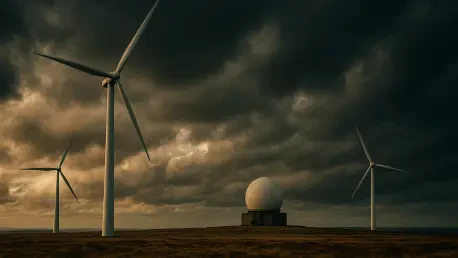
Following significant policy shifts in 2024, the push for large-scale onshore wind has accelerated from 2026 to 2030, resulting in a surge of ambitious proposals aimed at meeting clean power targets. Modern engineering has pushed turbine heights beyond 200 meters, a scale that drastically increases their radar cross-sections and physical presence in the sky. This growth creates a geographic “squeeze” where optimal wind corridors, often found on elevated and unobstructed moorlands, directly overlap with essential military low-flying zones and surveillance arcs.
Real-World Friction: The Hope Moor and Brizlee Wood Conflict
The conflict surrounding the Hope Moor project illustrates this friction, with the Ministry of Defense formally objecting to 23 massive turbines near the Yorkshire Dales. Military analysts warn that the rotating blades produce “false radar returns” that can mask the signature of actual aircraft, creating dangerous blind spots for operators. Even though the site is 60 miles from the Brizlee Wood radar station, the sheer height of the turbines threatens the integrity of air traffic control at RAF Leeming. While the project could power 135,000 homes, the military maintains that the resulting degradation of airspace monitoring is an unacceptable risk to national safety.
Expert Perspectives on the Security-Sustainability Nexus
Military strategists argue that air defense integrity is a binary requirement; a radar system is either fully functional or compromised, leaving no room for mid-project negotiation. However, developers like Fred. Olsen Renewables counter by defining energy independence as a core tenet of modern national security, arguing that a nation reliant on foreign power is inherently more vulnerable. This leaves political strategists in a difficult position, forced to adjudicate between legally mandated environmental mandates and the grave warnings of defense experts regarding pilot safety.
Future Outlook: Navigating the “Nail in the Coffin” for Onshore Wind
To break this stalemate, the industry is looking toward technological mitigation, such as “stealth” turbine blades and advanced signal filtering software designed to ignore rotational clutter. Strategic siting may also shift toward offshore locations or lower-impact inland zones to prevent the industrialization of sensitive military corridors. If these sectors fail to find common ground, the long-term consequences could manifest as either chronic energy shortages or significant gaps in the national surveillance net. Finding a path to co-existence is no longer an option but a necessity for long-term regional stability.
Conclusion: Balancing Sovereignty and Sustainability
Achieving a balance between sovereignty and sustainability required a unified national strategy that moved beyond adversarial litigation to prioritize integrated technological innovation. Stakeholders looked toward hybrid monitoring systems and shared data protocols to ensure that the transition to net-zero did not leave borders exposed. By fostering collaboration between military planners and energy developers, the government established a precedent for multi-use landscape management. This approach ultimately ensured that the infrastructure of the future supported both the climate and the crown without compromise.