
The tension between industrial expansion and biological preservation has rarely been as palpable as it is on the remote shores of Tasmania where a massive renewable energy project now faces a life-or-death challenge for one of the world’s most vulnerable avian species. This specific struggle centers on the orange-bellied parrot, a creature that defies its small stature by undertaking a perilous annual migration across the turbulent waters of the Bass Strait. While the push for carbon neutrality has led to the proposed construction of the Robbins Island wind farm, the intersection of these spinning blades and the birds’ narrow migratory corridor has created what many call a green-on-green conflict. The situation highlights a profound irony: the very technology designed to save the planet from climate change might inadvertently cause the extinction of a species that has survived for millennia. As the project moves forward, the global community is watching to see if technological innovation can truly bridge the gap between energy needs and ecological integrity. This case serves as a vital benchmark for modern conservation strategies.
The Fragile State: A Rare Migratory Species
Conservation efforts for the orange-bellied parrot have reached a critical juncture following a decade of intensive intervention that rescued the species from the absolute brink of total extinction. From a dangerously low point of only seventeen individuals observed in the wild during the mid-2010s, scientists and specialized breeding facilities have worked tirelessly to bolster their numbers, successfully reintroducing enough birds to bring the current wild population to over one hundred and seventy individuals. However, this hard-won progress remains incredibly delicate, as the genetic diversity of the flock is limited and their survival depends on a highly specific environmental niche. Experts emphasize that the recovery is not yet self-sustaining, and the loss of even a few breeding pairs could trigger a demographic collapse from which the species might never recover. The investment of millions of dollars and thousands of hours of labor has successfully delayed a biological tragedy, but the margin for error remains razor-thin.
The primary biological challenge facing these birds involves their unique migratory behavior, as they are one of the very few parrot species globally that performs a long-distance over-water journey. Every year, these parrots must navigate the treacherous weather patterns of the Bass Strait to reach their exclusive breeding grounds in the remote southwest of Tasmania. This journey is particularly hazardous for juvenile birds, who lack the experience and physical stamina of older adults, leading to high natural mortality rates during their first season. The introduction of industrial infrastructure directly into this flight path creates a novel hazard that the species did not evolve to manage. Because the entire population utilizes such a narrow corridor, any localized incident involving wind turbines has the potential to impact a significant percentage of the total species. This geographical bottleneck makes the site of the Robbins Island development especially contentious as it sits squarely in their path.
Technological Mitigation: Managing the Impact of Infrastructure
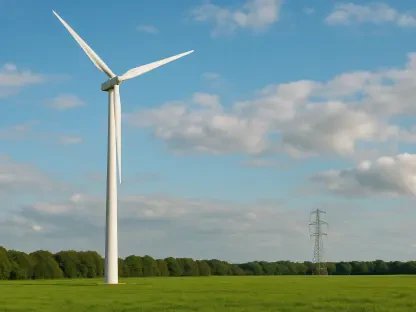
The proposed wind farm on Robbins Island represents a massive commitment to the decarbonization of the regional power grid, featuring a planned installation of approximately one hundred turbines with significant generating capacity. ACEN Australia, the developer leading the project, maintains that large-scale wind energy is the most effective tool available for Tasmania to meet its ambitious climate goals and support the broader transition to sustainable power. To address the severe ecological risks, the project has been subjected to rigorous federal assessments and must adhere to some of the strictest environmental conditions ever imposed on an energy development. These mandates are designed to ensure that the pursuit of renewable energy does not come at the direct expense of local biodiversity. By integrating environmental protection into the design, the project aims to demonstrate that industrial progress and wildlife conservation can occupy the same landscape through careful management and oversight.
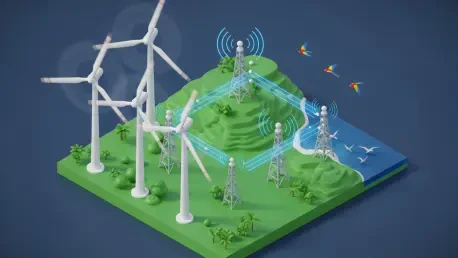
To mitigate the risk of bird strikes, the developers have committed to implementing an advanced reactive shutdown system that utilizes cutting-edge tracking technology to monitor the parrots in real time. This system involves equipping a significant portion of the wild and captive-bred population with miniature radio transmitters that emit a constant signal detectable by a network of receivers across the island. When a bird is detected approaching the wind farm’s perimeter, the turbines are programmed to decelerate and stop spinning within minutes, creating a safe passage through the site. This technological compromise is central to the project’s viability, as it seeks to replace the permanent exclusion of infrastructure with a dynamic, sensor-based safety net. While this approach is technically complex and requires constant calibration, it represents the leading edge of mitigation. The success of this system depends on the reliability of the sensors and the speed of the massive turbine blades.
Ethical Intersection: The Future of Ecological Risk
Despite the inclusion of high-tech safeguards, the wind farm project remains a source of deep anxiety among environmentalists who question the wisdom of gambling a species’ survival on mechanical systems. Critics argue that even a small technical failure, such as a sensor malfunction or a delay in the shutdown sequence, could lead to a catastrophic event for the orange-bellied parrot. There is also concern that the presence of the turbines might displace the birds from their traditional feeding and resting areas, leading to increased exhaustion during their already grueling migration. Proponents of the project, however, suggest that the greater threat to the parrot—and all species—is the unchecked progression of climate change, which is already altering the habitats and food sources they rely on. This debate forces a difficult calculation between immediate, localized risks to a single species and the long-term, global benefits of reducing carbon emissions during this transition for our planet.
The stakeholders involved in the Robbins Island dispute established a framework where technological innovation was prioritized as the primary bridge between energy production and wildlife safety. It was determined that the integration of artificial intelligence and real-time tracking offered the most viable path forward for preserving the orange-bellied parrot while expanding the renewable energy footprint. The lessons learned from this implementation provided a blueprint for future developments, showing that rigorous data collection and adaptive management were essential components of modern infrastructure projects. Moving forward, the focus shifted toward refining these tracking systems to ensure they could operate autonomously with near-perfect accuracy. Conservationists and engineers began collaborating more closely to design turbine layouts that accounted for migratory patterns from the initial planning stages. By treating the survival of the species as a non-negotiable metric, the industry set a new standard.