
Decarbonizing heavy transport without stranding critical fuel supply has become the tightrope Queensland chose to cross by backing a refinery retrofit that turns an old workhorse into a low-carbon producer while keeping diesel flowing. This move reframed a local refinery as a national asset: a platform to cut emissions now while building options for cleaner aviation later.
This FAQ laid out what the investment aimed to achieve, how the project worked, and when benefits showed up. It unpacked the staged pathway from modest renewable diesel volumes to potential large-scale output, helping readers see both the practical steps and the policy logic behind them.
Key Questions
What exactly is Queensland funding, and why does it matter?
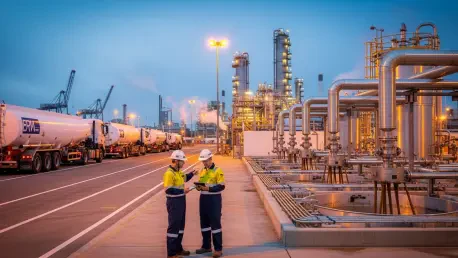
The state committed $25 million to help Ampol modify the Lytton refinery in Brisbane so it could co-process biogenic feedstocks with fossil diesel. That mattered because Lytton was one of only two refineries left in Australia, and its evolution underpinned both energy security and lower-carbon fuels without waiting for greenfield plants.
The package covered upgrades to the diesel hydrotreater, new truck unloading, heated and insulated tanks with blending, secondary containment, and control-system changes to manage variable bio-based inputs. It also supported streamlined regulatory approvals through the Sovereign Industry Development Fund, a $180.6 million program prioritizing strategic biofuels.
How will the retrofit work on the ground?
Refineries already crack, clean, and blend hydrocarbons; co-processing extended those steps to renewable inputs such as biogenic oils. The Lytton modifications allowed limited percentages of certified feedstocks to enter existing units, producing drop-in renewable diesel that met current specs.
Because the site stayed online, the staged approach reduced downtime and capital risk. Early output established operating know-how, validated supply chains, and informed later decisions about deeper conversion, creating a feedback loop between engineering performance and market demand.
When will production start, and how much fuel is expected?
Schedules balanced speed with safety. Construction was slated for mid-2027, enabling commissioning to ramp into 2028. That timeline aligned with rising demand signals for low-carbon fuels and gave suppliers time to qualify feedstocks at scale.
Initial renewable diesel volumes targeted about 20 million liters per year. If early phases performed, combined renewable diesel and sustainable aviation fuel capacity could scale to as much as 750 million liters annually in the early 2030s, contingent on feedstock availability, off-take agreements, and policy stability.
Why begin with co-processing instead of a full conversion?
Co-processing delivered near-term volumes using existing equipment, workforce, and logistics. It spread investment over time, avoided long outages, and kept conventional diesel available for sectors without immediate alternatives.
Moreover, incremental steps de-risked technology and feedstock choices. Operators could tune catalysts, blending ratios, and quality controls before committing to larger units, while financiers gained confidence from real production data rather than projections.
How does this enable sustainable aviation fuel later?
Renewable diesel and SAF share similar feedstocks and processing routes, especially when hydrotreating and isomerization are involved. By proving supply chains and quality management for renewable diesel, Lytton built the operational foundation to add SAF lines.
Airlines faced mounting decarbonization pressures, and domestic SAF reduced exposure to import constraints. Positioning Lytton as a first mover supported aviation goals, created local jobs, and kept value in Australia.
Summary
The retrofit used public funding to unlock a private asset’s transition, starting with co-processing for early renewable diesel and setting the stage for future SAF. Key milestones included construction in 2027, initial output in 2028, and potential scale to 750 million liters annually in the next decade.
The strategy married energy security with emissions cuts, minimized risk through staging, and leveraged the Sovereign Industry Development Fund to speed approvals. Readers could track progress through construction, commissioning, and market uptake.
Conclusion
The Lytton plan had shifted from feasibility to execution, pairing pragmatic engineering with clear market signals. Next steps centered on contracting feedstocks, finalizing off-takes with heavy transport and airlines, and locking consistent policy to de-risk scaling.
For businesses, the opportunity lay in aligning logistics and fleets to accept renewable blends; for policymakers, in maintaining durable incentives and certification pathways. With those pieces in place, the retrofit model stood ready to accelerate cleaner fuels at home.