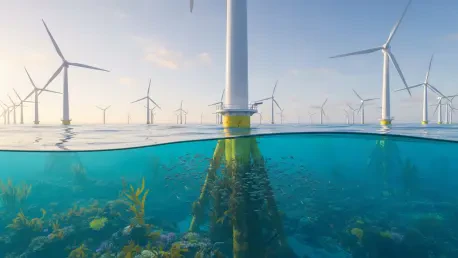

The rapid acceleration of the United Kingdom’s offshore wind sector is fundamentally altering the seascape, shifting the focus from traditional fossil fuels toward a decarbonized energy grid that powers millions of homes. This massive industrial expansion brings an inherent tension between the urgent need for clean energy and the preservation of fragile marine ecosystems that have already suffered from decades of overexploitation. A report by Rewilding Britain emphasizes that this transition represents a unique crossroads where infrastructure development can either degrade the ocean further or act as a primary driver for large-scale nature recovery. By integrating ecological restoration into the very blueprint of energy projects, the nation has an opportunity to treat the sea not just as a resource for power, but as a living system capable of rejuvenation. Achieving this balance requires a departure from old industrial models in favor of a holistic strategy that prioritizes the long-term health of the marine environment alongside energy production.
Balancing Ecological Preservation: Industrial Infrastructure and Nature
Developing massive wind farms in the open sea involves significant ecological challenges that must be managed during both the construction and operational phases. Activities like pile driving and dredging create noise and physical disturbances that can displace marine wildlife and harm fragile seabed habitats. The sheer scale of modern turbine installations necessitates deep-sea foundations, which can stir up sediment and disrupt the feeding grounds of various species. While the goal is to provide carbon-free energy, the immediate physical footprint of these structures often conflicts with the natural rhythms of the ocean floor. To address these concerns, researchers have begun implementing bubble curtains and other acoustic damping technologies to shield sensitive marine mammals from the deafening sounds of construction. These measures represent a necessary evolution in how maritime projects are executed, ensuring that the push for a greener future does not inadvertently silence the underwater world or lead to the permanent loss of critical biodiversity.
The physical presence of towering turbines also poses a documented risk to avian populations, with some major projects potentially causing thousands of seabird deaths annually due to collisions. Beyond the direct mortality rates, the displacement of migratory birds from their traditional flight paths can lead to increased energy expenditure and reduced breeding success. Protecting biodiversity requires innovative technology, such as real-time radar monitoring and AI-driven automated shut-down systems that can pause turbine rotation when large flocks of birds approach. Furthermore, careful spatial planning is required to avoid placing wind farms in high-traffic corridors for vulnerable species like the gannet or the kittiwake. By prioritizing these ecological safeguards, developers can minimize the negative externalities of clean energy production. The success of these efforts depends on a commitment to rigorous monitoring and a willingness to adjust project designs based on real-world data, ensuring that the expansion of the energy grid is compatible with survival.
Beyond the immediate risks, offshore wind farms have the potential to act as accidental habitats that foster a new kind of wild by providing structural complexity to the seafloor. The underwater turbine foundations function as artificial reefs, providing hard surfaces where mussels, barnacles, and anemones can thrive in areas that were previously flat and featureless. This colonization creates a vibrant base for a complex food web, attracting larger predators and increasing the overall density of marine life within the wind farm’s boundaries. The transition from a barren seabed to a bustling ecosystem demonstrates how industrial infrastructure can be repurposed to support biological productivity. Developers are now experimenting with nature-inclusive designs, such as textured concrete or eco-blocks, which are specifically engineered to encourage the growth of local flora and fauna. By viewing these steel and concrete structures as potential biological hotspots, the industry can actively contribute to the regeneration of the seabed.
Integrating Social Equity: Strategic Policy and Community Benefits
For the wind energy boom to be truly sustainable, its economic benefits must be shared with the people living in coastal towns who often face the direct impacts of these developments. In the past, some renewable energy projects have relied heavily on international supply chains, providing few long-term financial returns to the local communities where the infrastructure is located. Building a stronger domestic manufacturing base for turbine components and maintenance services ensures that the wealth generated by natural resources remains within the country. This approach not only bolsters the national economy but also fosters a sense of local ownership and support for the green transition. By investing in local ports and training programs, the industry can create high-quality jobs that revitalize traditional maritime centers. Ensuring that coastal residents are the primary beneficiaries of the clean energy transition is essential for maintaining the social license required for large-scale infrastructure projects.
Integrating local fishers and maritime workers into the planning and operational phases of offshore wind projects is another critical component of a socially equitable transition. Rather than viewing traditional ocean industries as obstacles, a collaborative approach seeks to utilize their expert knowledge of local waters to improve project outcomes. Fishers can be employed in monitoring roles, habitat restoration efforts, or as safety vessels during the construction process, providing alternative revenue streams that complement their traditional livelihoods. This integration helps to mitigate the potential displacement caused by new wind farms and ensures that the transition to green energy does not leave vulnerable coastal workers behind. By co-designing the layout of wind farms to allow for certain types of low-impact fishing or aquaculture, the industry can support a diverse and thriving blue economy. This collaborative spirit is necessary to bridge the gap between historical maritime practices and the modern energy landscape.
The integration of offshore wind expansion with marine rewilding efforts provided a clear pathway toward a more sustainable and biodiverse maritime future. Stakeholders recognized that the simple displacement of fossil fuels was insufficient if the process further degraded the natural world. Consequently, the industry moved toward a model where every new turbine was viewed as a potential catalyst for ecological growth and economic stability. Localized supply chains were established to ensure that coastal communities thrived, while advanced monitoring technologies successfully mitigated the risks to avian and marine populations. The focus shifted from mere coexistence to active collaboration, where the restoration of seagrass and the protection of seabed habitats became standard practice. Looking ahead, the focus remained on scaling these nature-positive designs and ensuring that the 30% restoration target was met with rigorous scientific backing. The journey toward a carbon-neutral energy system showed that it was possible to heal the ocean while powering the land.