
Maritime operators must now act as data-collection nodes to ensure the chain of custody for emissions information remains unbroken during transit. The global liquefied natural gas market is witnessing a profound shift where the environmental profile of a cargo is becoming as important as its chemical composition. For years, the industry relied on voluntary corporate social responsibility reports, but these have been replaced by rigorous legal mandates that demand absolute transparency. Methane, possessing a significant global warming potential over a twenty-year horizon, has emerged as the primary focal point for international regulators. This evolution requires a sophisticated framework for monitoring, reporting, and verification that extends from the extraction point to the final regasification terminal. Consequently, the commercial viability of natural gas is no longer determined solely by pricing or caloric value but by the precision of the verified emissions data that accompanies every shipment across the world’s oceans.
Global Trends: Navigating the Compliance Thicket
An international consensus is rapidly forming regarding the necessity of aggressive methane abatement, with regions representing two-thirds of global gas production already implementing operational rules. Since the start of 2026, the industry has demonstrated that it can adapt, having successfully achieved a ten percent reduction in average upstream methane intensity through improved engineering practices. These advancements were largely driven by the deployment of advanced leak detection and repair programs and a concentrated effort to phase out the routine venting and flaring of associated gas. However, while these technical milestones are impressive, they are being met with a fragmented regulatory landscape that many experts describe as a compliance thicket. For international exporters, the challenge is no longer just operational but administrative, as they must align their reporting with a patchwork of national laws that often feature conflicting technical requirements.
The transition from simple emission estimates toward rigorous, measurement-based data is now non-negotiable for major market participants. As different jurisdictions develop their own bespoke standards for quantifying methane loss, the lack of interoperability between these systems has become a significant barrier to global market liquidity. For a single shipment of liquefied natural gas to move from a production facility in the Middle East to a buyer in East Asia or Europe, it may now require three or more distinct sets of documentation to satisfy varying sovereign reporting rules. This redundancy not only increases the administrative burden on trading desks but also creates potential legal liabilities if discrepancies arise between different verification protocols. Without a common language for emissions reporting, the industry risks a scenario where physical gas flows are restricted by the inability of digital systems to communicate effectively across borders.
The European Union: Setting the Global Benchmark
The European Union has solidified its role as a global standard setter through the implementation of Regulation 2024/1787, which exerts influence far beyond the continent’s borders. By imposing strict methane performance requirements on all imported fossil fuels, the European Commission has effectively turned market access into a powerful lever for environmental reform. This approach ensures that major suppliers in the United States, Qatar, and Australia must align their upstream operations with European transparency standards if they intend to remain competitive. This phenomenon, often referred to as the Brussels Effect, has forced international producers to invest heavily in monitoring infrastructure that meets the rigorous demands of European regulators. As a result, the criteria for entering the European market have become the de-facto baseline for the global industry, pushing even those operators outside the EU’s direct jurisdiction to adopt more stringent emission controls.
At the heart of the European regulatory strategy is the adoption of the Oil and Gas Methane Partnership 2.0 framework, which provides a tiered approach to emissions reporting. The EU specifically targets Level 5 reporting as the benchmark for compliance, requiring operators to provide direct measurements at both the individual source and the broader site levels. However, industry analysts have pointed out that a mere commitment to join the partnership is no longer sufficient to guarantee legal entry into the market. Exporters are now required to provide independent, third-party verification that their monitoring systems meet specific equivalency standards defined by the European Commission. This requirement has raised the bar for administrative excellence and technical accuracy, as companies must prove that their data collection methods are robust enough to withstand legal scrutiny. The focus has moved from what is reported to how it is verified, ensuring that data integrity is maintained at every step.
Strategic Levers: From Fiscal Controls to Procurement
Governments are currently utilizing five primary strategic mechanisms to enforce methane control, beginning with market-access requirements that function as environmental gatekeepers. Beyond these measures, authorities have introduced direct operational controls that mandate the use of specific technologies, such as continuous monitoring sensors or high-efficiency combustion systems for necessary flaring. Furthermore, fiscal instruments have become increasingly common, with some jurisdictions imposing methane taxes or significant fees on emissions that exceed established intensity thresholds. These financial penalties provide a direct economic incentive for energy companies to modernize their legacy infrastructure and invest in more precise leak-detection equipment. By making methane emissions a line item on the balance sheet, regulators have ensured that carbon performance is directly tied to a company’s bottom line, forcing a shift in how capital is allocated for maintenance and infrastructure upgrades.
The landscape is further complicated by the emergence of buyer-led procurement frameworks and mandatory climate governance standards that prioritize low-methane gas. Major purchasing consortiums are increasingly including methane intensity as a weighted factor in their tender processes, effectively creating a premium for cleaner energy products. Simultaneously, financial regulators are demanding that energy firms disclose their full methane footprint as part of their standard financial filings, linking environmental performance to investor relations and credit ratings. A significant debate has also emerged regarding the structure of the market, specifically focusing on the choice between trace-and-claim systems and certification-based approaches. While trace-and-claim requires tracking specific gas molecules from the wellhead to the end-user, certification allows environmental attributes to be traded independently. The resolution of this debate will fundamentally change how the market values the green attributes of natural gas.
Technical Barriers: The Quest for Interoperability
Significant technical barriers continue to hinder the development of a truly fluid global market, with the lack of interoperability remaining the most persistent obstacle. One of the primary issues stems from the inconsistent definitions used across the industry, particularly concerning where the upstream sector ends and midstream transport begins. Furthermore, there is currently no global consensus on the standard unit for calculating methane intensity, with some regions favoring absolute mass measurements while others utilize a percentage of total throughput. This lack of a common reporting language leads to significant administrative duplication, as exporters are forced to recalculate their emissions data using different methodologies for each destination market. Such friction in the reporting process not only adds cost but also introduces the risk of data corruption, making it difficult for buyers to compare the environmental performance of different suppliers on a like-for-like basis.
The challenge of implementing these rules is exacerbated by a global shortage of qualified third-party verifiers capable of auditing the intricate details of global supply chains. As the demand for independent verification has surged, the pool of accredited experts has struggled to keep pace, leading to potential bottlenecks in the certification of new projects. This capacity constraint, combined with concerns over energy security, has led to active discussions regarding the timeline for the EU’s import requirements. While the original deadline was set for 2027, the prospect of a postponement to October 2028 is being considered to ensure that global infrastructure and administrative systems are fully prepared for the transition. Despite these potential delays, the long-term trajectory is clear; the industry is moving toward a future where every cubic meter of gas must be accounted for with extreme precision. The period for voluntary compliance is ending, replaced by a new era of legal accountability.
Digital Sovereignty: Ensuring Data Integrity in Transit
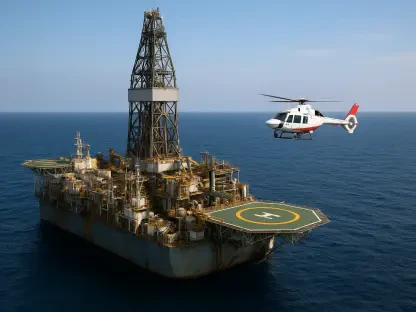
The maritime infrastructure, including LNG carriers, floating storage units, and regasification terminals, has become the critical link in the new carbon-transparent energy value chain. These assets are no longer viewed merely as transportation tools but as sophisticated data-collection nodes that must maintain the integrity of the fuel’s environmental credentials. Shipowners and charterers are now facing increased scrutiny regarding their operational emissions, such as methane slip from propulsion systems, which must be measured and reported with high accuracy. However, their role extends further as they are tasked with preserving the upstream emissions data provided by the producer, ensuring it remains untampered with and transferable throughout the voyage. The commercial value of a cargo is now inextricably linked to the quality of the digital documentation that accompanies it across the ocean, making data integrity a core component of maritime logistics and an essential requirement for port entry.
The transition toward a more regulated global methane landscape necessitated a fundamental rethinking of how energy was traded and verified. Industry leaders realized that the success of the liquefied natural gas trade depended on the creation of a unified international framework that bridged the gap between regional regulatory systems. By prioritizing interoperability and the mutual recognition of accredited verifiers, the sector took the necessary steps to prevent administrative duplication and maintain market liquidity. Stakeholders identified that the adoption of standardized data formats and robust blockchain-based tracking systems provided the transparency required by modern regulators. This evolution successfully turned verified emissions data into a secondary commodity that enhanced the overall value of the physical energy delivered. Ultimately, the move toward verified compliance ensured that the industry remained a viable part of the global energy mix while meeting the urgent requirements for environmental accountability.