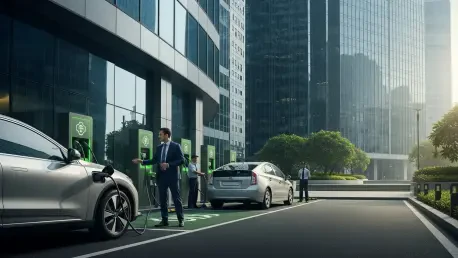

Luxury buyers across India are quietly redefining status as low-emission powertrains become the default measure of taste and technology in premium garages. The shift has been swift and visible: electric and hybrid models that once looked experimental now sit alongside flagship badges, promising the same hush, torque, and digital polish that define luxury—plus cleaner consciences and lower running costs. This market analysis explains how that transition unfolded, why it gained traction, and where competitive advantage is forming.
Market Context and Purpose
The premium car market is navigating a structural pivot as cleaner powertrains approach roughly 30% of nationwide sales, signaling mainstream comfort with alternatives to pure ICE. In luxury, this inflection is not just regulatory compliance; it is a reframing of value where refinement, technology, and responsibility reinforce each other rather than compete. Understanding this convergence is essential for brands, dealers, and financiers calibrating portfolios and risk.
This analysis tracks demand signals, supply responses, and enabling conditions—policy cues, urban infrastructure, and new ownership formats. It also outlines strategic pathways for monetizing software, stabilizing residuals, and widening access through certified pre-owned channels that are beginning to carry EV and hybrid stock at meaningful scale.
Demand Signals: Image, Impact, and Future Readiness
Luxury buyers still prize design purity and brand heritage, yet consideration sets now weigh emissions, operating costs, and the likelihood that a model will stay relevant as norms tighten. The result is pragmatic idealism: vehicles must feel special today and remain upgradeable tomorrow. Total cost of ownership in dense commutes, amplified by quiet cabins and instant torque, has become a persuasive proof point.
Confidence has strengthened as green options have become normal across price bands. In premium metros, buyers increasingly default to EVs when daily travel remains within predictable ranges and reliable charging exists at home or office. Where usage is mixed or intercity, hybrids reduce anxiety while preserving smoothness and efficiency. Constraints—upfront price, public charging gaps, and fast tech cycles—shape configurations and timing more than they halt purchases.
Supply-Side Realignment: Portfolios, Positioning, and Parity
Automakers have rewired lineups by embedding EV and hybrid variants inside familiar nameplates, preserving identity while normalizing choice. The benchmark is no longer “Can an EV match luxury?” but “Does it surpass ICE in daily refinement?” In urban conditions, the answer often tilts toward electric thanks to near-silent operation, single-pedal ease, and digital interfaces that feel more cohesive when paired with electric drivetrains.
This integration creates both complexity and upside. On one hand, dealers must master consultative selling rooted in use-case mapping and TCO math. On the other, software-led features, over-the-air updates, and curated charging bundles unlock recurring revenue and stickier loyalty. Residuals remain a watch item, but guaranteed buybacks and battery health transparency are proving effective mitigants.
City Dynamics, Pre-Owned Channels, and Perception Gaps
Adoption concentrates in metros where public charging density improves even as congestion and air-quality pressures bite. Corporate fleets and executive car programs add momentum, as sustainability reporting meets employee experience. Secondary cities follow through aspirational spillover and growing confidence in service networks that support green powertrains.
Certified pre-owned has become the bridge for hesitant luxury buyers. With stronger inspections, clear histories, and financing tailored to battery life, CPO reduces perceived risk and narrows the entry gap. As the first wave of luxury EVs and hybrids cycles into resale, the pipeline expands, anchoring residual values and encouraging first-time premium buyers to test electric without overcommitting.
Misconceptions, however, linger. Range anxiety often exceeds real-world needs when most luxury trips stay intra-city. Fears about performance ignore electric smoothness and responsiveness that align with classic luxury traits. The decisive factor is not pure range but convenience planning: reliable home or workplace charging plus a known public backup transforms ownership into a routine.
Economics, Policy, and Infrastructure Outlook
Cost curves favor high-usage urban drivers as electricity tariffs, time-of-day pricing, and maintenance savings compound advantages over fuel and service-heavy ICE ownership. Financing is modernizing as lenders price battery health, offer step-up EMIs aligned with operating savings, and deploy guaranteed residuals that derisk upgrades to newer chemistries.
Policy remains a tailwind. Stricter emission norms, targeted incentives, and city-level measures—low-emission zones, differentiated parking, or congestion policies—nudge adoption without compromising choice. Meanwhile, denser fast-charging corridors, smarter energy management, and gradual battery improvements extend range, speed up top-ups, and stabilize durability, strengthening the case for EV primacy in metro-centric lifestyles and hybrid preference for mixed-use mobility.
Strategic Implications and Action Points
Automakers and dealers benefit from integrating green variants into core nameplates while bundling at-home charger installation, public-network partnerships, and transparent battery warranties. Sales teams should pivot from spec battles to experience-led demos and TCO narratives grounded in a buyer’s daily routes and energy access.
Financiers and insurers can accelerate confidence with products indexed to verified usage, battery diagnostics, and predictable exit paths. Offering rate incentives for connected-service adoption and documented charging behavior reduces risk and encourages responsible ownership. Consumers gain by mapping routine travel, selecting between hybrid and EV based on charging certainty, and using CPO to test green luxury at lower upfront cost.
Conclusion: From Novelty to Baseline
The evidence pointed to a durable shift: sustainability had merged with refinement and technology to redefine luxury demand in India. Cleaner powertrains earned parity—and often superiority—in day-to-day experience, while policy, infrastructure, and evolving finance de-risked adoption. The market rewarded brands that treated electrification and hybrids as a baseline, invested in charging convenience, and protected residuals through transparent warranties and buybacks. For stakeholders, the next edge lay in software-rich ownership models, battery-intelligent financing, and a robust CPO flywheel that turned early adopters into mainstream momentum.