
The election of James Talarico as the first Democratic Senator from Texas in four decades illustrates a growing bipartisan appetite for balancing legacy oil jobs with aggressive renewable energy expansion. This seismic shift in the American political landscape arrived during the midterms as a direct consequence of a volatile economic climate and a series of geopolitical missteps that left voters seeking stability. For many, the catalyst for change was not a newfound devotion to abstract climate goals, but the tangible reality of a strained wallet. The combination of soaring gasoline prices—driven by recent military interventions in the Middle East—and a burgeoning homeowners insurance crisis in disaster-prone regions created a coalition of voters that transcended traditional party lines. This “blue wave” was powered by a pragmatic demand for energy security and fiscal protection, as constituents in former Republican strongholds began to view climate resilience as a necessary hedge against inflation. By framing the transition to clean energy as a means of reducing utility spikes and securing the national grid, candidates successfully remapped the political terrain, signaling an end to the era of total deregulation.
Federal Oversight: Reclaiming the Power of Inquiry and Purse
The shift in Congressional leadership provides the Democratic majority with immediate and potent tools to challenge the current administration’s environmental rollbacks through rigorous committee oversight. For the last two years, federal agencies like the Environmental Protection Agency and the Department of the Interior operated with minimal legislative interference, often pivoting toward a policy of systematic deregulation. Now, however, newly appointed committee chairs have signaled their intent to utilize subpoena power to investigate the internal decision-making processes that led to the “hollowing-out” of scientific advisory boards. These inquiries are designed to bring transparency to the freezing of clean energy grants and the reported suppression of climate risk data within the U.S. Forest Service. By compelling administration officials to testify under oath, the new majority aims to create a permanent public record of the consequences of removing environmental safeguards, effectively shifting the national narrative from a focus on industrial expansion to one of institutional accountability and scientific integrity.
Furthermore, the reclamation of the House and Senate empowers the legislative branch to wield the “power of the purse” during the upcoming budget cycles. This control over federal spending serves as a critical check on the executive branch’s ability to defund climate initiatives or eliminate essential disaster preparedness programs. During negotiations for “must-pass” funding bills, the new majority is expected to demand the restoration of funding for the Federal Emergency Management Agency and the National Oceanic and Atmospheric Administration, which have faced significant personnel cuts. By making these funds non-negotiable, the Congress can prevent the total dismantling of the federal government’s role in managing climate-driven crises. This budgetary leverage also extends to international climate commitments, where the new majority intends to restore American participation in global green energy financing, arguing that domestic economic security is inextricably linked to global ecological stability. The next two years will likely be defined by this intense fiscal tug-of-war, as the legislative branch attempts to re-establish the federal government as a primary investor in resilient infrastructure.
State Energy Landscapes: Navigating the Regulatory Frontier
The impact of the recent elections is perhaps most visible at the state level, where regulatory bodies and legislatures have seen a dramatic transformation in their leadership and priorities. In Georgia, the Democratic takeover of the Public Service Commission marks a historic turning point for a body that has historically favored fossil fuel expansion and the interests of traditional utility monopolies. This new majority is expected to pivot the state’s energy mix toward solar and wind projects, prioritizing consumer protection and long-term grid stability over the immediate profits of energy giants. The shift reflects a growing voter demand for transparency in how energy prices are set, particularly as the demand for power increases from new industrial sectors. By advocating for a “rate-payer first” approach, the commission is poised to implement stricter oversight on utility rate hikes, ensuring that the cost of transitioning to a cleaner grid is not borne entirely by the most vulnerable citizens.
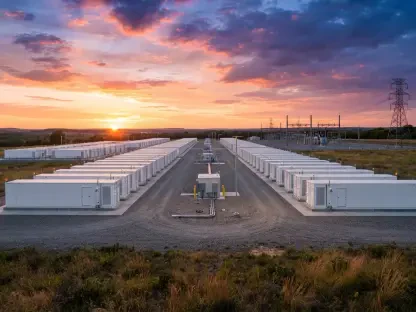
In the Rust Belt and the Mid-Atlantic, the legislative shift has cleared the way for aggressive clean energy mandates that were previously stalled by partisan gridlock. With the flip of the Pennsylvania State House, lawmakers are now fast-tracking legislation designed to support large-scale battery energy storage and community solar initiatives. These projects are seen as essential for modernizing an aging electrical grid that has struggled to keep pace with extreme weather events. Meanwhile, Michigan voters took a decisive stand against the political influence of the energy industry by passing landmark measures that ban utility executives from contributing to state political campaigns. This move, widely seen as a rejection of corporate lobbying, aims to ensure that future energy policies are dictated by public need rather than the interests of shareholders. These state-level victories suggest that the most immediate and tangible environmental policies will be enacted outside of the federal government, as localized movements focus on decentralizing power and enhancing local resource security.
The Digital Infrastructure Crisis: Addressing the Data Center Surge
A surprising and highly influential trend during the recent electoral cycle was the significant political backlash against the rapid expansion of data centers and artificial intelligence infrastructure. In states like Ohio and South Carolina, candidates who had previously championed the tech boom as a source of job creation found themselves vulnerable to accusations that these facilities were straining the local electrical grid and driving up residential utility bills. This “data center backlash” highlight a growing public concern that the massive energy needs of the technological sector are incompatible with the goal of reducing greenhouse gas emissions. Voters in affected districts expressed deep frustration over the perceived prioritization of “Big Tech” over individual homeowners, leading to the defeat of several high-profile incumbents who were seen as overly friendly to server farm developers. This development marks a new frontier in environmental policy, where the digital economy is now being scrutinized for its physical and ecological footprint.
Future legislation at both the state and federal levels is likely to focus on the energy efficiency of these massive computing facilities and the natural resources required to maintain them. The new majority in Congress has already hinted at introducing standards that would require data center operators to provide their own renewable energy sources rather than relying on existing municipal grids. Additionally, the significant water usage required for cooling these server farms has become a point of contention in regions facing increasing drought conditions. Policies currently under discussion involve mandatory water-recycling systems and stricter siting regulations to prevent these facilities from competing with local agriculture for limited water supplies. This shift indicates that the environmental movement is expanding its scope beyond traditional heavy industry to include the digital infrastructure of the modern economy, demanding that technological progress does not come at the expense of regional resource security or utility rate stability for the average citizen.
Regional Resilience: Bipartisan Climate Adaptation Strategies
In the wake of devastating storms in the Southeast, voters have begun to prioritize disaster management and climate adaptation as non-negotiable requirements for their elected officials. The results in North Carolina, where traditional incumbents were replaced by candidates focusing on rebuilding resilient infrastructure, demonstrate that the immediate consequences of extreme weather are bridging historical political divides. In the aftermath of Hurricane Helene, the failure of federal and state agencies to provide timely and adequate aid became a central campaign issue. This has led to a bipartisan consensus in the region that the federal government must reform its approach to disaster relief, moving toward a model that emphasizes proactive hardening of the grid and coastal defenses rather than just reactive recovery. The demand for a more robust and independent FEMA suggests that the American electorate now views the ability to manage environmental crises as a primary measure of government competence.
This trend toward pragmatism is also evident in Florida, where a unique “coastal protection” brand of environmentalism has taken root despite a complex political environment. While some leaders in the state remain skeptical of federal carbon mandates, there is an undeniable commitment to protecting Florida’s coastlines from rising sea levels and an increasingly unstable insurance market. The retention of certain key officials was tied to their support for banning offshore drilling and their commitment to funding habitat restoration projects like the Everglades. This suggests that in certain regions, climate action is being reframed through the lens of economic preservation and market-based insurance reform. By focusing on the protection of property values and the local tourism economy, these leaders have found a way to address environmental challenges without using the polarizing language of the national climate debate. This approach provides a potential model for how climate policy can be advanced in traditionally conservative areas by focusing on tangible, local benefits rather than abstract global goals.
Economic-Environmental Convergence: The Path Toward Stability
The recent midterm results confirm that environmental policy is now inextricably linked to economic survival for the modern American voter. The electorate no longer views the shifting climate as a distant or theoretical threat, but as a primary driver behind the rising costs of living, including insurance premiums, heating bills, and transportation expenses. This convergence has fundamentally altered the political map, forcing candidates from all backgrounds to address how they will protect their constituents from the financial fallout of an increasingly unstable environment. The next two years will be characterized by a shift toward “pocketbook environmentalism,” where the success of a policy is measured by its ability to lower energy costs, create stable jobs in the new energy sector, and provide long-term fiscal security. This transition ensures that the debate over the energy transition will be centered on transparency and the protection of the middle class rather than ideological purity.
As the nation looked toward the future following the electoral shift, several key actions were taken to cement the new policy direction. The legislative branch successfully prioritized the modernization of the electrical grid, passing incentives for regional transmission projects that lowered the cost of delivering renewable energy to urban centers. Regulatory bodies at the state level implemented more stringent transparency requirements for utility companies, which helped to stabilize rates for residential consumers. Furthermore, the push for disaster resilience led to the creation of new federal grant programs specifically for small communities to upgrade their water and power infrastructure against extreme weather. These steps collectively demonstrated that integrating ecological health with economic security was the most effective way to address the concerns of the American voter. By focusing on practical solutions that yielded immediate financial benefits, policymakers moved away from the gridlock of previous cycles and established a new framework for sustainable growth that prioritized stability over deregulation.