
The contemporary transformation of the global electrical landscape is no longer merely a conceptual goal but a physical reality as massive battery energy storage systems reshape the very fabric of how power is managed across aging utility networks. As the industry moves away from centralized, fossil-fuel-dependent generation, the focus has shifted toward creating a decentralized and resilient infrastructure capable of handling the inherent variability of renewable energy. This evolution requires more than just high-capacity batteries; it demands a sophisticated medium-voltage framework that can bridge the gap between volatile supply and constant consumer demand.
The current energy market is witnessing a surge in utility-scale projects that dwarf the localized storage solutions of the previous decade. These installations, often exceeding hundreds of megawatts, are becoming the primary stabilizers for regional grids, providing the necessary buffer to prevent blackouts during peak usage. However, the success of this transition depends heavily on the technical superiority of the hardware interfaces, where medium-voltage switchgear and transformers must perform with unprecedented precision and durability.
The integration of these storage systems is not a simple “plug-and-play” operation but a complex engineering feat that requires careful coordination between storage providers, equipment manufacturers, and utility operators. As power flows become more dynamic, the role of traditional grid components is being reimagined to facilitate two-way energy exchange and rapid frequency adjustment. This report examines the technical, operational, and regulatory shifts driving this transformation and highlights how the industry is overcoming the hurdles of modernizing the world’s most complex machine.
The Metamorphosis of Grid Infrastructure: From Static Networks to Dynamic Storage Ecosystems
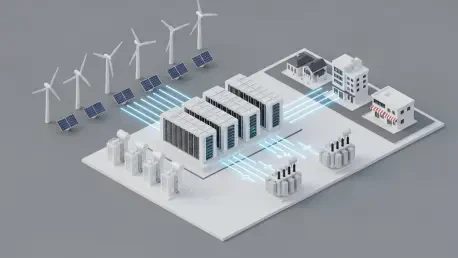
The traditional utility grid was designed as a one-way street, where power flowed from large, predictable generators to the end consumer. This static model is rapidly dissolving as non-dispatchable renewable energy sources like wind and solar become dominant components of the power mix. To manage the resulting fluctuations, the infrastructure is evolving into a dynamic ecosystem where Battery Energy Storage Systems (BESS) act as the central nervous system, balancing loads in real-time and ensuring that the transition to a greener grid does not compromise reliability.
In this new paradigm, medium-voltage infrastructure serves as the critical link between the storage cells and the high-voltage transmission network. Hardware such as switchgear, circuit breakers, and transformers must now handle bidirectional power flows and high-frequency switching operations that were rarely required in the past. This shift has elevated the importance of hardware performance, as the failure of a single interconnection point in a utility-scale facility can lead to significant regional instability and financial loss for operators.
Major industry players are responding by moving toward installations that prioritize scalability and modularity, allowing for the rapid expansion of storage capacity as demand grows. The influence of these large-scale projects is felt across the supply chain, driving innovation in ruggedized components that can withstand the high-stakes demands of modern power networks. The focus has moved beyond the chemical composition of the batteries themselves to the robustness of the “pipes and wires” that connect them to the world, making the medium-voltage interface the most critical frontier in grid modernization.
The Operational Evolution and Market Momentum of Battery Storage
The Paradigm Shift: Replacing Legacy Peaker Plants with Intelligent Storage Solutions
Historically, utilities relied on fossil-fuel-fired peaker plants to manage sudden surges in electricity demand, but these inefficient and high-emission units are quickly becoming obsolete. Intelligent storage solutions now provide a cleaner and more cost-effective alternative through energy arbitrage, where batteries charge during periods of low demand and discharge when prices and requirements peak. This transition is not just about environmental goals; it is an operational necessity driven by the need for near-instantaneous grid response capabilities that traditional turbines simply cannot match.
Technological advancements in vacuum retrofit systems and ruggedized switchgear, such as the Citadel platform, have made it possible to integrate advanced storage with legacy infrastructure. These systems allow utilities to modernize older substations without the need for total reconstruction, providing a faster path to grid stabilization. By utilizing vacuum technology for interruption, these systems offer a more reliable and maintenance-free solution compared to older oil-based or gas-insulated equipment, aligning with the industry’s move toward sustainable and emission-free operations.
Consumer demand for reliable backup power and sustainable energy is also accelerating this shift, as businesses and residential areas increasingly prioritize resilience. The ability of BESS to provide frequency regulation and correct short-term imbalances from wind and solar ensures that the power quality remains consistent even as the generation mix changes. This operational flexibility is the primary reason why storage is no longer seen as a secondary asset but as a foundational element of the modern utility business model.
Quantifying the Surge: Performance Indicators and the Rise of Utility-Scale BESS
The scale of modern battery storage projects has undergone a massive expansion, with facilities now commonly reaching capacities of 100 MW or 400 MWh. This growth is reflected in market data that shows a clear shift from small-scale, pilot projects to massive installations that function as virtual power plants. As these facilities grow, they require higher voltage classes for interconnection, leading to the widespread adoption of 15 kV, 27 kV, and 38 kV systems in storage applications.
Growth forecasts are currently driven by aggressive state-level climate initiatives and the urgent need to replace aging substation infrastructure that can no longer support modern loads. Performance benchmarks are increasingly focused on the Basic Insulation Level and Kilo-Ampere Interrupting Capacity of the equipment. These indicators are vital for ensuring that the storage system can withstand high-voltage surges and safely interrupt fault currents, which are common challenges in the dense and interconnected grids of the current era.
The focus on these technical metrics reflects a maturing market where reliability is the primary currency. Utilities are no longer satisfied with baseline industry standards; they are demanding equipment that offers higher safety margins and longer operational lifespans. This trend toward high-performance hardware is visible in the rigorous testing requirements and the selection of components that can handle the unique thermal and electrical stresses of continuous, high-capacity battery cycling.
Engineering Resilience: Overcoming Technical and Logistical Hurdles in Urban Grid Integration
Integrating high-capacity storage into dense urban environments presents a unique set of engineering challenges, primarily due to the physical space constraints and the complexity of high-voltage surges. In cities where real-time demand is highest, there is often little room for sprawling substations. Engineers are solving this “physical footprint” dilemma by utilizing prefabricated, weatherproof, and modular enclosures that house the entire medium-voltage interface in a compact, protected unit.
The logistical aspects of these urban installations require innovative strategies to streamline transportation and assembly. For example, “fly-in” switchgear sections that are pre-assembled and factory-tested allow for rapid deployment in tight spaces using heavy-duty cranes. This approach minimizes on-site labor and reduces the time that critical infrastructure must be offline, which is a vital consideration for projects located in high-traffic or residential areas.
Balancing rapid deployment with the stringent safety margins required by regional independent system operators remains a top priority. Every piece of equipment must be engineered to handle the specific fault current ratings of the local network to ensure that a failure in the storage unit does not cascade into a wider grid disturbance. This level of resilience is achieved through a combination of robust hardware design and sophisticated protective relays that can isolate problems in milliseconds.
Exceeding the Benchmark: Navigating Stringent Utility Standards and Safety Protocols
As BESS installations become a more integral part of the national power grid, the standards for their interconnection have become significantly more demanding. There is a noticeable shift away from generic industry benchmarks toward utility-specific requirements that demand higher safety margins and more rigorous validation. This is particularly true for large utilities that manage high-density networks where the consequences of equipment failure are magnified.
To meet these exacting standards, independent validation through high-power laboratories like KEMA and KERI has become a non-negotiable requirement for hardware manufacturers. These facilities subject equipment to extreme conditions to verify that it can truly handle the rated voltages and currents under real-world fault conditions. For instance, the Close-and-Latch rating is a critical safety parameter that ensures switchgear can be safely closed even if a short circuit is present, protecting both the equipment and the personnel operating it.
Compliance with complex interconnection topologies is another area where engineering precision is paramount. Modern grids require storage systems to maintain integrity across a variety of operating conditions, which necessitates the use of advanced medium-voltage interfaces. These interfaces safeguard the broader grid by providing a robust barrier between the storage system and the transmission lines, ensuring that the integration of new technologies does not introduce vulnerabilities into the established power network.
Beyond the Battery: The Future of Stabilized Power Flows and High-Capacity Interconnects
The next generation of grid technology is moving toward “injectable” backup power that can provide instant stability during regional brownouts or sudden drops in renewable generation. This future depends on the development of sophisticated grid-forming inverters that do more than just convert direct current to alternating current; they can actually set the voltage and frequency of the grid themselves. When combined with advanced medium-voltage hardware, these inverters allow storage systems to act as the primary anchor for local power networks.
Consumer preferences for clean energy continue to drive innovation in the “pipes and wires” infrastructure, as the demand for green electricity requires a grid that is more flexible than ever before. This evolving landscape is pushing manufacturers to develop higher-capacity interconnects and more intelligent control systems that can manage complex power flows with minimal human intervention. The long-term impact of global decarbonization goals is a complete overhaul of utility architecture, where storage is no longer an addition but the core of the system.
Technological progress is also being influenced by global economic conditions, which favor systems that offer lower total cost of ownership through durability and reduced maintenance. The move toward standardized, modular components allows for faster project timelines and more predictable performance across different geographic regions. As these trends converge, the grid of the future will be defined by its ability to seamlessly integrate diverse energy sources while maintaining the high levels of reliability that modern society requires.
Powering the Next Decade: Final Insights into a Cleaner and More Reliable Energy Frontier
The transition from a fossil-fuel-reliant grid to one supported by high-performance battery energy storage systems marked a definitive shift in the global energy strategy. The analysis demonstrated that the success of this metamorphosis depended less on the storage capacity itself and more on the technical superiority of the medium-voltage interfaces that managed the power flow. The report found that the replacement of legacy peaker plants with intelligent BESS solutions provided the necessary flexibility to stabilize modern utility networks.
Strategic recommendations for utility planners emphasize the importance of early coordination and the prioritization of independent hardware validation to ensure long-term grid integrity. The research highlighted that scalable logistical solutions, such as prefabricated switchgear, were essential for overcoming the spatial and technical hurdles of urban integration. It was observed that equipment engineered to exceed baseline industry standards provided the highest levels of safety and reliability for utility-scale applications.
The final outlook on the energy sector indicates that BESS will remain the cornerstone of a decentralized and dependable utility future. By investing in robust interconnection hardware and adhering to stringent safety protocols, the industry ensured that the energy transition remained stable and resilient. The evolution of the grid toward a more flexible and emission-free model was ultimately driven by the integration of advanced storage technologies that redefined the boundaries of modern power management.