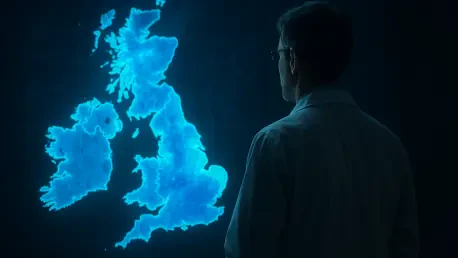

The current pace of electric vehicle adoption and renewable energy growth is already exceeding the formal market targets set for the year twenty-thirty. This acceleration serves as a background to a sobering narrative recently unveiled at the Brewery Arts center in Kendal, where naturalist Chris Packham launched a stark cinematic warning titled The People’s Emergency Briefing. The documentary is specifically designed to shatter lingering public complacency regarding the environmental crisis by adopting the urgent, no-nonsense aesthetic of a government pandemic briefing. By delivering a brutally honest assessment of the United Kingdom’s ecological standing, the film bridges the gap between dense scientific data and public perception. The ultimate goal is to transition citizens from a state of psychological paralysis into a phase of proactive activism that accurately reflects the severity and proximity of current climate projections and predicted ecological shifts throughout the country.
National Mobilization: The Role of Honest Communication
The philosophy driving this film is rooted in the belief that absolute transparency remains the most effective tool for mass mobilization in a democratic society. Prominent environmental experts and scientists involved in the project argue that the British public has largely been left in the dark about the true scale and proximity of the climate emergency, a lack of clarity that prevents meaningful engagement with policy decisions. By presenting unvarnished facts rather than sanitized reports, the campaign seeks to build public pressure on the Prime Minister to hold a formal national emergency briefing similar to those seen during previous global health crises. This movement has already gained significant political traction, earning the public support of over 160 Members of Parliament who agree that the nation requires a clear-eyed look at the risks ahead. This collective effort highlights a consensus that the public cannot act effectively without the full truth.
Beyond the political pressure, the documentary addresses the psychological barriers that often prevent individuals from taking meaningful action on environmental issues. Many citizens report feeling a sense of overwhelming dread or paralysis when faced with the abstract concept of global warming, which can lead to a state of defensive denial or apathy. However, data gathered from initial screenings suggests a surprising psychological pivot: when presented with the honest reality of specific tipping points, nearly ninety percent of viewers reported feeling more motivated to act rather than less. This finding challenges the conventional wisdom that “doom-and-gloom” messaging necessarily leads to disengagement. Instead, it suggests that clarity provides a necessary foundation for agency, allowing people to conceptualize the problem as a manageable series of challenges rather than an incomprehensible catastrophe that lies entirely beyond their personal or collective control.
Climate Tipping Points: The Atlantic Current Collapse
A central focus of the briefing is the precarious state of the Atlantic Meridional Overturning Circulation, or AMOC, which is the massive ocean current system responsible for maintaining the UK’s relatively mild maritime climate. Scientists warn that this system is already showing signs of significant weakening and faces a potential collapse if global warming exceeds the critical two-degree threshold. Should this circulation fail, the British Isles would face a transformative catastrophe that would fundamentally alter the geography of human life in the region. The documentary paints a chilling picture of this potential future, predicting winter temperatures that could plummet to minus twenty degrees in London and minus thirty degrees in Edinburgh. Such a shift would move the UK from a temperate zone into an area defined by extreme Arctic conditions, necessitating a total overhaul of national infrastructure, heating systems, and long-term emergency preparedness strategies for the future.
The societal fallout from such a drastic climatic shift would extend far beyond simple changes in seasonal weather patterns or personal discomfort. The documentary warns that these extreme temperatures would effectively terminate traditional agriculture in northern regions like Cumbria, triggering severe and prolonged food shortages that could destabilize the entire country. This combination of failing infrastructure, mass migration from uninhabitable zones, and acute resource scarcity could lead to what the briefing describes as an ungovernable state. By highlighting these specific tipping points, the film does not aim to spread fear for its own sake, but rather to illustrate the existential stakes associated with continued delays in national climate policy. This approach forces a conversation about the costs of inaction, which often outweigh the perceived burdens of a rapid transition to renewable energy and sustainable agricultural practices throughout the various regions of the British Isles.
Strategic Resilience: Economic and Social Agency
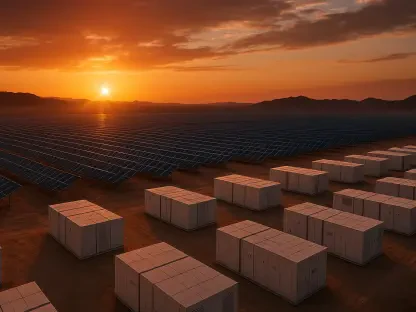
To counter prevailing narratives that climate action is prohibitively expensive, the briefing highlights the massive economic opportunities inherent in the green transition. Research presented in the film suggests that achieving net zero would cost a mere zero-point-two percent of the annual GDP, while a rapid global shift to renewable energy could save twelve trillion dollars compared to a continued reliance on volatile fossil fuels. Furthermore, the film emphasizes that aggressive decarbonization acts as a buffer against inflation and energy price spikes. By framing the transition as a path to a richer and warmer economy with cheaper power and better-insulated homes, the project highlights that a sustainable future is an upgrade to the quality of life rather than a sacrifice. This economic perspective is vital for convincing stakeholders that the shift toward sustainability is not just an environmental necessity but a sound financial strategy for ensuring long-term national stability for all.
The screening events successfully transformed the theoretical risks of climate change into a tangible roadmap for local resilience and immediate community agency. Organizers and participants recognized that waiting for centralized government solutions was no longer a viable strategy, leading to the formation of localized networks focused on food security and energy independence. This shift encouraged citizens to demand higher standards of transparency from their elected officials while simultaneously building the social fabric required to withstand environmental shocks. The transition to a sustainable future was viewed not merely as a survival tactic, but as a deliberate opportunity to enhance the quality of daily life through improved infrastructure and stronger neighborly connections. These gatherings proved that an honest confrontation with scientific reality provided the necessary catalyst for collective action, ensuring that the path forward was defined by preparation and empowerment rather than by reaction.