
The survival of the critically endangered orange-bellied parrot has become a defining symbol of Australia’s struggle to balance aggressive climate action with the immediate preservation of its unique and fragile biodiversity. This vibrant bird, which weighs roughly the same as a single AA battery, represents a biological anomaly as the only parrot species known to undertake a long-distance migration across the treacherous waters of the Bass Strait. Every year, these tiny travelers fly from the Australian mainland to the coastal saltmarshes of Tasmania, a journey that has remained unchanged for millennia but now faces a modern industrial roadblock. The proposed construction of a massive wind farm on Robbins Island, situated directly within the species’ primary flight corridor, has sparked a high-stakes debate between environmentalists and renewable energy advocates. This conflict highlights the growing friction between two essential ecological goals: the urgent need to decarbonize the power grid and the requirement to prevent the extinction of a species on the brink of collapse.
Reconciling Renewable Energy and Wildlife Safety
The Risks and Requirements: Balancing Robbins Island
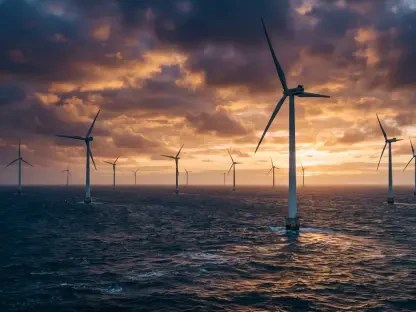
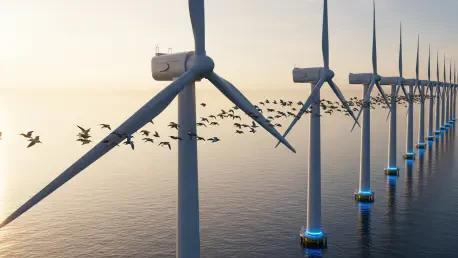
ACEN Australia’s ambitious wind farm project on Robbins Island is a monumental engineering undertaking designed to capitalize on the relentless winds of the Roaring Forties that sweep across the Tasmanian coastline. The plan involves the installation of up to 100 massive turbines with a total capacity of nearly 900 megawatts, which would generate enough clean electricity to power hundreds of thousands of homes and significantly reduce the region’s carbon footprint. However, the geographic location of this site is problematic because the island’s coastal marshes serve as critical stopover points where the orange-bellied parrot rests and feeds during its migration. The primary ecological concern revolves around the potential for rotor blade strikes, a scenario where the high-speed movement of the turbine blades could prove fatal for the birds. Given that the population is so small, the loss of even a few individuals could negate years of conservation work and lead to a genetic bottleneck from which the species might never recover.
To address these significant environmental risks, federal and state regulators have imposed some of the strictest conditions ever seen in the Australian renewable energy sector. Before any construction can begin on Robbins Island, the developers must conduct three years of comprehensive seasonal surveys to map the precise movements of the parrots and other migratory shorebirds. One of the most controversial yet necessary mandates is the requirement for a reactive shutdown system, which forces the wind farm to halt operations during peak migration windows or when individual birds are detected nearby. This operational constraint means that the wind farm will not be able to operate at maximum efficiency throughout the year, reflecting a necessary compromise where economic output is secondary to biological preservation. These requirements set a precedent for how large-scale infrastructure projects must adapt to the specific needs of local wildlife, ensuring that the transition to green energy does not come at the cost of Tasmania’s heritage.
Implementation of Mandates: Tracking and Safety
The feasibility of this coexistence depends largely on the successful integration of advanced tracking technology that can monitor the orange-bellied parrot population in real-time as they move across the Bass Strait. Researchers have already begun attaching miniature radio transmitters to captive-bred birds released into the wild, allowing for high-precision mapping of their flight altitudes and specific routes. This data is essential for the wind farm’s automated shutdown systems, which rely on artificial intelligence to interpret tracking signals and determine when turbines must be braked to allow safe passage. While this technological solution offers a theoretical bridge between industry and nature, many conservationists remain skeptical about the margins for error in such a complex system. If a signal is lost or a detection delay occurs, the consequences for the migrating flock could be catastrophic, especially during the night or in poor weather conditions when visibility is low and birds are most vulnerable.
Beyond the immediate technological fixes, the broader challenge involves the long-term management of the parrot’s habitat and the stabilization of its juvenile survival rates. Currently, the recovery program at Five Mile Beach has successfully increased the wild population from a low of just 17 birds to nearly 200, but the species remains fragile due to high mortality rates during the first migration of young birds. The presence of industrial structures like wind turbines introduces a new variable into an already dangerous life cycle, requiring a holistic approach that combines habitat restoration with industrial regulation. Moving forward, the success of the Robbins Island project will serve as a global case study for other regions facing similar dilemmas, such as offshore wind developments in the North Sea or solar arrays in the Mojave Desert. The goal was to establish a framework where green energy production and biodiversity protection were treated as integrated priorities rather than competing interests for the state.
Future Implications: A New Global Standard
As the world continues to shift toward sustainable energy, the situation in Tasmania illustrates the complex trade-offs required to mitigate global warming without sacrificing local ecosystems. Scientists generally agree that climate change represents the single greatest long-term threat to global biodiversity, yet the localized impact of green energy projects must be managed with extreme caution to avoid unintended extinctions. The Robbins Island project has become a test case for whether humanity can implement massive industrial shifts while respecting the delicate biological requirements of rare species. If the orange-bellied parrot thrives alongside these massive turbines, it will provide a powerful argument for the compatibility of technology and conservation. However, if the project leads to a decline in bird numbers, it may force a reassessment of where and how renewable infrastructure is built. This balance is critical for maintaining public support for the green transition while ensuring ecological integrity.
The successful management of the Robbins Island project demonstrated that the expansion of renewable energy did not have to occur at the expense of critically endangered biodiversity. It was essential for developers and government agencies to collaborate on a framework that prioritized the survival of the orange-bellied parrot through the use of adaptive management and rigorous data transparency. By implementing reactive shutdown protocols and investing in real-time tracking technology, stakeholders ensured that industrial progress was compatible with ecological preservation. These actions provided a blueprint for future infrastructure projects located in other sensitive environments around the world. The shift toward nature-positive energy solutions required a fundamental change in how corporations assessed environmental risk. Ultimately, the lessons learned from this initiative proved that technological innovation and species conservation could function as complementary goals. It was clear that the survival of rare species required constant vigilance.