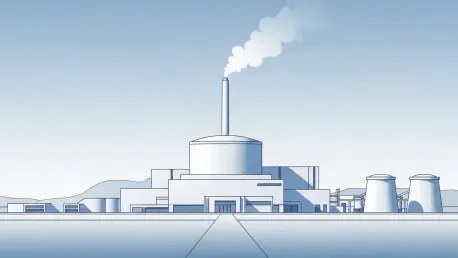

The energy landscape in the United States is currently witnessing a fundamental transformation as the legacy of massive, water-cooled nuclear facilities begins to recede in favor of a new generation of small modular reactors designed for the specific needs of a high-tech, electrified economy. At the center of this revolution is X-energy, a Maryland-based company that has reimagined nuclear power with its Xe-100 reactor, a system that utilizes billiard-ball-sized graphite spheres instead of traditional metal fuel rods to provide a more flexible and safer energy solution. This transition represents far more than a mere incremental improvement in engineering; it signals a departure from the one-size-fits-all approach of the mid-twentieth century toward a decentralized model capable of powering everything from heavy industrial plants to the sprawling data centers that fuel modern artificial intelligence. By moving away from high-pressure water systems and toward high-temperature gas cooling, X-energy is positioning itself to address the dual challenges of carbon reduction and the relentless growth of energy demand in the digital age. This technological pivot is not just about producing electricity but about reinventing the very infrastructure of clean energy to be more resilient, scalable, and compatible with the intense requirements of twenty-first-century industry.
Rethinking the Core: Innovations in Pebble-Bed Architecture
The technical foundation of the Xe-100 lies in its unique fuel configuration, which replaces standard fuel assemblies with thousands of graphite spheres known as pebbles. Each pebble is approximately the size of a billiard ball and contains thousands of microscopic uranium kernels, each encased in multiple layers of carbon and ceramic coatings to form TRISO fuel. This specialized fuel is designed to withstand temperatures far exceeding the operating limits of the reactor, making it virtually impossible for the core to melt down even under extreme conditions. Unlike traditional reactors that must be powered down for weeks to shuffle fuel rods, the Xe-100 employs a continuous refueling system where new pebbles are added to the top of the reactor while depleted ones are discharged from the bottom. This “gumball machine” approach allows the reactor to maintain high uptime, which is critical for industrial partners who require a constant, unwavering supply of energy to keep their manufacturing lines or digital services running without interruption.
Beyond the innovative fuel, the Xe-100 distinguishes itself by using helium as a primary coolant instead of water, which allows the system to operate at much higher temperatures while remaining at a lower pressure. Because helium is a chemically inert gas, it does not react with the reactor components or become radioactive in the same way that water can, significantly simplifying the overall plant design and reducing the complexity of safety systems. The high-temperature output, reaching up to 750 degrees Celsius, enables the reactor to produce high-grade steam that is not only efficient for electricity generation but also essential for various industrial processes. Many heavy industries, such as chemical manufacturing and hydrogen production, have long relied on burning natural gas to achieve these high temperatures. By providing carbon-free thermal energy, the Xe-100 offers a viable pathway for these sectors to decarbonize their operations while maintaining the high-energy throughput necessary for global competitiveness in an increasingly carbon-conscious market.
Economic Drivers: Amazon and the Quest for Firm Power
The rapid expansion of artificial intelligence and the proliferation of massive data center campuses have created an unprecedented demand for “firm” power—energy that is available 24 hours a day, regardless of weather conditions. While wind and solar have made significant strides, their intermittent nature presents a challenge for tech companies that cannot afford even a millisecond of downtime in their digital infrastructure. Amazon has recognized this gap and has stepped in as a major strategic partner for X-energy, spearheading a $500 million funding round to accelerate the deployment of the Xe-100. This investment is not merely a financial gesture; it includes a commitment to purchase up to five gigawatts of power, signaling that the tech industry is now a primary driver of nuclear innovation. For Amazon, the modular nature of X-energy’s design is a perfect match for the way data centers are built, allowing them to scale their power capacity in increments that align with the growth of their server farms.
This influx of private capital from the technology sector represents a historic shift in how nuclear projects are financed and developed in the United States. Historically, nuclear power was the domain of large regulated utilities and government agencies, often burdened by multi-decade timelines and massive cost overruns. The entry of agile, cash-rich tech giants like Amazon suggests a new model where the end-user of the energy also serves as the primary financier and advocate for the technology. By providing a guaranteed market for the power generated by these modular reactors, Amazon reduces the financial risk for X-energy and its manufacturing partners. This partnership also creates a template for other technology firms to follow, potentially unlocking billions of dollars in private investment for advanced nuclear projects that would have previously struggled to find backing in traditional capital markets. The result is an accelerated development cycle that brings these advanced designs from the drafting board to the construction site much faster than previous generations.
Commercial Frontiers: Dow Chemical and the Seadrift Milestone
While the technology sector provides the capital, the industrial sector is providing the first real-world testing ground for the Xe-100 at the Dow Chemical Seadrift Operations in Texas. This project is poised to become the first commercial installation of a high-temperature gas-cooled reactor at an industrial site, serving as a blueprint for how nuclear energy can be integrated directly into manufacturing hubs. Dow’s interest in the technology stems from its need for reliable, carbon-free steam and electricity to power the complex chemical synthesis processes that occur at the Seadrift facility. By placing the reactors directly on-site, Dow can eliminate the transmission losses associated with the broader power grid and ensure a dedicated energy source that is insulated from market volatility. This project demonstrates that the future of nuclear energy is not just about feeding the grid, but about providing localized, high-intensity energy solutions for the world’s most demanding industrial applications.
The Seadrift project recently passed a major regulatory milestone when the Nuclear Regulatory Commission (NRC) completed its environmental review in a timeframe that was significantly shorter than previous assessments. This efficiency suggests a growing recognition within federal agencies that the licensing process must be modernized to accommodate the unique safety profiles of small modular reactors. Because the Xe-100 relies on passive safety features—meaning it uses the laws of physics rather than mechanical pumps or operator intervention to stay cool—the regulatory burden can be theoretically reduced without compromising public safety. The success of the NRC review at Seadrift sends a strong signal to the rest of the industry that the path to commercialization is becoming more predictable. As other industrial giants watch the progress in Texas, the successful operation of these first units could trigger a wave of orders from companies looking to replace their aging, fossil-fuel-based boilers with a modern, modular alternative.
Strategic Competition: Supply Chains and Fuel Sovereignty
X-energy is operating in an increasingly competitive market where several advanced nuclear designs are vying for dominance, most notably the sodium-cooled systems backed by other high-profile investors. However, X-energy has carved out a distinct niche by focusing on helium cooling and vertical integration, which includes developing its own fuel fabrication capabilities. The company is currently investing in a dedicated facility in Tennessee to produce the specialized High-Assay Low-Enriched Uranium (HALEU) required for its TRISO pebbles. This move is a strategic necessity, as the current global supply of HALEU is extremely limited, and establishing a domestic production line is essential for the long-term viability of the modular reactor industry. By controlling its fuel supply chain, X-energy can offer its customers more price stability and reduce the geopolitical risks associated with sourcing nuclear fuel from overseas, a factor that has become increasingly important to both corporate and government stakeholders.
The competition between different modular designs is healthy for the industry, as it drives innovation and forces companies to optimize their manufacturing processes for cost-efficiency. While X-energy focuses on the industrial heat and data center markets, other competitors are exploring different applications, such as grid stabilization and remote community power. The presence of multiple viable technologies ensures that the nuclear sector is not reliant on a single design that might encounter unforeseen technical hurdles. Furthermore, X-energy’s successful public listing on the Nasdaq has provided it with the transparency and capital access required to compete at a global scale. This financial maturity, combined with a robust domestic fuel strategy, positions the company as a leader in the race to deploy the next generation of nuclear power. The ability to manufacture these reactors in a factory setting, rather than building them as bespoke civil engineering projects, is expected to drive down costs through economies of scale, eventually making modular nuclear power competitive with traditional fossil fuels.
Operational Realities: Navigating Implementation and Future Readiness
Despite the technical promise and strong financial backing, the transition from successful prototypes to a fleet of operational reactors involves navigating significant logistical and operational risks. The primary challenge remains the fact that a commercial-scale Xe-100 has yet to be fully constructed and synchronized with an industrial facility or power grid. Critics often point to the “first-of-a-kind” costs and technical glitches that typically plague new energy technologies during their initial deployment phase. To mitigate these risks, X-energy and its partners have focused heavily on digital twin technology and advanced simulations to predict how the reactor will behave under various conditions. This digital-first approach allows engineers to identify potential bottlenecks in the manufacturing and assembly process before the first steel is ever poured at the Seadrift site. The coming years will be a definitive test of whether the modular manufacturing philosophy can truly deliver on its promise of reduced construction times and lower capital requirements.
The industry moved forward by prioritizing the creation of a robust domestic fuel cycle and streamlining the integration of modular reactors into existing industrial zones. Stakeholders realized that the success of the pebble-bed design depended not just on the physics of the core, but on the ability of the broader supply chain to deliver high-quality components on a predictable schedule. Decision-makers in the energy sector implemented strategies that favored decentralized power generation, recognizing that “always-on” carbon-free energy was the only way to meet the escalating demands of the digital economy. These actions provided a clear roadmap for other nations and companies to follow, ensuring that the lessons learned from the early deployments were shared across the industry to avoid redundant failures. By focusing on actionable solutions like factory-based assembly and standardized licensing, the path was cleared for a more resilient energy future. The focus shifted toward training a specialized workforce capable of operating these advanced systems, ensuring that the human element of nuclear safety kept pace with the rapid technological advancements in the field.