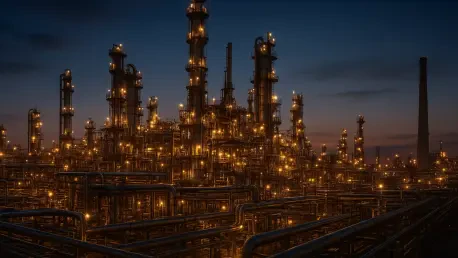

Ukrainian drone strikes on Russian refineries have synchronized with Middle Eastern instability to create a massive deficit in the world’s primary industrial fuel. This dual-front energy crisis has catalyzed a 52 percent collapse in the global diesel supply, pushing international markets into a state of extreme volatility as of late 2026. The intensifying conflict between the United States, Israel, and Iran has effectively throttled the refined fuel sector, creating a scarcity that threatens to halt industrial growth and disrupt global supply chains. Unlike previous energy shocks that were primarily defined by rising crude oil prices, this specific shortage focuses on refined products, which are the backbone of modern freight and manufacturing. As strategic reserves dwindle and traditional shipping lanes become zones of kinetic warfare, the global economy faces an unprecedented challenge in securing the middle distillates required for day-to-day operations and food security across multiple continents. This refined fuel squeeze represents a fundamental realignment of energy availability.
Supply Disruptions: The Persian Gulf and Eastern European Pressures
The primary driver of this supply-side failure is the rapid contraction of refined fuel shipments originating from the Persian Gulf. Historically, this region has served as a reliable cornerstone for global energy security, with major producers such as Saudi Arabia, the United Arab Emirates, Kuwait, and Oman supplying the bulk of the world’s diesel. However, combined exports from these nations have cratered from approximately 1.4 million barrels per day in 2025 to a mere 670,000 barrels per day by the end of September 2026. This precipitous drop highlights a critical fracture in the global logistical framework, as refining operations in the Gulf face both security threats and operational limitations. While crude oil transit through the Strait of Hormuz has shown signs of a tenuous recovery, the flow of diesel has failed to follow suit, creating a disconnect that leaves the international community vulnerable to acute energy deficits that are currently impacting the global transportation and agricultural sectors.
Compounding this crisis is a “pincer movement” created by the simultaneous escalation of the Russia-Ukraine war. While Middle Eastern instability disrupts the transit of refined products, targeted drone strikes on Russian energy infrastructure have systematically sidelined significant portions of that nation’s refining capacity. These strikes have moved beyond simple tactical maneuvers to become a strategic effort to degrade the economic engine of the Russian state, resulting in a synchronized failure of production and delivery on a global scale. Western sanctions have further complicated the situation by forcing a reorganization of established trade routes, leading to logistical bottlenecks that are difficult to resolve in the short term. The combination of these two major conflicts has removed a massive volume of diesel from the market, creating a scenario where no single producer has the capacity to fill the void, thereby cementing the current supply deficit for the foreseeable future and creating high prices.
Market Volatility: Logistics Costs and Strategic Reserve Depletion
The financial burden of these logistical disruptions is most clearly reflected in the skyrocketing costs associated with maritime transport. Freight charges for operating a Very Large Crude Carrier from the Middle East to China have surged from approximately $3 per barrel at the start of 2026 to a staggering $35 per barrel by late autumn. Similar escalations are being observed on transit routes from the U.S. Gulf Coast to various Asian ports, effectively serving as a hidden tax on every gallon of fuel consumed. These inflated shipping costs ensure that even during periods of relative price stability in crude markets, the end-user price for diesel remains prohibitively high. The complexity of modern maritime logistics means that these costs are not easily reduced; they are tied to high-risk labor, increased fuel consumption for longer routes, and the extreme scarcity of available hull space as tankers are tied up in longer voyages, further tightening the global fuel distribution network.
The global diesel market was caught in a precarious balance between escalating geopolitical risk and the urgent need for industrial stability throughout 2026. This crisis proved that the modern economy remained deeply vulnerable to disruptions in refined fuel supplies, as the United States Strategic Petroleum Reserve fell to 282 million barrels. To address these vulnerabilities, immediate focus shifted toward the decentralization of refining capacity and the expansion of domestic fuel production within major consuming nations. Policymakers and industrial leaders recognized that relying on a few sensitive geographic corridors for refined products was no longer a sustainable strategy. Moving forward, the implementation of more robust maritime security protocols and the acceleration of synthetic diesel technologies became critical priorities. Restoring energy security required a fundamental reconstruction of the global logistics network to ensure that vital fuels could reach their destinations regardless of instability.