
The intersection of renewable energy and computational science has fundamentally shifted the landscape of waste management, transforming what was once discarded into a high-value asset for the modern power grid. With the announcement of the £1 million Manchester Prize, the spotlight has turned to BiofuelAi, a pioneering firm that has successfully integrated advanced machine learning with anaerobic digestion. This recognition marks a significant milestone in the British government’s commitment to fostering artificial intelligence solutions that address the most pressing environmental challenges of the decade. By focusing on the stabilization of biogas production, BiofuelAi addresses the inherent volatility of biological reactors, which have historically struggled with efficiency and consistency. The award not only provides vital capital for expansion but also validates the concept that AI can manage the complex, non-linear variables found in organic decomposition. This achievement represents a major step toward achieving localized energy independence and reducing reliance on fossil fuels while cleaning the planet.
Transforming Biogas Production through Machine Learning
Digital Twins: Simulating Complex Biological Interactions
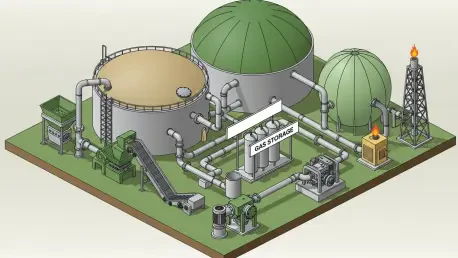
The core of the technology involves the creation of sophisticated digital twins that mirror the physical and chemical conditions inside anaerobic digesters in real-time. These virtual models allow operators to simulate various scenarios and predict how different feedstocks, such as agricultural waste or food scraps, will impact the overall gas yield before they are actually introduced into the system. By processing vast amounts of historical and real-time data, the AI identifies subtle patterns that human operators might miss, such as early indicators of “sour” tanks where acidity levels threaten to kill beneficial bacteria. This proactive approach ensures that the biological flora remains healthy and productive, maximizing the methane output while minimizing the risk of costly downtime or system failures. Building on this foundation, the platform continuously learns from every batch, refining its internal logic to adapt to the unique microbial ecosystems found in different regional facilities across the country.
Furthermore, the integration of high-fidelity sensors provides a steady stream of data points regarding temperature, pH levels, and gas composition, which the machine learning algorithms use to fine-tune the environment. This level of precision was previously unattainable in traditional biogas plants, where adjustments were often reactive and based on manual testing that lagged behind the actual state of the reactor. The ability of BiofuelAi to automate these adjustments means that the system can maintain an optimal state of equilibrium around the clock, regardless of external environmental shifts. As the technology matures, it is expected that these digital twins will become standard across the industry, providing a blueprint for how biotechnology can be managed through a digital-first lens. This shift toward automated biological management not only improves the reliability of the energy produced but also lowers the barrier to entry for smaller facilities that lack the resources for specialized on-site chemical engineering teams.
Operational Stability: Mitigating Risks in Waste Conversion
One of the primary challenges in the biogas industry has been the inconsistency of feedstock quality, which can vary significantly depending on the season or the source of the organic waste. BiofuelAi addresses this by utilizing predictive analytics to calculate the exact nutrient mix required to keep the digestion process stable despite these fluctuations. By recommending specific additives or adjusting the rate of material input, the AI prevents the system from becoming overwhelmed or under-nourished, which leads to a much more predictable energy output for the national grid. This stability is crucial for utility companies that need reliable baseload power to complement intermittent sources like wind and solar. This approach naturally leads to a more robust circular economy where waste is no longer a liability but a dependable fuel source. The reduction in operational risk makes the technology more attractive to private investors who were previously wary of the biological uncertainties inherent in large-scale biogas projects.
Moreover, the efficiency gains realized through AI optimization directly translate into improved profit margins for waste management companies and agricultural enterprises. By increasing the methane yield per ton of waste, BiofuelAi enables facilities to produce more energy without increasing their physical footprint or feedstock consumption. This optimization also reduces the amount of unreacted organic matter that remains at the end of the process, resulting in a higher quality digestate that can be used as a premium bio-fertilizer. This dual benefit of clean energy and sustainable soil nutrients creates a closed-loop system that enhances the overall sustainability of the agricultural sector. As these systems become more prevalent, the data gathered from thousands of diverse installations will create a massive repository of knowledge, allowing the AI to solve even more complex challenges related to waste diversity. Consequently, the technology is poised to redefine the economic viability of green energy projects in rural and urban settings alike.
Strategic Impact of the Manchester Prize on the Energy Sector
Institutional Support: The Role of Government-Led Innovation
The awarding of the Manchester Prize serves as a powerful signal of the UK government’s intent to lead the global race in applied artificial intelligence for public benefit. By dedicating significant financial resources to this specific niche, the state has effectively de-risked the research and development phase for BiofuelAi, allowing them to focus on scaling their solution rather than constant fundraising. This prize is part of a broader ten-year strategy to position the North of England as a hub for climate tech, leveraging the region’s industrial heritage to build a future-proof energy infrastructure. The selection process for the prize was rigorous, involving a panel of experts who evaluated the scientific validity and the potential societal impact of the competing technologies. Winning this competition provides BiofuelAi with not only the capital needed for infrastructure but also a level of prestige that will facilitate partnerships with major energy providers and international regulatory bodies in the coming years.
In addition to the direct funding, the prize offers access to specialized computational resources and a network of academic researchers who can help refine the underlying algorithms. This collaborative ecosystem is essential for maintaining the momentum of innovation in a field that moves as quickly as machine learning. The government’s involvement also ensures that ethical considerations and data security standards are integrated into the development process from the ground up. This framework builds public trust in AI technologies, demonstrating that they can be used to solve tangible problems like climate change and energy security rather than just abstract digital tasks. By fostering an environment where high-risk, high-reward technologies can thrive, the Manchester Prize has set a new standard for how public policy can drive technological breakthroughs. This successful implementation will likely serve as a model for other nations looking to harness the power of artificial intelligence to meet their own carbon reduction targets and economic goals.
Global Scalability: Exporting Sustainable AI Solutions
While the immediate focus of BiofuelAi remains on the UK market, the modular nature of the software allows for rapid deployment in international markets where organic waste is abundant but underutilized. From the sprawling agricultural zones of North America to the rapidly urbanizing regions of Southeast Asia, the need for efficient waste-to-energy solutions is universal. The AI can be trained on localized data sets to account for different waste streams and climatic conditions, making it a highly adaptable tool for global decarbonization efforts. This versatility is key to the company’s long-term growth strategy, as it seeks to license its technology to international energy conglomerates and municipal governments. By providing a software-based solution to a physical engineering problem, BiofuelAi can scale its impact far faster than companies that rely solely on hardware manufacturing. This digital-first approach to green energy is a testament to the transformative power of the current technological era.
To ensure the successful integration of these systems, stakeholders must prioritize the modernization of existing waste infrastructure and the training of a new workforce capable of operating AI-enhanced facilities. Future considerations should include the development of universal data standards for biogas sensors to allow for even more seamless interoperability between different technology providers. Regulatory frameworks also needed to evolve to recognize the enhanced safety and efficiency of AI-managed reactors, potentially leading to faster permitting processes for new installations. By embracing these advancements, the global community moved closer to a decentralized and resilient energy grid that prioritized environmental health alongside economic growth. The path forward involved a deliberate shift toward transparency in algorithmic decision-making and a commitment to reinvesting the dividends of AI efficiency back into local communities. Ultimately, the success of this project demonstrated that the most effective solutions to climate change required a sophisticated blend of biological understanding and advanced computational intelligence.