
Christopher Hailstone has spent years at the crossroads of energy management, renewable integration, and electricity delivery. In this conversation, he digs into how a 200 MW/800 MWh battery in Jackson County can soak up low-cost power off-peak and steady the grid when it matters most, what it takes to bring one of the first large-scale batteries in this territory online by 2029, and how grid-forming controls, winter resilience, and cybersecurity will be proven in the field. We explore how four-hour storage complements a plan to add 6.2 GW of new generation, aligns with up to 1.5 GW of batteries by 2029, and adapts to a future that may include up to 6 GW of small modular reactors next decade and a 300 MW unit targeted by 2032. Along the way, he unpacks lessons from projects totaling 1,650 MW/4,150 MWh in other states, strategies to de-risk supply chains and interconnections, and a pragmatic playbook for community benefits and transparent performance reporting.
A 200 MW/800 MWh battery is slated for Jackson County, Alabama. What specific peak events or seasonal patterns will it target, and how will four-hour duration shape dispatch strategy and revenue stacking?
We’re squarely targeting the winter morning and evening ramps and the sticky summer afternoons when air conditioners push demand toward the edge. Four-hour duration lets us cover the full shoulder of a peak—two hours climbing up and two hours easing down—so we can discharge 200 MW through the tightest window without running out of runway. The core stack is energy arbitrage off-peak to on-peak, capacity during coincident peaks as load grows about 2% annually, and ancillary services—frequency response, regulation, and operating reserves—to keep the system stable. Practically, we’ll day-ahead block for 2–3 hours of peak coverage, reserve headroom for regulation, and pivot intra-day when market conditions or system needs swing, so the battery earns across all three products rather than betting everything on one slice.
Construction is expected in 2028 with operations in 2029. What critical-path milestones could accelerate or delay that timeline, and how will you de-risk interconnection, supply chain, and workforce availability?
The gating items are interconnection studies and upgrades, long-lead equipment like transformers and inverters, and civil permits that unlock site work. We’ll push early procurement for high-voltage gear and medium-voltage skids because those can slip a schedule by quarters if you wait. On interconnection, we’ll pursue detailed modeling aligned with the host grid’s standards and pre-fund upgrades where prudent to avoid last-minute surprises. For labor, we’ll stage craft training with local partners ahead of 2028 and sequence work so that as battery enclosures arrive, the foundations, cabling, and SCADA backbone are already in, keeping the 2029 in-service date on track.
As one of the first large-scale batteries in the territory, what integration hurdles do you anticipate, and how will you validate grid-forming capabilities like frequency response, regulation, and operating reserves at scale?
First-of-kind integration means aligning protection settings, ride-through profiles, and dispatch rules with a system that hasn’t had many 200 MW assets switching from charge to discharge in seconds. We’ll use detailed electromagnetic transient models to tune grid-forming controls, then verify with staged commissioning tests for frequency response, automatic generation control, and spinning reserve substitution. Because this asset is contracted for 20 years, we’ll include periodic re-tuning windows as the grid changes, so performance doesn’t drift. Transparency matters, so we’ll publish pre- and post-test data traces that show how the plant holds setpoints during regulation and how it responds to frequency events.
With load projected to grow about 2% annually and data center demand potentially doubling by 2030, how will this project prioritize capacity during coincident peaks, and what metrics will define success?
We’ll reserve discharge blocks for the top 50–100 system peaks each year, focusing on the coincident windows where data center load intensifies stress. Success is measured by verified MW reduction at the system peak, hours contributed to top-decile peaks, and avoided curtailments or interruptions during those hours. We’ll also track how often we hit full 200 MW during those events and how many MWh—up to 800 MWh—land where they matter most. Over time, we’ll correlate those results with reliability outcomes, especially during the tightest days, to show the battery’s role in keeping the lights on.
The plan includes 6.2 GW of new generation. How does a 200 MW battery complement new gas, nuclear life extensions, hydro uprates, and variable renewables, and where does it relieve transmission constraints most?
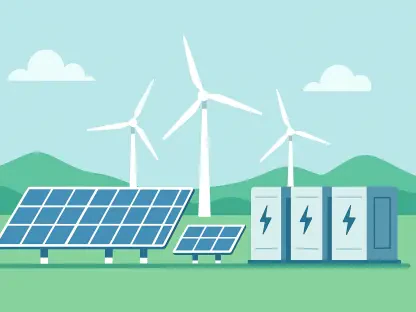
The battery soaks up low-cost energy from uprated hydro and added renewables when they’re abundant, then discharges during ramps that gas would otherwise chase less efficiently. Nuclear life extensions provide steady baseload; storage shapes that output to the evening peak without touching the fuel supply. On the wires, a strategically placed 200 MW unit can act like virtual transmission, easing flows across congested corridors during high-load periods. By smoothing ramps and shaving peaks, we reduce starts and reserve burdens on the thermal fleet while creating headroom for variable resources.
There’s a strategy to deploy up to 1.5 GW of batteries by 2029. What criteria will guide site selection, technology mix, and phasing, and how will lessons from the first build inform the next tranche?
We’ll target nodes with recurring congestion, strong interconnection capacity, and proximity to load pockets that see the steepest ramps. The first wave will likely be four-hour systems, mirroring the 200 MW/800 MWh profile, with later phases exploring different durations as needs evolve. Phasing will front-load sites that can be online by 2029 and backfill with locations requiring more upgrades. From this project, we’ll carry forward commissioning scripts, grid-forming settings, and O&M routines that have already handled real events, trimming months off the learning curve for the rest of the 1.5 GW.
After severe winter storms caused widespread outages, how will this battery support black start, ride-through, and fast frequency response during extreme cold snaps, and what performance targets will you hold it to?
The winter ice storm taught us that assets must ride through low-voltage conditions and respond instantly to frequency dips when generation trips. We’ll configure grid-forming controls to energize local buses for black start support once safe, then synchronize with the wider grid as restoration progresses. Fast frequency response will prioritize immediate MW injection to arrest frequency decline, then hand off to regulation for steady-state control. Our target is to keep full four-hour capability available for the most severe cold events and ensure the plant can transition from standby to full 200 MW discharge without delay when conditions demand it.
How will you allocate the battery between energy arbitrage, capacity, and ancillary services over its lifetime, and what triggers would shift that mix as market conditions change?
Early years will lean more on arbitrage and capacity to stabilize peaks while the system grows at about 2% annually. As more renewables arrive and variability increases, we’ll dial up regulation and operating reserves, allocating a slice of the 800 MWh to flexibility. Triggers include changes in peak shape from data center additions, the entry of up to 1.5 GW of other batteries by 2029, and resource additions under the 6.2 GW plan. We’ll revisit the mix seasonally, preserving that four-hour backbone while shifting hourly dispatch to follow evolving value.
What grid-forming inverter functions are you specifying—virtual inertia, grid-following fallback, voltage control—and how will you test and tune them to local system dynamics?
We’ll enable virtual inertia to stiffen frequency, voltage droop controls to anchor local voltage, and a seamless fallback to grid-following mode if conditions warrant. Testing starts in the lab with hardware-in-the-loop, then moves on-site with staged faults, step changes, and AGC setpoint tracking. We’ll benchmark the response against acceptance criteria for frequency response, regulation, and operating reserves so we can prove the advertised behavior in the field. Importantly, we’ll capture waveforms during severe events to refine controller gains and ensure stable interaction with nearby generation.
For lifecycle management, how will you approach degradation modeling, augmentation, and warranty strategy, and what are your step-by-step plans for maintaining four-hour capability over 20 years?
We’ll use measured cycling and temperature data to update degradation models annually, adjusting dispatch to protect health while meeting the 20-year agreement. When usable energy dips below targets, we’ll augment with additional enclosures to restore the 800 MWh nameplate. Warranties will tie performance to verified duty cycles and ambient conditions, aligning incentives so both parties preserve four-hour output. Step-by-step, that means tracking state-of-health, scheduling augmentations before seasonal peaks, and keeping spare capacity ready so the plant holds its four-hour obligation without fail.
The region is also exploring small modular reactors this decade. How would firm nuclear output alter battery operational patterns, and could storage help time-shift nuclear baseload to meet evening peaks?
If up to 6 GW of SMR capacity appears next decade, plus a 300 MW unit that could come online by 2032, we’ll see steadier off-peak supply. The battery would soak that energy and push it into the evening peak, effectively shaping baseload to match demand. That means more frequent partial cycles focused on peak shaving rather than long arbitrage spreads. It’s a natural pairing: firm nuclear runs efficiently while storage handles the daily dance.
Local utilities are piloting front-of-the-meter storage to cut demand charges. How will you coordinate dispatch across wholesale and distribution levels, and what data-sharing or control protocols are needed to avoid counterproductive actions?
With 45 MW/95 MWh already operating on one distribution system and more than 100 MW proposed over the next three years, coordination is essential. We’ll share day-ahead schedules, state-of-charge forecasts, and contingency plans so wholesale and distribution controls don’t trip over each other. A common telemetry standard and real-time curtailment rights ensure we don’t both discharge into the same feeder peak or both charge during a stressed hour. The goal is simple: stack value at both levels without creating hidden peaks downstream.
Community benefits matter. What are your plans for local jobs, safety training for first responders, and environmental safeguards, and how will you communicate emergency response procedures to nearby residents?
We’ll prioritize local hiring for civil works, electrical installation, and long-term O&M, pairing that with training programs well before 2028. First responders will get hands-on sessions at the site, plus clear playbooks for isolation, ventilation, and coordination during rare events. Environmental safeguards include stormwater controls and careful handling of all equipment to keep the site clean and quiet. We’ll host open houses, share emergency procedures in plain language, and keep a hotline active so neighbors get timely, factual updates.
Supply chain risks persist for cells, transformers, and power electronics. What dual-sourcing or domestic content strategies are you pursuing, and how will you hedge commodity exposure for key materials?
We’ll dual-source cells and inverters where possible and place early orders for grid transformers, which are classic schedule risks. Domestic content will be emphasized when it strengthens resilience and timing, especially for power conversion and integration. For materials exposure, we’ll use indexed pricing with collars and carry strategic spares on-site to avoid downtime from small-part shortages. The aim is to lock the critical path while keeping flexibility where the market is most dynamic.
Plus Power operates projects in Arizona, New Mexico, and Hawaii. Which proven practices from those systems will you transplant here, and what regional differences—humidity, temperature swings, grid topology—require a fresh approach?
We’re bringing over lessons from 360 MW/1,340 MWh in one territory, 150 MW/600 MWh in another, and 185 MW/565 MWh on an island grid that can match 17% of a 1,100 MW peak. Those sites taught us disciplined commissioning, crisp AGC integration, and durable O&M routines. Here, humidity and winter cold call for tighter HVAC control in enclosures and attention to condensation and icing around terminations. Grid topology is also different—fewer islanding events than Hawaii but longer transmission corridors—so we’ll tune controls for larger-area dynamics and deeper winterization.
What cybersecurity standards, monitoring, and incident response playbooks will you implement for inverter controls, SCADA, and remote access, and how will you validate them with red-team exercises?
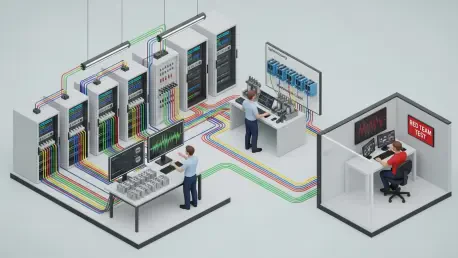
We’ll harden inverter controls and SCADA with network segmentation, multi-factor authentication, and strict change management. Continuous monitoring will flag anomalies at the controller and network layers, with predefined isolation steps if thresholds are crossed. We’ll conduct red-team exercises before commercial operations and periodically afterward to pressure-test access controls and restoration procedures. Every drill ends with action items tied to timelines so defenses keep pace with evolving threats.
On financing and contracts, how are you structuring availability guarantees, performance penalties, and shared-savings incentives, and what bankability lessons should counterparties keep in mind?
Availability guarantees will focus on peak seasons when the grid is tight, with penalties calibrated to missed performance during those windows. We like shared-savings structures that reward superior dispatch—if we capture more value through better operations, everyone benefits. For bankability, counterparties should align warranties and performance tests with actual duty cycles, not theoretical curves. Keeping metrics tied to the 200 MW/800 MWh reality reduces disputes and ensures lenders see predictable cash flows.
How will you measure and publish outcomes—peak reduction, avoided outages, emissions impacts—so stakeholders can assess value, and what third-party verification will you use?
We’ll publish verified peak reductions in MW and MWh delivered during the top peak hours, cross-referenced with system conditions. Where severe events occur, we’ll document the battery’s role in avoiding outages or reducing their duration, supported by operator logs. Emissions impacts will be estimated using generation mixes for charge and discharge periods, then reviewed by an independent verifier. Regular reports will make it clear how the project contributes to reliability, affordability, and resilience as load grows.
What is your forecast for grid-scale battery storage in the Southeast?
I expect rapid scaling through 2029 as the strategy to execute up to 1.5 GW comes to fruition, anchored by projects like this 200 MW/800 MWh unit. With annual load growth around 2% and data center demand potentially doubling by 2030, four-hour batteries will become a default tool for peak shaping and fast response. If up to 6 GW of SMRs arrive next decade alongside a 300 MW unit targeted by 2032, storage will pivot from pure arbitrage toward shaping firm supply to evening peaks. In short, batteries will move from pilot to backbone—proving, season after season, that they’re essential to a stable, affordable, and secure grid.