
The strategic fragility of a global economy tethered to a fifty-kilometer maritime chokepoint has reached a breaking point, forcing a massive architectural shift in how energy flows across the planet. For decades, the Strait of Hormuz acted as the singular jugular of the oil market, a narrow passage through which twenty percent of the world’s petroleum supply traveled daily. However, the recent escalation of the U.S.-Iran conflict and the subsequent “double-blockade” have shattered the long-held belief that economic interdependence alone could prevent a total maritime shutdown. Today, the regional focus has shifted from maintaining a “deterrent architecture” within the Gulf to a frantic, high-stakes race for terrestrial and multi-basin export routes that circumvent the waterway entirely.
This transition marks the end of an era defined by maritime efficiency and the beginning of a period dominated by redundant, land-based logistics. The shift is not merely a matter of convenience but a fundamental reassessment of global energy resilience. As the world watches the closure of the Strait transform from a theoretical risk into a persistent reality, the focus of major producers like Saudi Arabia and the United Arab Emirates has pivoted toward creating a networked system of pipelines and terminals. This analysis explores the current capacity gap, the real-world performance of existing bypass projects, and the expert warnings that suggest moving the exit point of oil is only the first step in a much longer security struggle.
The Strategic Shift Toward Route Diversification
Evaluating the Capacity Gap and Adoption Trends
The sheer scale of the logistical challenge is best understood through a comparison of current throughput requirements versus existing infrastructure capabilities. While the Strait of Hormuz traditionally facilitated the transit of approximately twenty million barrels per day (mb/d), the combined capacity of all operational bypass routes remains significantly lower, estimated between 3.5 and 5.5 mb/d. This massive deficit has turned what was once a secondary concern for oil-producing nations into a primary driver of capital allocation. In the current landscape, investment trends have moved away from short-term maritime optimization and toward the development of a “multi-corridor architecture” that can withstand the pressures of localized warfare.
Adoption of these new strategies accelerated rapidly following the total shutdown of Hormuz earlier this year. The crisis proved that the cost of inaction far outweighed the multi-billion-dollar price tags of transcontinental pipelines. Consequently, regional producers are no longer viewing these projects through the lens of traditional return on investment; instead, they are being treated as an essential “insurance premium” for national survival. The data suggests that for the global economy to achieve true stability, the current bypass capacity must triple, a goal that is driving a massive wave of construction projects stretching from the Persian Gulf to the shores of the Red Sea and the Mediterranean.
Real-World Applications of Bypass Infrastructure
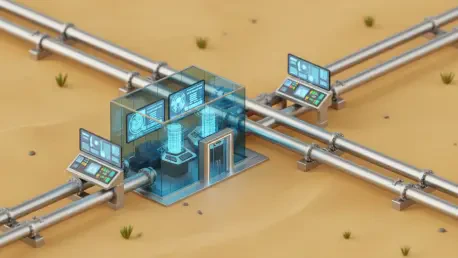
Saudi Arabia’s East-West Pipeline stands as the most prominent example of this diversification effort. Connecting the Kingdom’s eastern processing facilities to the Red Sea port of Yanbu, the pipeline has a theoretical capacity of seven mb/d. However, maintaining this throughput under adversarial pressure has proven difficult. Recent kinetic strikes on pumping stations have demonstrated that terrestrial infrastructure is not immune to the same drone and missile threats that plague maritime shipping. Despite these challenges, the ability to move even a fraction of the Kingdom’s exports to the west has provided a critical safety valve during the most intense periods of the current blockade.
Similarly, the United Arab Emirates has leveraged its Habshan–Fujairah (ADCOP) Pipeline to bypass the Gulf and exit directly into the Gulf of Oman. This gateway is a vital component of the UAE’s strategic independence, allowing it to market oil without entering the volatile waters of the Strait. Beyond these established routes, northern corridors are seeing a revival as Iraq moves to restore and expand its pipeline connections to Turkey. These emerging systems, combined with conceptual networks reaching through Oman, Jordan, and Egypt, represent the first steps toward a fragmented but more resilient energy map that prioritizes geographic variety over the efficiency of a single chokepoint.
Perspectives from Global Energy and Security Experts
The current crisis has prompted a candid re-evaluation of energy security from figures like IEA Executive Director Fatih Birol. He has often highlighted the profound irony that a $110 trillion global economy can be effectively paralyzed by a handful of armed actors operating in a geographically constrained area. This “energy hostage-taking” has forced a move away from the traditional belief that the global market is too large to fail. Instead, experts are now advocating for a decentralized model where energy flows are distributed across multiple basins, reducing the leverage any single nation or group can exert over the global supply chain.
However, military and security analysts warn that the “geographic bypass” may be a dangerous fallacy if not accompanied by advanced defensive integration. Moving a terminal point outside the Strait of Hormuz does not inherently protect it from modern long-range capabilities. As seen in recent attacks on the port of Fujairah, the transition from maritime chokepoints to terrestrial exit points merely shifts the theater of conflict rather than eliminating the risk. Therefore, industry leaders are increasingly discussing economic re-calibration, acknowledging that the high costs of defending these new corridors are a permanent addition to the price of global energy.
Future Projections for Middle Eastern Energy Logistics
The evolution of energy infrastructure over the next several years is expected to trend toward a “multi-basin” export model. This fragmented approach will likely see the development of new terminals along the Red Sea and the Mediterranean, effectively diluting the strategic importance of the Persian Gulf as a transit hub. While this diversification increases systemic resilience, it also introduces complex political hurdles. Transnational transit treaties will become the new currency of regional diplomacy, as producers must secure the cooperation of transit states like Jordan, Egypt, and Turkey to ensure their oil reaches the global market safely.
The outcome of this shift will be a permanent change in how global oil prices react to regional volatility. While the end of the “Hormuz era” should theoretically lower the risk of a single catastrophic supply shock, the higher costs associated with maintaining and defending a vast network of pipelines will likely keep baseline prices elevated. The strategic leverage of nations bordering the Strait of Hormuz will diminish, but the geopolitical importance of “gateway” nations on the Red Sea and Mediterranean will rise. This new landscape will require a balance between increased physical resilience and the diplomatic finesse needed to manage a more complex web of energy arteries.
Summary of the Post-Hormuz Energy Landscape
The transition from a hyper-efficient single chokepoint to a diversified, multi-corridor energy network reflected a fundamental shift in global priorities. This period demonstrated that the cost of maintaining a vulnerable maritime status quo was no longer sustainable for either producers or consumers. The move toward terrestrial bypass routes, while physically and politically demanding, represented the only viable path to long-term economic stability in an increasingly contested region. The massive capital flows directed toward pipeline infrastructure confirmed that route diversity had become the primary metric of national security.
Ultimately, the development of these alternative pathways provided a necessary, if expensive, buffer against the weaponization of energy transit. The shift away from the Strait of Hormuz necessitated a broader integration of regional defense and diplomatic efforts, ensuring that new terminals remained operational despite ongoing threats. This evolution did not solve the problem of regional instability, but it did decouple the health of the global economy from a single fifty-kilometer stretch of water. The strategic focus moved toward the next generation of global energy arteries, where continued diplomatic and defensive cooperation remained the only way to safeguard the world’s most critical resources.