
The recent spikes in global energy prices have underscored a fundamental flaw in how the international community manages its primary fuel sources, specifically the staggering amount of natural gas that is lost during production. While much of the conversation around energy security typically revolves around the discovery of new fields or the accelerated deployment of solar and wind farms, a far more immediate and cost-effective solution lies in the recovery of methane that is currently being vented, flared, or leaked into the atmosphere. This pervasive waste not only undermines the financial stability of energy markets but also exacerbates environmental degradation at a time when efficiency should be the highest priority. By capturing this byproduct of oil and gas operations, nations can effectively increase their available energy supply without the decade-long lead times required for new infrastructure projects. The convergence of economic necessity and technological capability has created a unique opportunity to bridge the gap between traditional fossil fuel reliance and a cleaner energy future.
The Economic Impact: Geopolitical Instability
Geopolitical tensions in the Middle East and Eastern Europe during the early months of 2026 have pushed the vulnerability of global energy supply chains to a breaking point, forcing governments to reconsider their dependence on unstable corridors. The repeated threats to maritime traffic in the Strait of Hormuz, through which a significant portion of the world’s liquefied natural gas travels, have sent shockwaves through international markets and caused Brent crude to soar to levels not seen in several years. These fluctuations do more than just raise the price at the pump; they increase the cost of manufacturing, transport, and heating, effectively acting as a regressive tax on the global population. When energy supplies are weaponized or disrupted by regional conflicts, the resulting economic volatility stifles long-term investment and forces emergency fiscal measures that divert funds from essential public services. Consequently, the need for a domestically controlled or at least more efficient energy supply has become a matter of national security rather than just environmental policy.
Traditional responses to these supply shocks often involve a binary choice between fast-tracking new drilling permits or drastically pivoting to renewable energy sources, yet both paths present significant hurdles in the current landscape. New fossil fuel developments are increasingly viewed as risky long-term investments due to shifting regulatory environments and the potential for stranded assets as the world moves toward a lower-carbon economy by 2028 and beyond. Simultaneously, while the expansion of wind and solar capacity is non-negotiable for future stability, these sectors continue to struggle with grid integration challenges and lengthy permitting processes that prevent them from providing immediate relief during a crisis. This realization has shifted the focus toward maximizing the utility of every cubic foot of gas already being extracted, thereby reducing the need for new, high-risk production ventures. By treating wasted gas as a strategic reserve, the industry can create a buffer against international price swings and provide a more reliable foundation for economic growth.
Technological Pathways: Resource Optimization
Modern energy production has long suffered from the triple threat of venting, flaring, and fugitive emissions, but the emergence of sophisticated monitoring technology is finally turning the tide against these systemic inefficiencies. Venting, the deliberate release of gas to maintain safety pressures, and flaring, the burning of excess gas that lacks pipeline access, represent hundreds of billions of cubic feet of lost potential annually. However, the deployment of advanced Vapor Capture Units at wellheads is now allowing operators to compress and transport this gas, transforming a liability into a profitable asset. Furthermore, the integration of continuous monitoring systems using high-resolution sensors and automated valves ensures that pressure management does not result in the unnecessary loss of valuable resources. These technical advancements allow the industry to tighten its operations, ensuring that the energy harvested from the ground actually reaches the end consumer rather than disappearing into the atmosphere as a potent greenhouse gas.
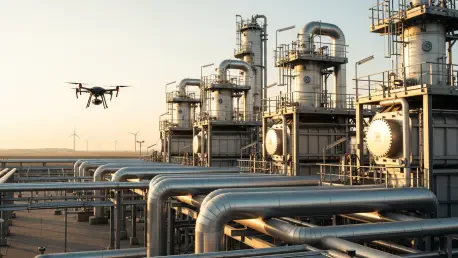
Beyond intentional releases, the industry is leveraging aerospace technology and artificial intelligence to address the elusive problem of fugitive emissions from aging or faulty infrastructure. Satellite constellations now provide daily methane maps of the entire planet, identifying “super-emitter” events with a level of precision that was physically impossible only a few short years ago. On the ground, Leak Detection and Repair programs have been revolutionized by the use of drones equipped with LiDAR and infrared cameras, which can inspect thousands of miles of pipeline in a fraction of the time required for manual patrols. When these hardware solutions are paired with machine learning algorithms that predict equipment failure before it occurs, the result is a proactive maintenance model that virtually eliminates accidental leaks. This shift from reactive repair to predictive management not only secures the energy supply but also drastically reduces the operational costs associated with emergency shutdowns and lost product, proving that technological precision is the most effective weapon.
Strategic Frameworks: National Security
The adoption of waste-reduction technologies creates a multifaceted benefit for the global economy by stabilizing the supply of natural gas while simultaneously hitting critical climate benchmarks. Every unit of methane captured through improved infrastructure is a unit that does not need to be replaced by drilling in sensitive or geopolitically volatile areas. This efficiency effectively expands the global energy pool, exerting downward pressure on prices and providing much-needed relief to industrial sectors that rely on gas for electricity and chemical production. Moreover, because methane is significantly more potent as a heat-trapping gas than carbon dioxide in the short term, its elimination provides an immediate environmental dividend that buys time for the longer-term transition to fully renewable systems. This “triple-win” of enhanced security, lower costs, and reduced environmental impact makes the mitigation of gas waste one of the most pragmatic policy objectives available to modern leaders.
Realizing the full potential of these efficiencies requires a move away from voluntary industry guidelines toward a more robust and standardized regulatory environment that holds all operators to the same high standard. Governments are beginning to implement mandatory leak detection and repair cycles, often backed by stiff penalties for non-compliance and bans on the routine flaring of associated gas. To complement these mandates, financial incentives such as accelerated depreciation for capture equipment and public-private partnerships for pipeline modernization are helping smaller operators bridge the initial capital expenditure gap. By creating a clear legal framework that penalizes waste and rewards efficiency, policymakers can drive the widespread adoption of technologies that were previously considered too expensive. These regulations serve as the backbone of a new energy security strategy, ensuring that the pursuit of profit aligns with the broader public interest of maintaining a stable and reliable supply for everyone.
Future Resilience: Actionable Next Steps
Moving forward, the global community must prioritize the standardization of data reporting and the cross-border sharing of leak detection technologies to ensure that no region becomes a weak link in the energy chain. International cooperation through platforms like the Methane Alert and Response System has already demonstrated that collective transparency can force accountability even in jurisdictions with historically lax oversight. Moving into the next phase of this energy evolution, it is essential that financial institutions integrate methane intensity metrics into their lending criteria, effectively making waste reduction a prerequisite for capital access. This market-driven approach will ensure that the transition to a more efficient energy system is self-sustaining and less dependent on fluctuating political will. By treating gas waste as a technical failure rather than a byproduct of doing business, the industry set a new benchmark for operational excellence that drastically reduced the geopolitical leverage held by volatile energy exporters.
Energy leaders recognized that the most effective way to bolster energy security was to stop letting billions of dollars worth of resources simply evaporate into the atmosphere. They invested heavily in the midstream infrastructure necessary to move captured gas to market, ensuring that remote extraction sites were no longer forced to flare due to a lack of physical connectivity. Furthermore, the integration of methane capture into broader decarbonization strategies allowed for a more balanced transition, providing a reliable bridge fuel that supported the grid as intermittent renewable sources continued to scale. This holistic approach shifted the narrative from a zero-sum game between fuels to a comprehensive focus on total system efficiency and resource stewardship. Ultimately, the actions taken to eliminate waste proved to be the most resilient defense against market volatility, creating a more stable and predictable energy landscape that benefited consumers and the environment alike.