
The vast network of energy pipelines spanning North America functions as the silent, essential circulatory system of a modern economy, yet its technological evolution remains largely hidden from the public eye. Over the last three decades, the industry has undergone a radical transformation, abandoning the reactive maintenance models of the mid-20th century in favor of a sophisticated, high-tech infrastructure that prioritizes safety and durability from the moment of conception. This shift represents a transition toward a proactive engineering philosophy where every mile of pipe is treated as a high-precision instrument rather than a simple metal tube. By adopting these rigorous modern standards, the energy sector has fundamentally altered the paradigm of moving oil and natural gas across the continent, ensuring that reliability is baked into the very fabric of the system. While political narratives often linger on the failures of legacy infrastructure, the current reality involves a fusion of advanced metallurgy, aerospace-grade sensors, and artificial intelligence that sets a global benchmark for industrial safety. This commitment to technical excellence ensures that the energy resources required to power homes and businesses are delivered with minimal environmental impact and maximum operational transparency. Current initiatives throughout 2026 demonstrate that the integration of digital oversight and superior materials is not merely an upgrade but a complete reimagining of how energy safely traverses the landscape.
Engineering Integrity: Advanced Metallurgy and Robust Coatings
Modern pipelines leverage breakthroughs in material science by utilizing high-strength steel that is specifically engineered for superior fracture resistance and exceptional toughness. Unlike the legacy alloys used decades ago, these modern steels, such as Grade X80, are manufactured to much tighter tolerances and undergo rigorous quality control measures that ensure uniformity across thousands of miles of infrastructure. One of the most significant advancements is the application of Fusion-Bonded Epoxy coatings, which create a chemical bond with the steel surface to provide a robust, non-permeable barrier against moisture and environmental contaminants. To further bolster the pipeline’s lifespan, engineers implement sophisticated cathodic protection systems that use controlled electrical currents to counteract natural corrosion processes at a molecular level. By maintaining a slight negative charge on the steel, these systems effectively neutralize the chemical reactions that would otherwise lead to wall thinning over time. This multi-layered approach to material integrity ensures that modern pipelines remain structurally sound for many decades, significantly reducing the likelihood of failures caused by environmental degradation or material fatigue. The transition to these advanced materials represents a fundamental shift toward building infrastructure that is designed to last a century with minimal intervention.
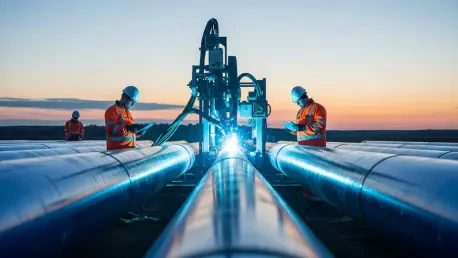
Construction techniques have undergone a parallel evolution, moving toward automated and semi-automated welding systems that deliver consistent, high-quality joints across diverse terrain and climatic conditions. To verify the integrity of these critical connections, technicians utilize advanced digital X-ray imaging and phased-array ultrasonic testing to identify even microscopic defects that would be invisible to the naked eye. This level of scrutiny allows for immediate repairs during the installation phase, ensuring that the finished product meets the highest possible safety specifications before it is ever buried. Additionally, the widespread adoption of Horizontal Directional Drilling has revolutionized the way pipelines cross sensitive areas, such as major rivers, wetlands, and busy urban corridors. By boring deep beneath the surface, operators can install infrastructure without disturbing surface ecosystems or existing surface-level structures, maintaining the environmental integrity of the region. Before any energy product is introduced into the system, the entire network undergoes a hydrostatic pressure test where it is filled with water and pressurized to levels far exceeding normal operating limits. This rigorous validation process identifies potential weaknesses in a controlled environment, providing a final layer of safety assurance that confirms the structural readiness of the network for active service.
Digital Ecosystems: Real-Time Operational Surveillance
The industry has successfully developed a “digital nervous system” centered around Supervisory Control and Data Acquisition systems that provide unparalleled visibility into pipeline operations. These centralized hubs collect a continuous stream of data from thousands of sensors strategically placed along the pipeline route, monitoring critical variables such as pressure, temperature, and flow rates in real-time. Specialized control rooms, staffed twenty-four hours a day by highly trained technicians, serve as the command centers for these operations, utilizing sophisticated software to visualize the health of the entire network at a glance. The integration of automated shut-off valves further enhances this safety framework, as these devices are programmed to trigger immediately if the system detects an unexpected drop in pressure or an anomaly in flow patterns. This rapid-response capability ensures that any potential incident can be isolated within seconds, dramatically limiting the impact on the surrounding environment and preventing the loss of product. By replacing manual observation with precise, high-speed digital monitoring, operators can manage vast distances of infrastructure with a degree of accuracy that was simply unattainable in previous decades. This shift toward total digital transparency has allowed the industry to move from responding to issues to preventing them through constant data analysis.
To maintain the interior integrity of active lines, operators employ sophisticated diagnostic devices known as smart pigs or inline inspection tools that provide a detailed map of the pipe’s condition. These high-tech instruments travel through the interior of the pipeline without interrupting the flow of energy products, utilizing magnetic flux leakage and ultrasonic sensors to inspect the pipe walls from the inside out. As the tool moves through the system, it records detailed data on metal fatigue, microscopic cracks, or any signs of wall thinning, creating a comprehensive digital twin of the pipeline’s interior surface. This technology enables a shift from reactive repairs to a philosophy of predictive maintenance, allowing companies to identify and address minor imperfections years before they could potentially develop into structural risks. The data collected by these tools is analyzed by advanced algorithms to prioritize maintenance schedules, ensuring that engineering resources are directed to the exact locations where they will have the greatest impact on system longevity. This granular level of internal surveillance provides a continuous loop of feedback that informs long-term asset management strategies and reinforces the overall safety of the energy delivery network. In 2026, the use of these tools has become a standard practice that underpins the reliability of energy transport across all major North American corridors.
Multi-Layered Defense: Fiber Optics and Orbital Intelligence
Beyond internal inspections, newer infrastructure projects frequently incorporate advanced remote sensing technologies, including fiber optic cables buried directly alongside the pipeline corridor. These cables function as a distributed acoustic sensing network, capable of detecting the minute vibrations associated with unauthorized excavation activities or the specific acoustic signatures generated by a small leak. Because the fiber optic system provides continuous monitoring along the entire length of the pipe, it can pinpoint the exact location of an anomaly within meters, allowing for an immediate tactical response from field crews. This ground-level technology is increasingly supplemented by high-resolution satellite surveillance and autonomous drone inspections, which provide a wide-angle view of the pipeline’s right-of-way. Drones equipped with infrared cameras and methane sensors can fly scheduled routes to detect thermal changes or gas emissions that might indicate a subsurface issue, offering a level of oversight that is both cost-effective and highly reliable. When these various layers of sensing technology are integrated into a single operational platform, they provide a multi-dimensional view of pipeline health that creates a robust barrier against both accidental damage and natural degradation. This integration of aerospace and terrestrial technology ensures that even the most remote sections of the network are under constant, vigilant watch.
Current statistical data from 2026 continues to demonstrate that pipelines are the safest and most efficient method for transporting large volumes of oil and natural gas when compared to alternative modes such as rail or trucking. Unlike vehicles that must navigate public roadways and interact with civilian traffic, buried pipelines are inherently isolated from the most common causes of transportation accidents, such as human driver error or adverse weather conditions. The logistical efficiency of pipelines also translates into a significantly lower carbon footprint per barrel of product transported, as the system relies on stationary electric pumps rather than the internal combustion engines required for fleets of trucks or locomotives. This inherent efficiency is a critical component of the broader effort to modernize energy delivery while minimizing environmental externalities. Furthermore, the capacity of a single pipeline to move the equivalent volume of hundreds of trucks removes a massive amount of congestion from the national transportation network, thereby improving safety for all road users. By focusing on the structural advantages of pipeline transport, stakeholders can make more informed decisions about how to meet energy demand while upholding the highest standards of public safety and environmental responsibility. This objective comparison highlights why modernizing the pipeline network is a central pillar of national safety strategy.
Strategic Governance: Regulatory Compliance and Systemic Safety
The framework of modern pipeline safety is further supported by a rigorous regulatory environment where agencies like the Pipeline and Hazardous Materials Safety Administration enforce the strictest inspection and reporting standards in history. These regulations require operators to maintain comprehensive integrity management programs that utilize the full suite of modern diagnostic tools to ensure the ongoing health of their assets. However, a persistent challenge remains in the public sphere, where opposition to new infrastructure projects often ignores the technological advancements that differentiate modern pipelines from legacy systems. Ironically, blocking the construction of new, high-tech pipelines often results in the continued reliance on older, less sophisticated infrastructure or an increase in energy transport via rail and road, both of which carry higher statistical risks. This paradox highlights the importance of data-driven policy making that recognizes the safety benefits of replacing or supplementing aging networks with modern, sensor-rich systems. By prioritizing the deployment of the latest engineering solutions, the energy sector can continue to improve its safety performance and provide a reliable foundation for the continent’s economic stability and growth through 2028 and beyond. The alignment of regulatory rigor with technological innovation creates a virtuous cycle that continuously pushes the boundaries of industrial safety.
The successful implementation of these advanced safety technologies required a concerted effort to integrate artificial intelligence and high-level data analytics into the core of pipeline management strategies. It was determined that the most effective path toward achieving zero-incident operations involved the use of machine learning algorithms to analyze the vast quantities of data generated by fiber optic sensors and smart pigs. These systems were designed to identify patterns in equipment behavior that preceded mechanical failure, allowing operators to intervene with surgical precision before a risk manifested. The industry also prioritized the expansion of space-based methane monitoring, which provided an unprecedented global view of emissions and ensured that even the smallest leaks were detected and remediated immediately. Furthermore, stakeholders recognized that the path forward necessitated a commitment to transparent data sharing and the standardization of safety protocols across all energy corridors. By focusing on these proactive and technologically driven solutions, the energy sector effectively bridged the gap between operational demands and environmental protection, establishing a new standard for infrastructure resilience. These advancements ensured that the transport of vital energy resources remained a secure and sustainable component of the modern industrial landscape, providing actionable proof that innovation is the primary driver of public safety.