
The global energy landscape is currently undergoing a fundamental transformation as China leverages its massive industrial capacity and strategic storage to act as a stabilizing force against runaway oil prices. While historically known as a primary driver of demand that often pushed prices higher, the nation has matured into a sophisticated market participant that uses its vast resources to dampen volatility. This shift is characterized by a multi-pronged strategy that includes the rapid build-up of crude oil inventories and a shift toward domestic refining self-sufficiency. By acting as a buyer of last resort during global surpluses and a supplier of refined products during shortages, the country provides a buffer that benefits the broader international economy. This proactive management of the energy cycle helps to mitigate the impact of geopolitical conflicts that would otherwise lead to sustained price shocks for consumers in both developed and emerging markets. The integration of advanced logistics and state-directed purchasing programs has fundamentally changed how the world prices risk, making the global oil market more resilient than in previous decades.
Strategic Buffers: Market Stabilization
Infrastructure Growth: Expansion of Physical Reserves
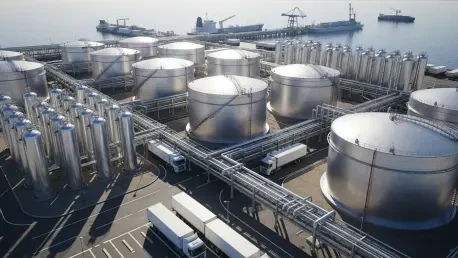
The massive expansion of physical storage infrastructure across major coastal hubs has provided a unique opportunity for market intervention that was previously unavailable to any single consumer. Since the start of 2026, the focus has remained on the completion of underground storage facilities that offer greater security and environmental protection than traditional surface tanks. These installations allow the central government to maintain a continuous purchasing program, which effectively sets a floor for global prices by absorbing surplus crude when other nations might be forced to cut imports due to economic slowing. This domestic capacity ensures that even if traditional shipping lanes are disrupted, there is sufficient inventory to maintain industrial output without the immediate need to bid up prices on the spot market. This prevents the kind of panic buying that often leads to a feedback loop of escalating costs. By maintaining this steady-state demand, the market finds a level of predictability that reduces the risk premiums often charged by traders.
Internal Dynamics: State and Private Sector Coordination
Managing these reserves requires a sophisticated understanding of international trade dynamics and the ability to coordinate between state-owned enterprises and private refiners. The government has implemented a quota system that encourages private firms to fill their own storage during price dips, effectively distributing the financial burden of stockpiling across a broader segment of the economy. This decentralized approach to energy security means that price stabilization is not just a top-down mandate but a structural feature of the domestic market. When global prices reach levels that threaten economic growth, the release of these private and state-held stocks into the domestic refining system reduces the need for expensive imports, thereby cooling the overall global demand for crude. This mechanism serves as a safety valve for the entire global economy, as a reduction in Chinese import requirements can offset supply deficits elsewhere, preventing a total price meltdown. The transparency of these inventory levels has improved significantly, allowing analysts to better price in the potential for intervention.
Supply Chain Security: Refining and Technology
Refining Capacity: Balancing Global Fuel Liquidity
Beyond the accumulation of raw crude, the expansion of high-tech refining capacity has allowed the nation to influence the prices of downstream products like gasoline and diesel. By processing crude at home and then exporting refined products to regions experiencing shortages, the industry helps to balance the global supply of finished fuels. This capability is particularly vital when refineries in Europe or North America face maintenance issues or high operational costs, as Chinese exports can fill the gap and prevent local price spikes from becoming global crises. The strategic use of export quotas for refined fuels allows for a dynamic response to international market conditions, ensuring that fuel stays affordable even when crude prices remain volatile. Modern refining complexes are now designed for maximum flexibility, enabling them to process various grades of crude oil, including heavier or more sour varieties that are often cheaper than the benchmark sweet crudes. This technical adaptability ensures that the nation can source oil from a wider array of producers, reducing the leverage of any single supplier.
Future Resilience: Technological Integration and Strategy
The global energy community observed that the most effective way to prevent future crises was through the aggressive adoption of dual-track energy policies. China demonstrated that maintaining high domestic refining standards alongside significant green energy investments mitigated the impact of supply chain disruptions. Leaders across the globe noted that decoupling industrial output from oil price fluctuations required a multi-decade commitment to infrastructure overhaul. It was concluded that the strategic release of refined products acted as a more precise instrument for market cooling than the release of raw crude alone. These actions provided a blueprint for regional energy blocks to coordinate their own storage and refining capabilities to ensure collective stability. Furthermore, the integration of real-time data analytics into energy distribution systems allowed for a more responsive and less speculative trading environment. This holistic approach ensured that the era of extreme energy insecurity remained a thing of the past, paving the way for a more resilient and predictable global economy.