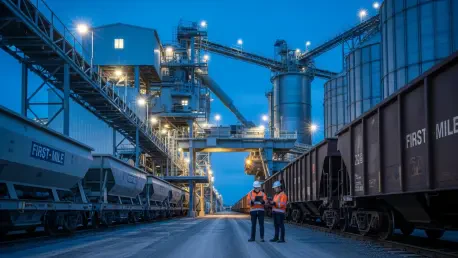

India’s coal balance has reached a turning point: Coal India Ltd. (CIL) is pushing to replace about 243 million tonnes (MT) of “substitutable” imports with domestic supply while scaling production toward 1 billion tonnes (BT) by FY2028-29. The stakes are clear—energy security, foreign exchange savings, and industrial competitiveness—but so are the constraints. Quality uniformity, freight economics, and retrofit readiness now separate ambitious intent from bankable outcomes.
Headline
CIL’s import swap plan hinges on delivered-cost parity and repeatable quality for plants tuned to imported blends. Logistics execution, beneficiation expansion, and targeted retrofits define the near-term winners, while policy alignment and rail capacity shape the long arc of success. Market sentiment stays cautious, pricing in execution risk more than demand risk.
Context and Purpose
This analysis evaluates the market implications of CIL’s 10-year substitution strategy: where the volumes sit, what it takes to shift them onshore, and how costs might track under different operating conditions. It also examines the ripple effects on utilities, railways, and investors that fund the infrastructure and working capital behind this transition.
Recent years altered coal economics. CIL’s output accelerated to 768.1 MT in FY26, with inventories of roughly 90 MT at FY24-end, offering a supply buffer. Grade conformity reached about 76% in FY24, narrowing disputes and enabling tighter contracting. At the same time, renewables gained share, but the grid still leaned on coal for stability, keeping baseload coal demand resilient.
Market Drivers and Current Position
Three forces set the current trajectory. First, domestic production growth closed part of the availability gap, shrinking spot exposure for inland plants. Second, policy moved toward energy security and forex conservation, reinforcing incentives to localize value chains and enable coal gasification ambitions. Third, logistics constraints and seaborne price cycles continued to influence the delivered cost of imports, especially for coastal units with short marine hauls.
CIL’s execution roadmap responds directly to these drivers: appoint consultants, audit import use, accelerate clearances and land acquisition, and, crucially, build a National Washery & Logistics Grid. The goal is straightforward—lift consistent gross calorific value (GCV), manage ash, and move coal at scale on predictable timetables.
Quality And Logistics Economics
Quality is the swing factor. Indian coal’s higher ash and lower GCV complicate combustion and emissions for plants designed around imported blends. Large-scale washing, consistent sizing, automated sampling, and digital grade tracking at nodal hubs near railheads can stabilize plant performance and reduce penalties. However, beneficiation adds cost and water intensity, so the margin case relies on repeatable spec compliance at high volume.
Logistics sets the floor for parity. Imported coal arrives via efficient seaborne chains and short coastal hauls. To compete, CIL needs multi-corridor evacuation, longer rakes, higher axle loads, decongested first and last miles, and time-tabled freight paths. Rail tariff calibration becomes pivotal: align pricing with energy security while preserving railway economics, or substitution stalls at the siding.
Plant Retrofit And Operational Risk
The boiler face is where theory meets reality. Swapping to higher-ash domestic coal can require mill upgrades, burner tuning, soot-blowing optimization, and changes to fuel handling systems. Coastal plants purpose-built for imports face the steepest curve; supercritical units often accept limited blending but still need controls optimization to protect heat rate and emissions.
These capex and downtime costs can dilute substitution savings if quality bands drift or logistics slip. Flexible contracts that reward operational outcomes—stable GCV bands, ash ceilings, sizing tolerances—reduce risk for generators and sharpen incentives for suppliers to maintain discipline through the monsoon and across seams.
Outlook And Projections
If production rises toward 1 BT by FY2028-29 and the Washery & Logistics Grid achieves scale, substitutable imports could decline materially. Inland plants with blending tolerance and proximity to rail corridors should benefit first, followed by progressively harder-to-serve coastal units where quality and marine economics set a higher bar. Rail modernization—longer rakes, automated scheduling, multimodal links—will determine the pace.
Market indicators reflect this conditional upside. Valuation around a TTM P/E of roughly 9 and a Hold/Moderate Buy tilt point to confidence in demand but caution on execution. Key watch items include commissioned washery capacity, grade conformity persistence, rake availability, turnaround times, and plant performance under new blends.
Conclusion
The analysis indicated that CIL’s import substitution could succeed where quality alignment and delivered-cost parity converged. Investors prioritized proof points—washery buildout at high-impact nodes, outcome-based contracts, and corridor-specific rail upgrades—as leading indicators for momentum. Utilities benefited most when unit-by-unit retrofit plans synchronized with reliable GCV bands and flexible blending windows. Policy support that fast-tracked clearances, rationalized freight tariffs, and incentivized water-efficient washing had amplified effects. In sum, the path forward depended less on headline tonnages and more on systems engineering across the mine-wash-rail-plant chain, with disciplined execution defining who captured the margin and who simply shifted risk.