
Christopher Hailstone brings decades of experience navigating the high-stakes intersection of energy infrastructure and Middle Eastern geopolitics. As a veteran in grid security and utility management, he has witnessed the shifting tides of the Persian Gulf and the fragile nature of global oil dependencies. In this conversation, he provides a granular look at how Iraq and the UAE are frantically attempting to re-engineer their export routes to survive the ongoing conflict and the closure of the world’s most vital maritime chokepoint.
The discussion centers on the rapid expansion of alternative pipeline networks across the region and the economic desperation driving these projects. We explore the stark contrast between Iraq’s total geographical confinement and the UAE’s strategic coastal advantages, while also examining the physical security threats facing existing land routes. Hailstone analyzes the feasibility of replacing the massive volumes of oil that once flowed through the Strait of Hormuz and the long-term implications for regional energy security.
The Iraqi cabinet recently moved to triple its exports through the Kurdistan-Turkey pipeline network. How critical is this transition for an economy so heavily reliant on crude?
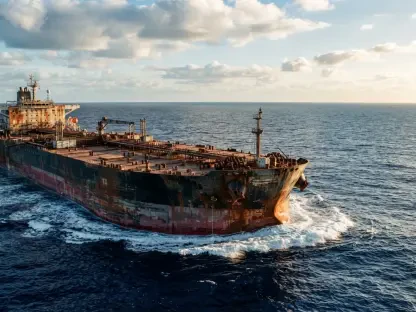
The decision to accelerate exports from 220,000 barrels per day to a projected 770,000 is nothing short of a survival tactic for Baghdad. When you look at the raw data, oil accounted for a staggering 53% of Iraq’s real GDP in 2025, meaning any disruption in the flow is felt immediately in every sector of their society. This shift toward Turkey’s Mediterranean port of Ceyhan is a response to the “deadweight tonnage” drying up at their southern ports, where the silence of stalled tankers is deafening. They are effectively trying to bypass a geographic cage that has seen their exports through the Strait of Hormuz collapse from 93 million barrels down to just 10 million barrels in April.
You’ve noted that Iraq is in a much more complicated situation than the United Arab Emirates; can you elaborate on the logistical and geographic factors that create this disparity?
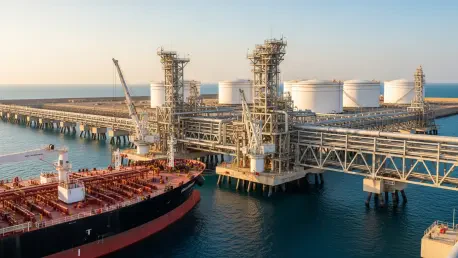
Iraq suffers from a profound geographic vulnerability because nearly all its oil must transit through the narrow needle’s eye of the Strait of Hormuz. The UAE, by contrast, has spent years investing in the Fujairah terminal, which sits outside the Persian Gulf and provides a direct gateway to the Indian Ocean. While the UAE is fast-tracking its new West-East pipeline to double ADNOC’s export capacity by 2027, they already have a foundational infrastructure that Iraq is only now trying to replicate under duress. Even with the Fujairah terminal facing the heat of the conflict, the UAE still possesses the vessels and alternative maritime access that give them a strategic breathing room Iraq simply does not have.
Security remains a massive concern even for land-based alternatives. How do the recent attacks on the Saudi East-West pipeline and the Fujairah terminal change the risk assessment for these multi-billion dollar projects?
The reality on the ground is that these “alternatives” are far from invulnerable, as we saw in April when Iranian forces targeted the Saudi East-West pipeline and sent drones against the Fujairah loading operations. There is a palpable sense of tension for the operators who have to manage these facilities while knowing they are high-value targets in an active theater of war. Even if a pipeline is technically capable of pumping 7 million barrels per day, as Saudi Arabia claimed in March, that capacity means little if the export hubs are under constant threat of sabotage. Shipping traffic through the sea lanes has already hit its lowest point of the war, leaving crews stuck in the Gulf facing a grim choice between Iranian harassment or the crushing weight of U.S. sanctions.
Even if these new projects like the West-East pipeline to Fujairah are delivered ahead of schedule, can they truly compensate for the 20 million barrels that used to pass through Hormuz daily?
The math is quite sobering when you compare the pre-war daily transit of 20 million barrels of oil and petroleum products to the combined capacity of the current alternatives. Even with the Saudi East-West line and the UAE’s existing routes, the IEA notes that available capacity only sits between 3.5 and 5.5 million barrels per day. We are looking at a massive shortfall that infrastructure alone cannot bridge in the short term, especially when transnational agreements and massive investments take years to materialize. The scent of diesel and the sound of heavy machinery at the Nahr Bin Umar fields represent a valiant effort, but we are essentially trying to replace a roaring river with a series of narrow garden hoses.
What is your forecast for the future of Middle Eastern oil exports?
I expect to see a permanent, structural shift in how oil moves out of the region, where the historical reliance on the Strait of Hormuz is replaced by a decentralized, land-based network of pipelines reaching toward the Red Sea and the Mediterranean. However, this transition will be painful and marked by extreme volatility, as the 2027 targets for major projects leave a multi-year gap where global energy markets will remain at the mercy of regional skirmishes. We will likely see Iraq continue to struggle with its 53% GDP dependence as it fights to secure its northern routes, while the UAE will emerge as the dominant logistical hub due to its superior coastal positioning. Ultimately, the era of “safe” maritime passage in the Gulf has ended, and the future belongs to those who can successfully bury their exports deep underground and away from the shoreline.