
A Crisis Where Energy Security and Oversight Collide
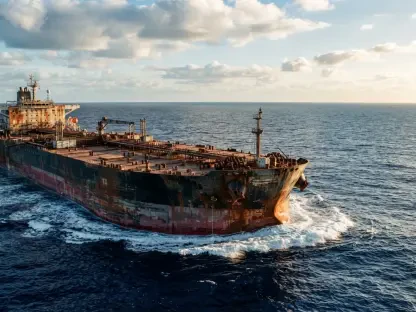
As Hormuz narrows and misinformation ricochets through trading desks, markets are testing whether Congress can force a consistent energy strategy while prices climb and public trust thins. The interruption of a route that once carried a fifth of global oil has pushed energy security onto the national security stage, with gasoline above $4 and logistics managers recalculating risks by the hour.
Congressional leaders—led by Sen. Martin Heinrich—are demanding evidence that the administration modeled outcomes, synchronized messaging, and prepared tools to steady markets. This analysis evaluates whether oversight can compel coherent planning under fire, why unclear signals inflame volatility, and which sequential actions could cool prices while deterring panic.
How We Got Here: Chokepoints, Market Memory, and Policy Drift
Oil markets carry a long memory of the Gulf’s hazards—from the Tanker War to drone and mine scares—and react not only to damage but to doubt. Even modest perceived threats shift insurance, reroute cargoes, and widen time spreads, with ripple effects for refinery margins and consumer prices.
U.S. policy often leaned on redundancy in global flows and faith in strategic stocks. The Strait’s constriction exposed fragile assumptions and a fragmented decision chain across Energy, Defense, State, Treasury, and DHS. That diffusion clouds accountability just as speed and accuracy become price stabilizers.
The Oversight Challenge: Planning, Proof, and Price Stability
Prewar Risk Modeling and the Credibility Gap
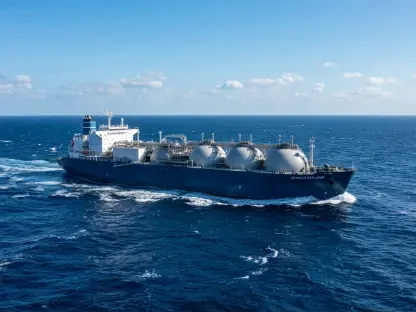
Heinrich’s letter asks whether DOE stress-tested a full Hormuz shutdown, including refinery utilization, SPR sequencing, rerouting limits, and LNG swing capacity. Market signals—sharp spot volatility, fatter freight and insurance premia, and erratic crack spreads—imply inadequate preparation.
Compounding the issue, a March 10 post from Energy Secretary Chris Wright incorrectly touted a Navy tanker escort. Traders price information quality; when official channels misfire, option skews and basis risk jump. Oversight now centers on documented models and interagency-cleared communications before market-moving claims.
From Blockade to Blowback: Second-Order Effects and Chokepoint Contagion
The blockade of Iranian ports aims to pressure Tehran but expands maritime risk across adjacent routes. Pressure on the Bab al-Mandeb, already strained by Houthi activity, pushes voyages around the Cape, tightening tanker supply and amplifying premiums.
Layered chokepoint stress can create nonlinear price outcomes when spare capacity, port throughput, and convoy availability collide. Congress is probing allied coordination on escorts and mines, plus emergency flexibility—fuel standard waivers and targeted regulatory relief—to keep domestic supply adaptable.
Infrastructure Risk, Regional Asymmetries, and Misunderstood Buffers
Damage to Gulf terminals, SPMs, and subsea lines can outlast naval incidents, constraining loadouts after sea lanes reopen. Regional asymmetries deepen the shock: Gulf Coast plants optimized for heavier slates cannot pivot instantly, and West Coast isolation magnifies local spikes.
The SPR is not a magic switch. Draws must match quality, pipeline and dock capacity, and commercial incentives. Best practice stacks buffers: IEA coordination, Jones Act relief, focused fuel specs, and liquidity support for importers facing margin calls. Oversight seeks proof these were ready, not improvised.
What’s Next: Technologies, Tools, and Rulebooks Reshaping Resilience
Short-cycle shale infill and refracs can respond within months if service capacity and labor permit, offering partial supply elasticity. Meanwhile, AIS-driven convoy routing, mine-detection analytics, and dynamic insurance pricing compress decision time in contested waters and sharpen risk selection.
Regulatory playbooks are likely to harden: clearer SPR triggers, pre-negotiated IEA release protocols, and mandatory validation for public statements that can move markets. Expect larger Maritime Security Program outlays, joint naval–commercial drills, and crisis communication exercises that privilege verified, time-stamped updates.
Practical Takeaways and a Roadmap for Accountable Stability
- For Congress: Require a classified annex on chokepoint scenarios, SPR logistics, waiver thresholds, and convoy–insurance coordination, plus timestamped records of market-moving communications tied to funding and joint DOE–DoD tabletop drills.
- For the administration: Stand up a crisis communications cell with a single on-record spokesperson; sequence mitigations—messaging discipline, insurance backstops and waivers, then calibrated SPR draws tied to utilization and regional stocks.
- For industry: Lock contingent charters, diversify crude slates within technical bounds, and pre-fund margin capacity; share anonymized operations data to refine models.
- For consumers and states: Favor targeted, temporary relief over broad tax holidays, and shift demand with fleet scheduling and telework incentives.
The Bottom Line: Energy Strategy as National Strategy
This conflict revealed that coherent energy planning is inseparable from deterrence, market stability, and voter confidence. Effective oversight, disciplined messaging, and staged mitigations proved to be the difference between manageable volatility and cascading fear. The strategic path forward rested on verification first, tools second, barrels third.